MUNICH, Germany (ViaNews) - The contamination of South Sudan‘s water can potentially condemn an estimated number of more than 600,000 South Sudanese to painful lives and early and horrible deaths, said Klaus Stieglitz, the vice chairman of the German NGO, Sign of Hope, as
reported by the German publication, Deutsche Welle. Among them, the alleged many horribly deformed babies, the pictures of whom have been flooding the social media – along with reports of a huge wave of stillbirths.
Large though this figure already is, it's likely to rise dramatically over the next years. By doing so, it might become the gravest problem facing South Sudan. That‘s quite a statement to make about a country in which more than half of the population is starving, or facing such, and in which this famine, along with the civil wars gripping South Sudan, and the alleged oil-caused corruption at the root of it, has caused one third of the country‘s population to flee their homes.
Leading Rights Groups Reveal How a South Sudan Oil Company Plays a Key Role in Prolonging Conflict
Why Big Oil‘s Contamination is so Serious
The lead and other heavy metals and salts issuing from the country's oil companies callous failure to safely process and store its “produced water” are lodged in South Sudan’s aquifers forever. That means local residents who are still using the wells whose water comes from the aquifers might be joining the legions of victims.
These wells are also used to water livestock and land – potentially resulting in the death of the former and contamination of the latter. It adds up to a destruction of the South Sudanese’s livelihoods.
[caption id="attachment_4535" align="aligncenter" width="950"]
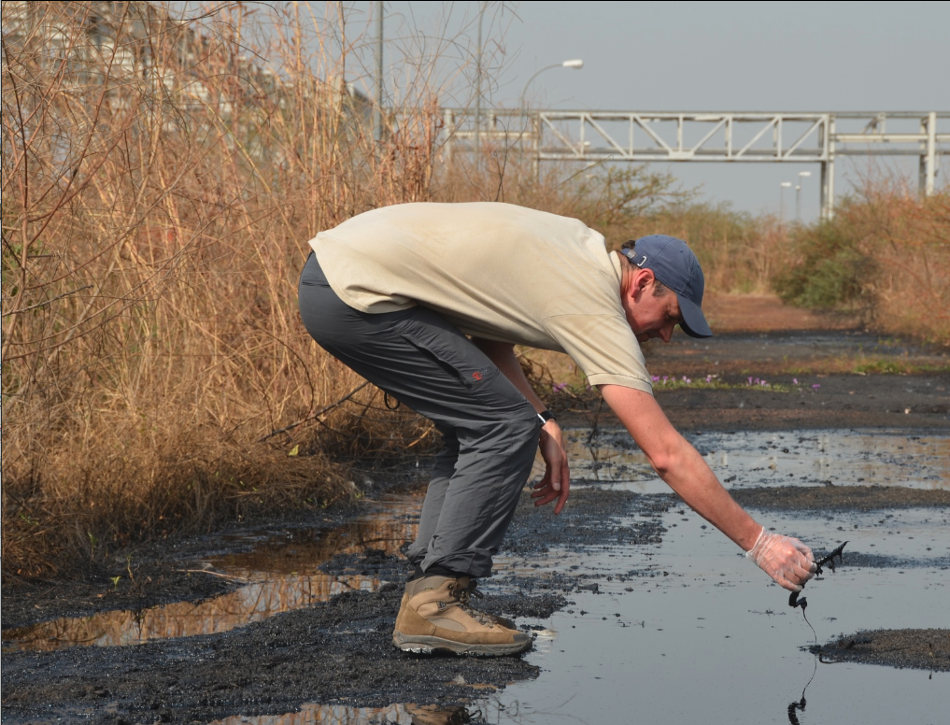
Klaus Stieglitz, Sign of Hope vice chairman in South Sudan. Photo by: Sign of Hope.[/caption]
It's this destruction, in fact, which has been a prime driver of flight, as thirsty, sick, frightened people who have lost their means of subsistence head to the relative safety of Uganda and other regions. Another great driver of flight: expulsion of residents who dared to protest big oil companies expropriation of their lands and poisoning of their environment.
This destruction and this expulsion preclude there being any return of the refugees to their villages. Many of these refugees have already headed to Israel and Europe.
Oil-mudslides flooding South Sudan
This contamination has been joined by the alleged abandonment of malfunctioning oil processing facilities and pipelines, and of the supplies (such as toxic chemicals) needed to make them run. The result: South Sudan’s oil fields and environs are potentially littered with environmental time bombs that are leaking oil, chemicals, and other toxic materials into the environment. This, in turn, adds to the number of people and animals killed or chronically ill. This problem has been especially well documented in Ruweng, one of the 28 states of South Sudan.
Problematic is also the several oil fields' proximity to the Nile, which is the main source of water for 100 million people, and which feeds into the Sudd, the vast and valuable wetlands that gave Sudan its name. The contamination of both is being scrupulously tracked chronicled by the well-respected Sudd Institute and other scientific bodies.
German NGO struggle for clean water in South Sudan
The scariest and most important point, South Sudan is, according to
Reuters, planning on vastly ramping up its production of oil, which now stands at 130,000 barrels a day, to more than 300,000.
Apparently, so far there isn't much intention of insisting upon any adherence to environmental and human rights standards, which together with an increase in oil output could potentially cause the number of victims to skyrocket into the millions.
Last updated on: 2018/06/23 17:03 CET

 Klaus Stieglitz, Sign of Hope vice chairman in South Sudan. Photo by: Sign of Hope.[/caption]
It's this destruction, in fact, which has been a prime driver of flight, as thirsty, sick, frightened people who have lost their means of subsistence head to the relative safety of Uganda and other regions. Another great driver of flight: expulsion of residents who dared to protest big oil companies expropriation of their lands and poisoning of their environment.
This destruction and this expulsion preclude there being any return of the refugees to their villages. Many of these refugees have already headed to Israel and Europe.
Oil-mudslides flooding South Sudan
This contamination has been joined by the alleged abandonment of malfunctioning oil processing facilities and pipelines, and of the supplies (such as toxic chemicals) needed to make them run. The result: South Sudan’s oil fields and environs are potentially littered with environmental time bombs that are leaking oil, chemicals, and other toxic materials into the environment. This, in turn, adds to the number of people and animals killed or chronically ill. This problem has been especially well documented in Ruweng, one of the 28 states of South Sudan.
Problematic is also the several oil fields' proximity to the Nile, which is the main source of water for 100 million people, and which feeds into the Sudd, the vast and valuable wetlands that gave Sudan its name. The contamination of both is being scrupulously tracked chronicled by the well-respected Sudd Institute and other scientific bodies.
German NGO struggle for clean water in South Sudan
The scariest and most important point, South Sudan is, according to Reuters, planning on vastly ramping up its production of oil, which now stands at 130,000 barrels a day, to more than 300,000.
Apparently, so far there isn't much intention of insisting upon any adherence to environmental and human rights standards, which together with an increase in oil output could potentially cause the number of victims to skyrocket into the millions.
Last updated on: 2018/06/23 17:03 CET
Klaus Stieglitz, Sign of Hope vice chairman in South Sudan. Photo by: Sign of Hope.[/caption]
It's this destruction, in fact, which has been a prime driver of flight, as thirsty, sick, frightened people who have lost their means of subsistence head to the relative safety of Uganda and other regions. Another great driver of flight: expulsion of residents who dared to protest big oil companies expropriation of their lands and poisoning of their environment.
This destruction and this expulsion preclude there being any return of the refugees to their villages. Many of these refugees have already headed to Israel and Europe.
Oil-mudslides flooding South Sudan
This contamination has been joined by the alleged abandonment of malfunctioning oil processing facilities and pipelines, and of the supplies (such as toxic chemicals) needed to make them run. The result: South Sudan’s oil fields and environs are potentially littered with environmental time bombs that are leaking oil, chemicals, and other toxic materials into the environment. This, in turn, adds to the number of people and animals killed or chronically ill. This problem has been especially well documented in Ruweng, one of the 28 states of South Sudan.
Problematic is also the several oil fields' proximity to the Nile, which is the main source of water for 100 million people, and which feeds into the Sudd, the vast and valuable wetlands that gave Sudan its name. The contamination of both is being scrupulously tracked chronicled by the well-respected Sudd Institute and other scientific bodies.
German NGO struggle for clean water in South Sudan
The scariest and most important point, South Sudan is, according to Reuters, planning on vastly ramping up its production of oil, which now stands at 130,000 barrels a day, to more than 300,000.
Apparently, so far there isn't much intention of insisting upon any adherence to environmental and human rights standards, which together with an increase in oil output could potentially cause the number of victims to skyrocket into the millions.
Last updated on: 2018/06/23 17:03 CET