

The work environment is changing rapidly and it is vital to understand how the changes are defining the landscape. New trends are disrupting the work environment which requires organizations and employees to adopt the trends to be relevant. Technological advancement such as automation and AI, globalization as well as new approaches like working from home or cafes which are preferred by millennials are transforming the sphere.
As a result of the changing trends, co-working spaces are increasingly becoming popular in all cities across the world. For instance in India coworking spaces has increased tremendously and according to JLL in the first nine months of last year, there were around 3.4 million square feet of space. This will significantly increase by 2020. There are over 200 coworking companies in the country and with WeWork among those leading the pack. Organizations now need talented employees more than how people need the organization. This means that people are starting to drive conversations and discussions around work.
Here are the trends that are disrupting the future of work.
The Millennial workforce
Millennials currently make up a significant percentage of the workforce. By next year they will be around 50% of the workforce and they could increase to 75% by 2025. This is a generation that characterized the different approach to work relative to previous generations. They have different values and styles of working in that they are don't want to be tied to a single organization forever. They love "fluid Gigs" where they can be able to juggle between jobs and sometimes do them simultaneously. The worrying thing is that they are going to be many going forward and companies will have to adapt to their approaches. This generation prefers not to work in a typical office where there is a nine-to-five schedule.
The advent of coworking spaces
With globalization, the world has become so small that boundaries do not matter anymore. The currency you transact, your language or locations do not matter as you can work from anywhere. What matters is whether you can do your job. People are increasingly starting to prefer working from home, malls, parks or cafes. In high-traffic-density areas such as India, it is increasingly becoming difficult to find talented people living near their offices.
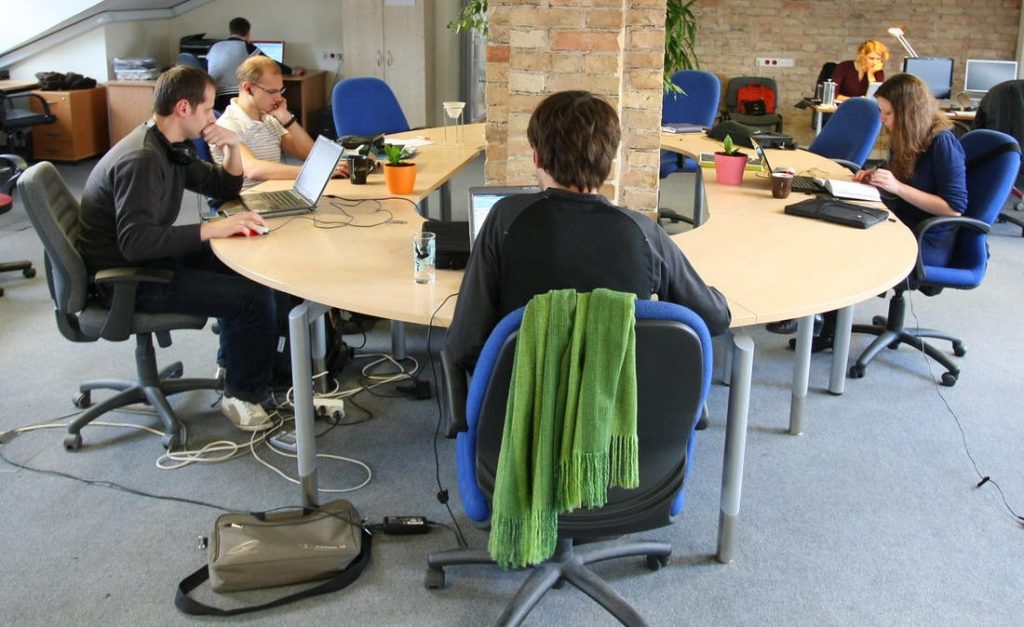
Workers want more mobility and location flexibility and the best way to allow this is to permit remote working. This minimizes office costs, enhances productivity and leads to higher employee retention. Decentralized workforces are becoming popular which is why coworking spaces are rapidly increasing.
Technology (AI, Robotics, Machine Automation, Cloud)
Technological advancements are disrupting everything in the world today and not just work. Important technologies changing the future of work include artificial intelligence, big data, automation, robotics, cloud, and IoT among others. With robotic process automation kicking in most organizations will not have to worry about repetitive tasks. Natural language processing, machine learning algorithms, and deep learning AI will make most tasks possible.
The cloud has put technology in the hands of employees and they are forcing them to redefine roles of humans. The machines, however, will need humans but humans will do better in jobs requiring collaboration, empathy, and compassion.
Distributed ledger technology
Blockchain technology is driving decentralization of functions in large organizations such as in finance, banking and logistics among others. With this, new forms of organizations are born where workspaces centralized and rigid organization structures will not be important. The decentralized autonomous companies are signs that workers and partners are getting more empowered at the expense of senior management. Decentralization of organizations will be vital in defining the future of work with coworking spaces becoming the infrastructural point of the change.