
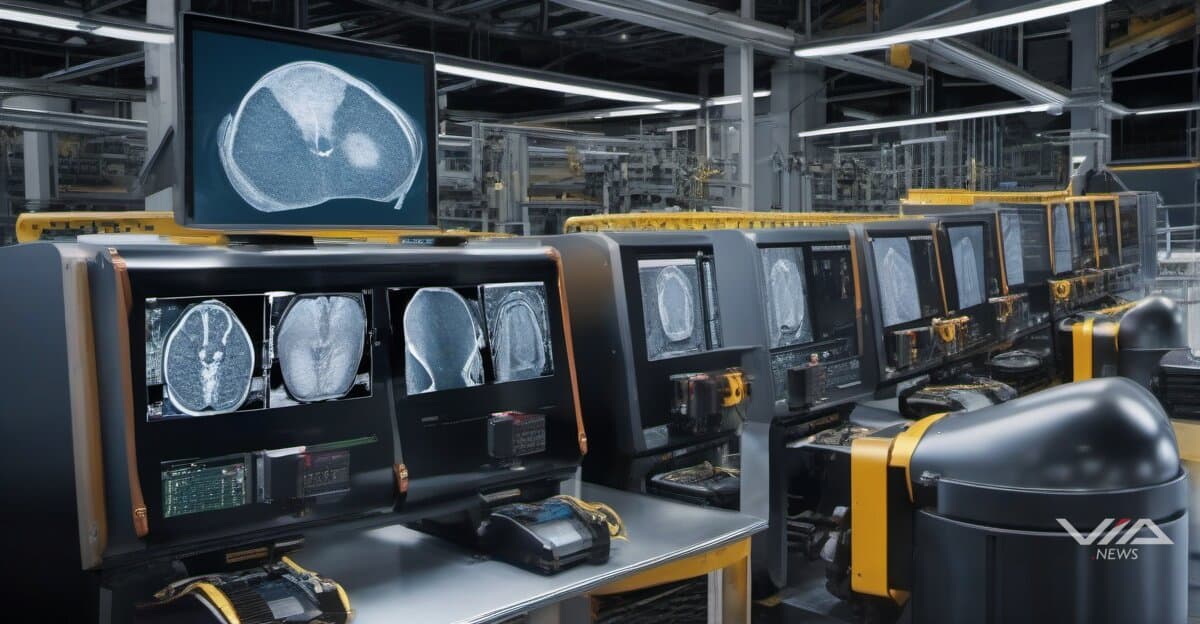
Computer vision AI has moved into safety-critical roles across global healthcare, space exploration, and agriculture. NASA's Mars rovers use visual localization in environments 225 million kilometers from Earth. Deere's precision agriculture platforms operate across weather conditions in the Americas. Safe Pro deploys threat detection systems where errors risk human safety.
Medical imaging demands near-perfect accuracy. Melika Qahqaie warns that "accurate detection of merging and splitting lesions is crucial for reliable response evaluation, as overlooking these events can lead to misclassification under RECIST and potentially incorrect assessment of disease progression." Oncology AI mistakes can trigger wrong treatment decisions.
Cultural applications show regional adaptation. China's Yunju Temple uses micro-trace imaging to reveal millennium-old stone scriptures. Hui Pengyu explains the system collects "image data under light sources at different angles" to enhance depth perception in weathered carvings.
AI researcher Timnit Gebru challenges the dominant development model. She argues Big Tech "stealing data, killing the environment, exploiting labor" crushes regional innovation. When Meta released its 200-language translation system including 55 African languages, investors told African NLP startups to "close up shop"—claiming "Facebook has solved it." Small companies building region-specific solutions lost funding overnight.
Reliability gaps persist in commercial systems. Audio AI Whisper shows hallucination problems despite widespread deployment. This raises concerns about similar architectures handling medical diagnosis or autonomous vehicle navigation.
The computer vision sector now spans applications requiring different failure tolerances. Agricultural robots need weather resistance. Medical imaging demands near-zero error rates. Robotic manipulation requires real-time spatial processing. Training large models consumes massive computational resources, while deployment sites from rural clinics to farm equipment often lack high-end hardware.
The gap between deployment speed and safety validation widens as companies accelerate computer vision into high-stakes environments across global markets.