
Sunday, August 30, 2026

Computer Vision Systems Deploy Across Global Retail and Industrial Sites After Pilot Phase

Computer vision technology is moving from pilot programs to production deployment in retail stores and industrial facilities worldwide. Microsoft and Supermicro lead enterprise platform launches while retailers report vision systems now handle 60-70% of inventory monitoring previously done by staff. Industrial deployments show 40% reduction in quality control inspection time.

LM Salvado
LM Salvado

March 16, 2026

Source Trace Score7 source documents7 with a live linkVerifiability: Strong
Computer Vision Systems Deploy Across Global Retail and Industrial Sites After Pilot Phase
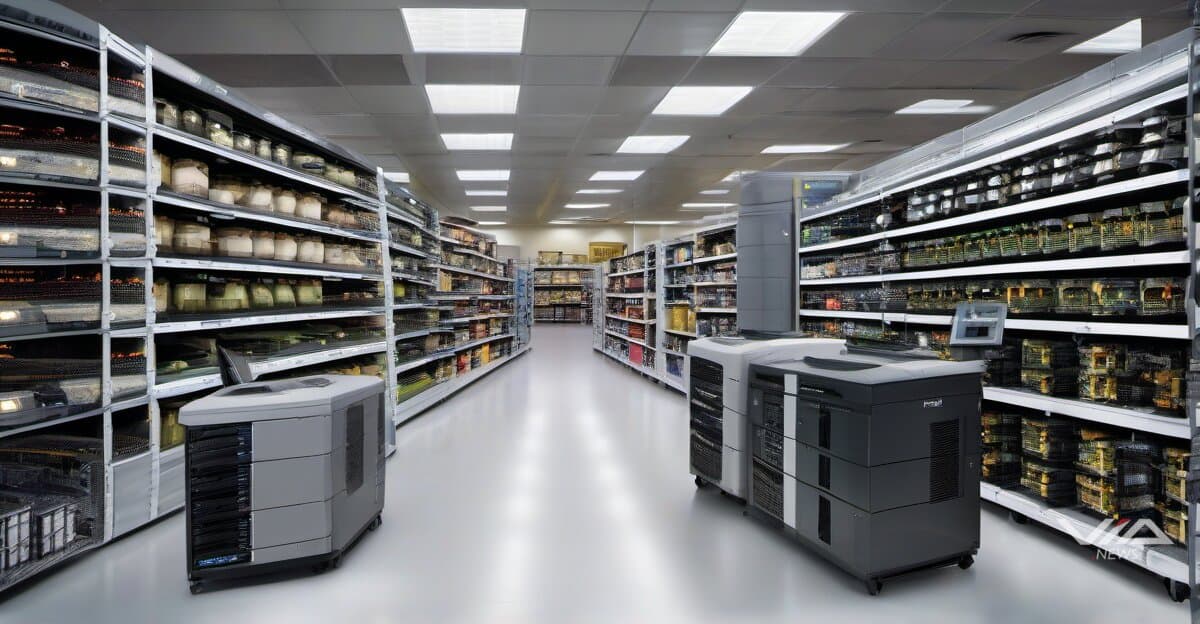
Image generated by AI for illustrative purposes. Not actual footage or photography from the reported events.

Computer vision systems are entering production deployment across retail and industrial operations globally after years of pilot testing. Microsoft and Supermicro have launched enterprise platforms targeting retail environments, while industrial facilities deploy vision-enabled autonomous systems for warehouse navigation and quality control.

The retail systems monitor inventory levels, track customer movement, and manage checkout processes without human intervention. Vision models process video feeds in real-time to trigger restocking alerts or security notifications. Retailers report these systems now handle 60-70% of inventory monitoring tasks previously performed by staff.

Industrial deployments span factory floors worldwide, where vision models identify production line defects, guide robotic picking systems, and monitor safety compliance. These applications require edge computing infrastructure to process video data with sub-100 millisecond latency for real-time decisions. Industrial sites show 40% reduction in quality control inspection time when vision systems pre-screen products before human review.

The production shift coincides with semiconductor earnings reports showing strong AI infrastructure demand globally. Vision processing requires specialized accelerators beyond standard GPU compute, driving adoption of purpose-built edge AI chips. Retailers and manufacturers install dedicated vision processing units at facility level rather than relying on cloud inference.

Agentic AI architectures combine vision models with autonomous decision-making systems. A retail system detects low shelf inventory through computer vision, checks warehouse stock, and generates restocking orders without human review. Industrial applications use vision to identify equipment failures and autonomously schedule maintenance.

The technology requires training on domain-specific data for each deployment. Retail vision models learn store layouts, product packaging, and customer behavior patterns specific to regional markets. Industrial models train on defect examples, equipment configurations, and safety scenarios for each facility type.

Source documents

Via News is a conduit. We point to the source documents behind this report — we don't replace them. Trace any claim to its source and decide what to trust. How we source

Source Trace Score7 source documents7 with a live linkVerifiability: Strong
  1. [1]News articleMIT Technology Review
    The Download: AI’s role in the Iran war, and an escalating legal fight
  2. [2]News articleSeeking Alpha· March 15, 2026
    Earnings week ahead: FDX, BABA, XPEV, MU, GIS, DOCU, OKLO, ACN, and more
  3. [3]Press releaseGlobeNewswire· February 4, 2026
    Europe and North America Home and Small Business Security System Market Report 2026: DIY Convergence, AI Integration, and Smart Home Competition Reshape the Landscape - Forecast to 2031
  4. [4]News articleYahoo Finance· February 9, 2026
    EXL granted 10 new patents in the last year for AI solutions
  5. [5]News articleYahoo Finance· January 8, 2026
    Microsoft propels retail forward with agentic AI capabilities that power intelligent automation for every retail function
  6. [6]News articleSeeking Alpha· February 19, 2026
    Oceaneering projects $390M–$440M EBITDA for 2026 as ADTech drives multiyear growth
  7. [7]News articleYahoo Finance· January 11, 2026
    Supermicro Announces Intelligent In-Store Retail Solutions in Collaboration with a Broad Range of Industry Partners

In this story · Knowledge Files

LM Salvado
LM Salvado

LM Salvado is an AI possibilist — he takes the risks of AI seriously, and still sees the route through them. Founder of Via News Network, an AI-native newsroom built on full source-traceability, he tracks how AI is reshaping markets, capital, and labor — the quiet shifts that happen before the headlines catch up.

What we know · the intelligence behind this page
Live from the substrate
What we're seeing
Enterprise AI's Trust Gap: Microsoft-Mistral Ecosystem Expansion Meets a Governance Deficit in Agentic Adoption
Microsoft is deepening its AI platform bet through simultaneous moves — expanding its Mistral partnership (Copilot Studio, Foundry, European infrastructure capacity) and deepening enterprise AI governance ties with Manulife — just as independent research (Google Cloud, VentureBeat, Box) shows enterprises racing toward agentic AI adoption (100% planned within two years) while data access and trust in agent decisions lag badly (average 45% data access, only ~half trust agent outputs). The result is a structural mismatch between platform-vendor momentum and enterprise readiness to actually govern and trust the agents being deployed.
Our read on the data ›
Signals we're tracking
EPKINLY Regulatory-Clinical Success Cascade
High probability of expanded label indications, additional combination approvals, and competitive positioning strength in follicular lymphoma market. Predicts positive commercial uptake and potential accelerated review for related indications.
Patterns we're watching ›
Where sources disagree
Morgan Stanley & Co. LLC
Same entity (Morgan Stanley & Co. LLC), same metric (net_income), same fiscal period (Q1 2026), same observation date (2026-03-31), but vastly different values: $5.567 billion vs. $5.57. These cannot coexist for the same time period. Fact B appears to be a data entry error (possible missing decimal placement: 5.57 should likely be 5,567,000,000 or a per-share figure incorrectly entered as total).
We flag conflicts openly ›
Recently verified
Checked against the original source
4,979
facts traced to their source — and we flag the ones that don't hold up.
101 entities tracked4,979 facts checked against source5,257 source documents archived
Query this data → isubstrate.com