Wednesday, August 19, 2026
What we know · the intelligence behind this page
Live from the substrate
What we're seeing
AI Platforms Rush to Establish Content-Authenticity Standards Amid Leadership Shakeups and Sustained Capex
Within days of each other in mid-August 2026, Google, Anthropic, and Spotify moved to formalize AI content watermarking and labeling policies, signaling an industry-wide push toward self-governed provenance standards as generative AI output floods consumer platforms. The shift coincides with executive turnover at OpenAI (Brad Lightcap's departure) and Meta's public AI manifesto, all set against continued heavy AI infrastructure capital expenditure and finance-sector moves (e.g., Wall Street paying for algorithmic edges on social signals) that underscore AI's deepening entanglement with capital markets.
Our read on the data ›
Signals we're tracking
EPKINLY Regulatory-Clinical Success Cascade
High probability of expanded label indications, additional combination approvals, and competitive positioning strength in follicular lymphoma market. Predicts positive commercial uptake and potential accelerated review for related indications.
Patterns we're watching ›
Where sources disagree
JPMorgan Chase & Co.
Both facts report JPMorgan Chase & Co.'s revenue for the same fiscal period (FY 2025) with the same observation date (2025-12-31), but with different values: $182.447 billion vs. $185 billion. The ~1.4% difference ($2.553 billion) is too large to be explained by rounding alone and represents conflicting data for the identical time period.
We flag conflicts openly ›
Recently verified
Checked against the original source
4,812
facts traced to their source — and we flag the ones that don't hold up.
101 entities tracked4,812 facts checked against source5,238 source documents archived
Work with this data → vianewsagency.com

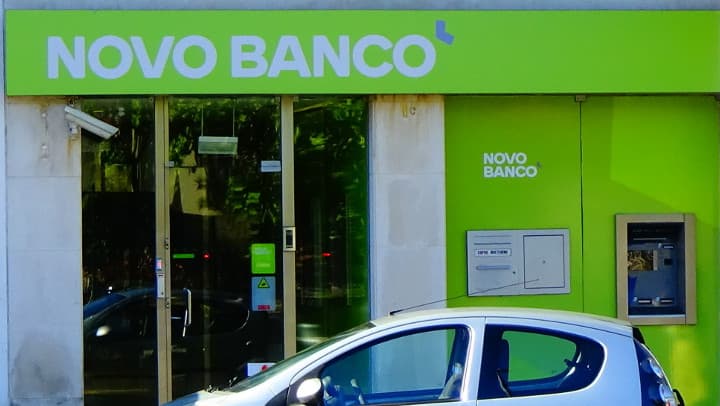
FOSUM and "NOVO BANCO" Negotiations Failed: Sale Postponed Until After Country's National Elections

Negotiations between Novo Banco and potential buyers Apollo, Anbang, and Fosun collapsed in September 2015, with Fosun's final €1.5 billion offer falling short of Banco de Portugal's expectations. The sale was postponed until after Portugal's national elections.

L.M. Salvado
L.M. Salvado

September 11, 2015

Novo Banco sale postponed.
Negotiations have failed between Novo Banco and its buyers Apollo, Anbang, and Fosun. Rumors seem to indicate Banco de Portugal to re-enter negotiations with Apollo before the final decision to postpone the sale to 2016. The last standing bid offer from the Chinese Fosun company was 1.5 billion Euros ($1.7 billion) that was about half the required original offer amount from Banco de Portugal. Banco de Portugal had previously stated there is no hurry in accepting low offers and is prepared to postpone the deal till after the country's next national elections. Novo Banco was created in August 2014 to rescue assets and liabilities from the debts of Banco Espírito Santo. The bank was held by a resolution fund by Portuguese banks with the Banco de Portugal supervision. In an interview to the Portuguese daily "Jornal de Negócios", the President of Millennium BCP, Nuno Amado, said that "the delay in Novo Banco sale may be positive" and "speeding up the sale is not a good idea." Millennium BCP is one of the banks holding the Novo Banco resolution fund.
L.M. Salvado
L.M. Salvado

L.M. Salvado is an AI possibilist — he takes the risks of AI seriously, and still sees the route through them. Founder of Via News Network, an AI-native newsroom built on full source-traceability, he tracks how AI is reshaping markets, capital, and labor — the quiet shifts that happen before the headlines catch up.