
Saturday, October 3, 2026

Greece Bailout Green Light From Eurozone but Not IMF

The Eurogroup approved Greece's third bailout package of €86 billion on August 14, 2015. Greek Finance Minister Euclid Tsakalotos confirmed depositors' money would be protected from bail-in, while the IMF maintained that Greek debt remains "highly unsustainable."

LM Salvado
LM Salvado

August 15, 2015

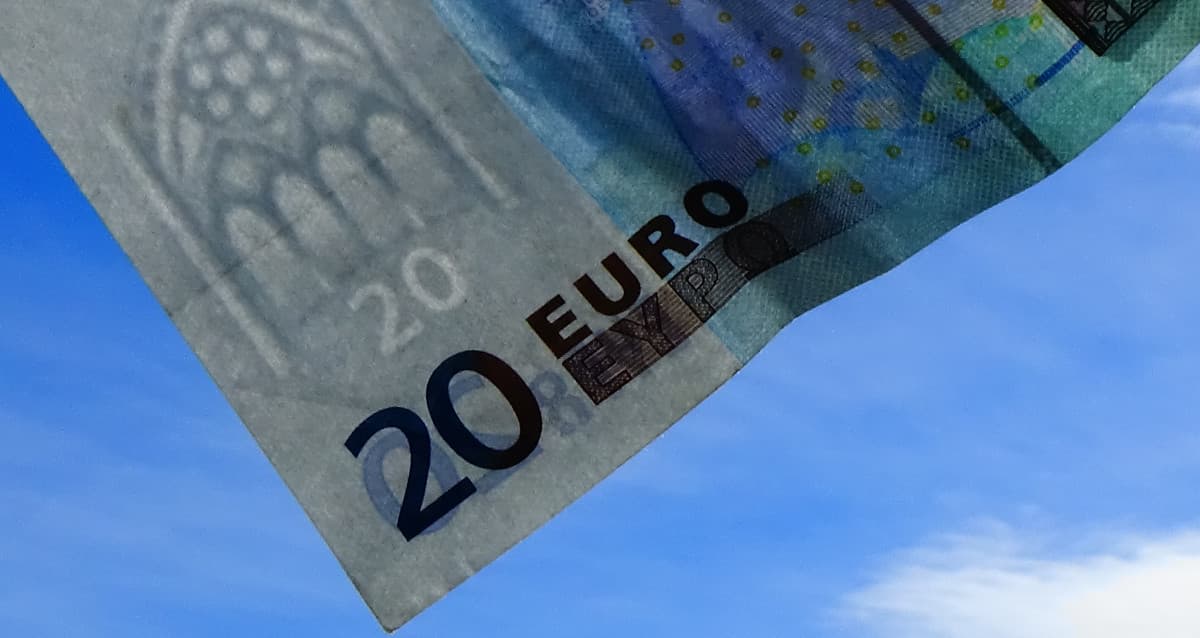
Euro - Image credits Mick Carvalho
On Friday, August 14, 2015, the Eurogroup agreed to the third Greece rescue package of € 86 billion ($ 95.5 billion). The 3-year bailout first tranche of € 26 billion ($ 28.9) will be used to repay debt and recapitalize the banking system. According to the Greek Finance Minister Euclid Tsakalotos, a depositors money bail-in is out of the question. The Eurogroup president, Jeroen Dijsselbloem said at the press conference that "the Eurogroup have come to a positive conclusion" and that "All the intense work over the last week has paid off." In the same press conference Jeroen Dijsselbloem mentioned the IMF by saying:

We welcome the intention of the IMF board to consider further financial support to Greece. They will do so in the autumn. We stressed that such IMF involvement for the Eurogroup is indispensable, and we welcome the positive assessment of the IMF staff of the policy conditionality contained in the MOU (Memorandum of Understanding). For the IMF board to consider further financial support there are two crucial issues, we realize and accept that. First, there needs to be a full specification of fiscal structural and financial system reforms and secondly that debt sustainability is ensured.

Jeroen Dijsselbloem

The Greek depositors' money is safe

Some EU Finance Ministers made it clear that deposits are safe, discarding any panic depositors may have had regarding losing their savings. Leaving the Eurogroup Meeting, the Greek Finance Minister Euclid Tsakalotos confirmed that no deposit bail-in would take place.
"This deal is something that we hope will take Greece forward. It takes Greece forward in the sense that the financial system should be much more stable from now on. There is the promise of the recapitalization of the banks without any deposit having any bail-in or anything to worry about. The process of reversing the negative effects of capital controls will start very quickly and will speedily return the banks to where they were before and hopefully on a far firmer footing."

Euclid Tsakalotos (Greek Finance Minister)

The IMF still considers the Greek debt unsustainable

In an IMF statement issued Friday night by Christine Lagarde, the Greek's public debt is "highly unsustainable" and the bailout should include measures to restructure the country's debt. The "European partners should make commitments to relieve Greek debt, well beyond what has been done so far". Christine Lagarde added that only after a Greek debt relief will it be possible to implement a credible and comprehensive program for Greece. Only then will the IMF Board of Directors provide more financial assistance to help Greece.
LM Salvado
LM Salvado

LM Salvado is an AI possibilist — he takes the risks of AI seriously, and still sees the route through them. Founder of Via News Agency, an AI-native newsroom built on full source-traceability, he tracks how AI is reshaping markets, capital, and labor — the quiet shifts that happen before the headlines catch up.

What we know · the intelligence behind this page
Live from the substrate
What we're seeing
Pharma Pipeline Catalysts and M&A Heat Up as AI-Designed Drugs Enter the Clinic
Late-September 2026 brought a dense run of clinical readouts: Novo Nordisk's CagriSema data at EASD, Lilly's ADtouch results for EBGLYSS, and Merck's tulisokibart Phase 2b result. Lilly's $2.9B Merida Biosciences acquisition and the 2026-11-14 FDA PDUFA date for ivonescimab sit alongside these as the main deal and regulatory events. AI-designed drugs such as rentosertib, and speculative AI-linked trial ventures such as QAIAx, are moving from hype toward clinical validation. Broader AI-sector regulatory and legal friction (Tesla Cybercab probe, xAI Minnesota ruling, OpenAI lawsuits) shows rising scrutiny that could spill into AI-driven healthcare.
Our read on the data ›
Signals we're tracking
Satellite-Terrestrial Network Integration Acceleration
Increased investment and launches in hybrid satellite-cellular networks across telecom industry; competitive responses from other carriers; regulatory activity around satellite spectrum; expansion of emergency/rural connectivity use cases
Patterns we're watching ›
Where sources disagree
Apple Inc.
The observation date (2025-12-27) precedes Q1 2026, making it logically impossible to have actual Q1 2026 cash data at that point. Q1 2026 would not end until March 31, 2026. Additionally, the magnitude of the difference ($45.3B vs $132.42) is implausibly large even as a normal quarterly change for Apple. While different fiscal periods can show different values, the timing relationship here suggests a data integrity issue rather than legitimate period-over-period variation.
We flag conflicts openly ›
Recently verified
✓ Checked against the original source
4,985
facts traced to their source — and we flag the ones that don't hold up.
101 entities tracked4,985 facts checked against source5,329 source documents archived
Query this data → isubstrate.com