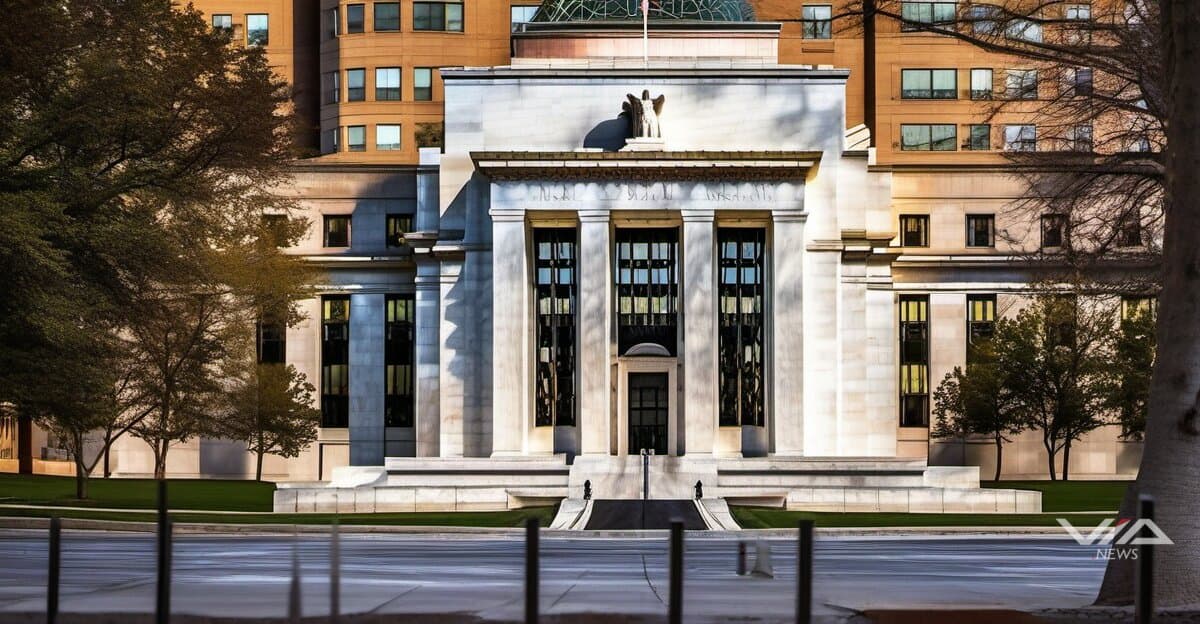
Nearly 64% of interest rate traders expect the Federal Reserve to maintain rates at 3.5-3.75% through December 2026, according to CME FedWatch data1. The projection reverses December forecasts of two rate cuts and positions U.S. monetary policy at sustained tightness while the European Central Bank cuts and the Bank of Japan normalizes2.
Only 0.2% of traders anticipate rates falling to 3.25-3.5% by year-end 20261. Rate hike expectations remain limited, with 31% projecting a move to 3.75-4% and just 5% expecting a 50-basis-point increase. The distribution suggests markets price stability over directional moves as Kevin Warsh prepares to succeed Jerome Powell as Fed Chair.
The extended pause creates divergence with major central banks. While the Fed holds steady, the ECB has cut rates four times since June and the Bank of England signals further easing ahead. The disparity supports dollar strength but pressures emerging markets with dollar-denominated debt facing persistently high U.S. rates.
For global credit markets, the freeze eliminates relief from further easing. Multinational corporations refinancing dollar debt through 2026 must structure around mid-3% policy rates, raising costs compared to euro or yen borrowing. Regional U.S. banks face margin compression as deposit competition persists while loan yields plateau.
Fixed income allocators worldwide confront a narrow window. If the 64% consensus proves correct, current Treasury yields may represent peak returns for this cycle, pressuring portfolio managers to extend duration now rather than wait for higher entry points.
Warsh's historically hawkish stance adds uncertainty. Markets have not priced significant probability of renewed tightening, creating asymmetric risk if his Fed proves less accommodative than anticipated. Retail investor retreat compounds the shift, with trading activity down 30% and flows falling to $3 billion signaling capitulation.
Institutional investors must recalibrate strategies around persistent 3.5-3.75% rates rather than the declining-rate playbook that dominated 2024. The adjustment affects leveraged buyout modeling, pension liability discounting, and cross-border capital allocation as U.S. rates diverge from global peers.