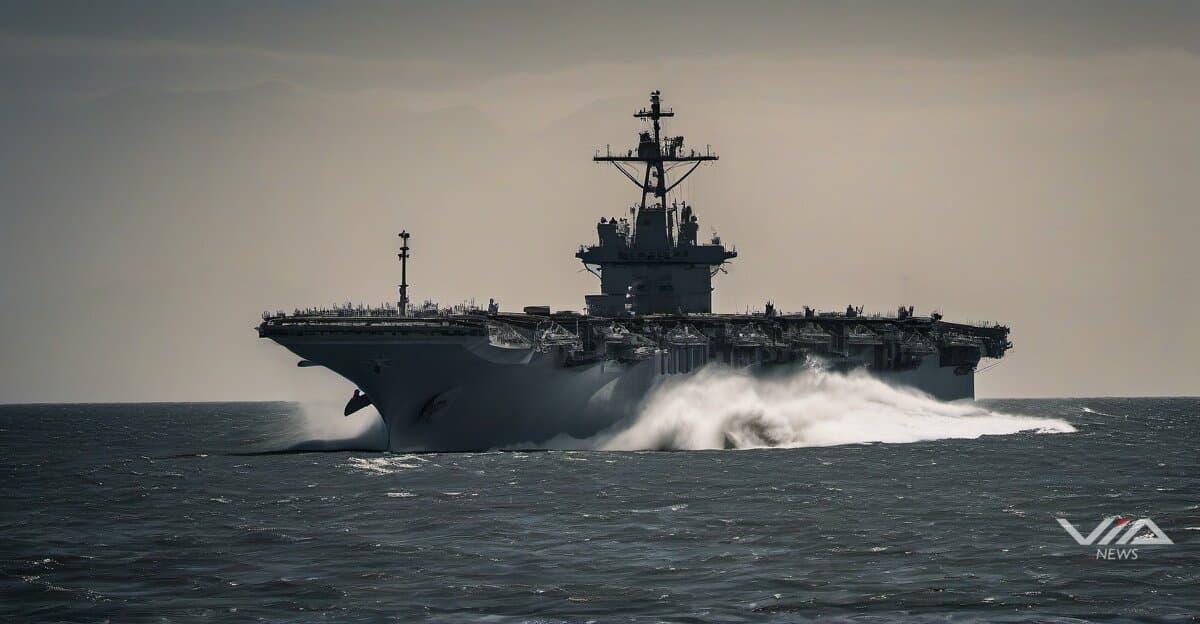
Oil prices broke through $100 per barrel on April 14, 2026, as the US imposed a blockade on Iran's Strait of Hormuz access, threatening roughly 20% of global petroleum shipments.1 Brent and WTI crude benchmarks hit triple digits for the first time since previous geopolitical crises, with traders pricing immediate supply disruption risks into energy futures.
The dollar strengthened sharply across G10 currencies as global traders shifted to traditional safe havens.2 The greenback gained against the euro, yen, and commodity-linked currencies including the Australian and Canadian dollars. Equity markets from New York to Tokyo trimmed earlier losses but remained under pressure as the crisis dominated trading floors worldwide.1
The Strait of Hormuz represents the world's most critical oil chokepoint, channeling petroleum from Saudi Arabia, Iraq, the UAE, and other Gulf producers to Asian and European markets. Any prolonged disruption forces tankers on multi-week detours around Africa, adding significant transport costs and tightening available supply. Asian buyers, particularly China, Japan, and South Korea, face the most acute exposure to Hormuz supply risks.
Central banks maintained steady policy even as markets convulsed. The Bank of Canada held rates at 2.25% while the Federal Reserve kept its current stance, providing no monetary catalyst for the volatility.2 The ECB and Bank of Japan similarly stood pat, underscoring how geopolitical shocks can decouple asset prices from monetary fundamentals.
Currency markets showed textbook crisis behavior. Safe-haven flows benefited the dollar, Swiss franc, and gold while punishing emerging market currencies and commodity exporters. Trading volumes spiked in forex and energy derivatives as institutional investors hedged geopolitical exposure.
The crisis hit markets already showing fragility. Canadian household debt metrics reflected economic uncertainty before the blockade,3 while European manufacturing data had softened. These underlying weaknesses amplified the market reaction to Middle East tensions.
Traders now monitor diplomatic channels and physical tanker flows through alternative routes. Further escalation could drive oil toward previous crisis peaks above significant capitalwhile rapid de-escalation might trigger sharp reversals in extended energy positions.