
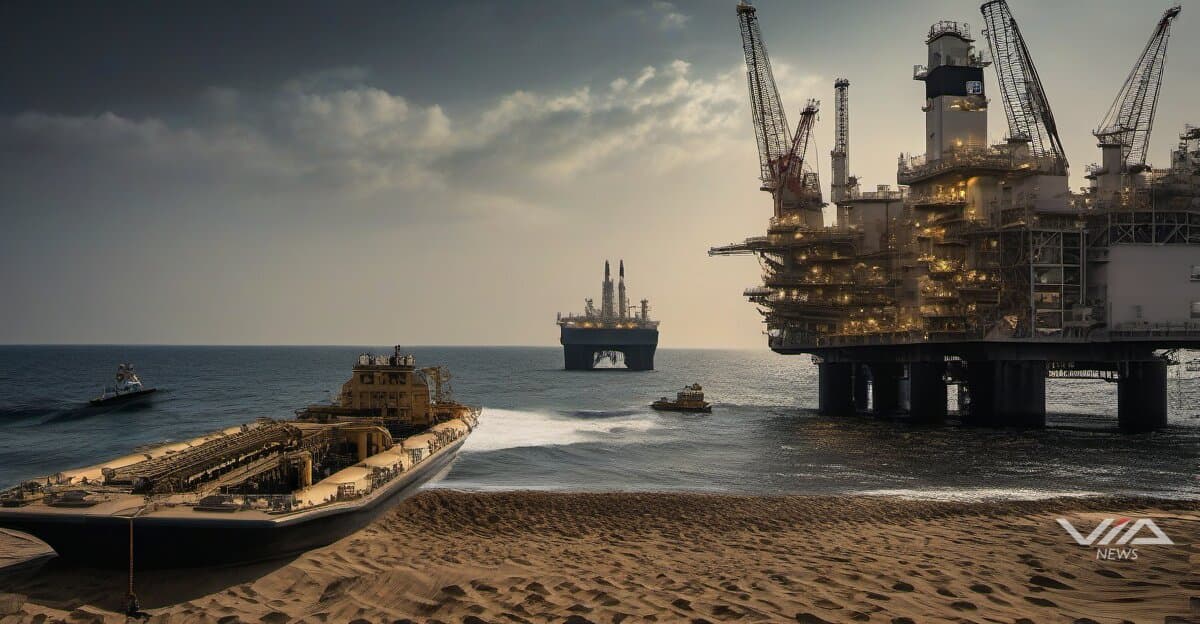
The Strait of Hormuz blockade has removed 20 million barrels per day from global oil markets, according to MacroEdge Research—the largest supply disruption in recorded history. The chokepoint normally handles 21 million barrels daily, roughly 21% of global petroleum consumption, making this a near-complete cutoff from Persian Gulf producers.
WTI crude prices spiked 15% in initial trading, while Brent crude jumped 18% as European and Asian buyers bid aggressively for Atlantic Basin supplies. Oil VIX volatility surged to levels not seen since the 2019 Saudi Aramco attacks. Transport premiums for rerouted shipments from U.S. Gulf Coast and West African producers now exceed $10 per barrel to Asian destinations.
The shock extends across commodity sectors. Natural gas prices in Europe and Asia climbed 8-12% on energy substitution demand. CF Industries and other fertilizer producers face elevated costs, threatening agricultural margins from Brazil to India. Aluminum futures jumped 6% on industrial demand fears and input cost inflation.
"Any geopolitical situation that can affect the price of oil will have the largest impact on financial markets," said Scott Wren, analyst covering Middle East oil price risks. "Both the Middle East and Ukraine situations can impact prices."
Trading desks repositioned rapidly. Asian refiners activated force majeure clauses on long-term contracts. European utilities increased LNG imports to offset potential diesel shortages. Commodity volatility triggered defensive flows into mining equities including Agnico Eagle and Teck Resources as investors sought hard asset exposure.
Agricultural commodity traders face margin compression. Diesel, fertilizer, and transport costs all track crude prices, pressuring wheat, corn, and soybean margins from Argentina to Australia. Cocoa and coffee markets show elevated implied volatility as traders price geopolitical risk premiums into soft commodities.
Options markets reflect acute uncertainty. Oil traders pay premium prices for downside protection. Energy spreads between WTI and Brent offer arbitrage opportunities as Atlantic Basin barrels command regional premiums.
Markets await White House military response signals, OPEC spare capacity deployment—estimated at 2-3 million barrels daily from Saudi Arabia and UAE—and Strategic Petroleum Reserve release announcements. Previous Hormuz threats moved oil 10-20% within days; this complete blockade has already exceeded those ranges.