
Sunday, September 13, 2026

Live Nation Faces 70% Probability of Forced Ticketmaster Breakup in US Antitrust Action

US regulators have assigned a 70% confidence level to catastrophic outcomes for Live Nation Entertainment, including forced divestiture of Ticketmaster or severe operational restrictions. The antitrust action targets the company's 70-80% control of major venue ticketing nationwide, threatening to dismantle the $20 billion vertically integrated model that combines the world's largest concert promoter with dominant ticketing infrastructure.

ViaNews Editorial Team

February 25, 2026

Live Nation Faces 70% Probability of Forced Ticketmaster Breakup in US Antitrust Action
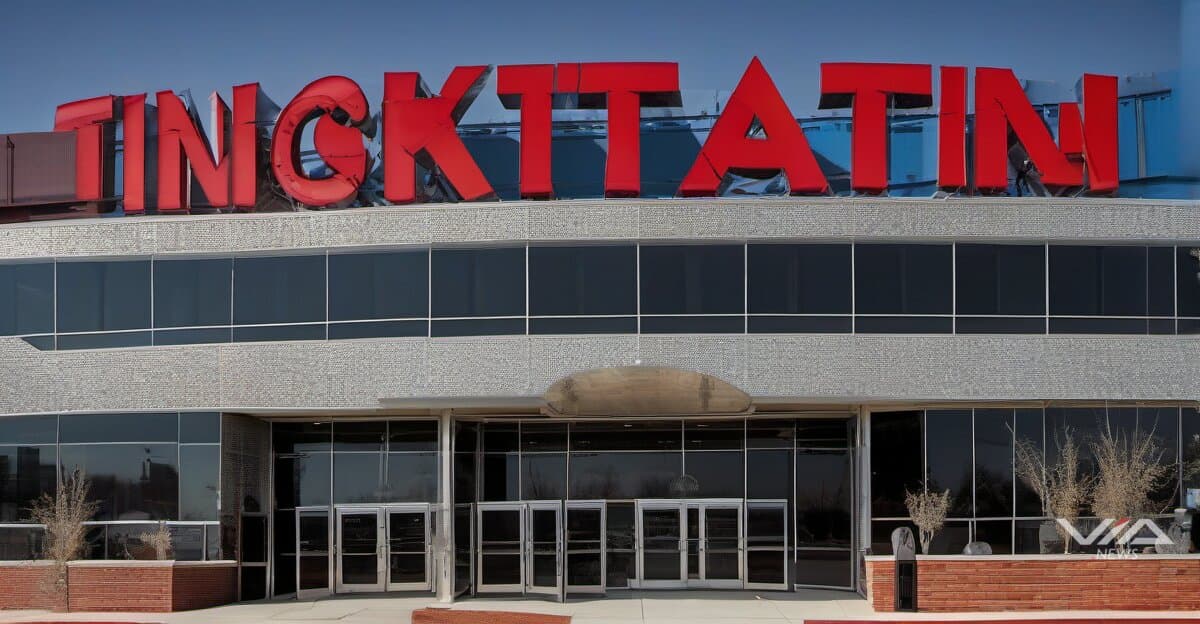
Image generated by AI for illustrative purposes. Not actual footage or photography from the reported events.

US antitrust regulators have assigned a 70% probability to forced breakup of Live Nation Entertainment, targeting Ticketmaster's estimated 70-80% control of primary ticket sales at major venues. The regulatory threat would dismantle the vertically integrated structure created in the 2010 merger, separating the world's largest concert promoter from its ticketing platform in what would rank among the most significant corporate breakups since AT&T's 1982 divestiture.

Forced divestiture would eliminate the exclusive venue contracts and integrated revenue model that drove Live Nation's $20 billion market capitalization across 40+ countries. The company operates differently than European counterparts, where fragmented markets and stronger consumer protection laws have prevented comparable ticketing monopolies. UK venues typically work with multiple ticketing providers, while Germany's CTS Eventim maintains market leadership without Live Nation's vertical integration.

Authorities could mandate operational restrictions short of full breakup, including bans on exclusive contracts, service fee caps, or required interoperability with competitors. Each scenario would compress margins in high-fee ticketing that generates disproportionate profits compared to lower-margin concert promotion. The regulatory push gained bipartisan political support after high-profile system failures exposed consumer harm from limited alternatives.

Investors face binary outcomes over an 18-36 month enforcement timeline. Either Live Nation preserves integration through legal challenges, or restructuring creates two diminished entities. Separated Ticketmaster would lose venue relationships and exclusive access, while Live Nation's promotion business would face higher costs and reduced data advantages. Share price volatility will intensify as milestones approach, with restructuring costs and stranded assets adding downside risk beyond core business separation.


Sources:
1 Yahoo Finance, "BC-Most Active Stocks" (March 09, 2026)
2 Yahoo Finance, "Traders Left With ‘Unscratchable Itch’ for Anthropic Exposure" (February 19, 2026)
3 Globe Newswire, "Mobile-First Shopping Fuels Global Online Ticketing Market Towards $105.17 Billion by 2031 - Real-Ti" (January 20, 2026)

In this story · Knowledge Files

What we know · the intelligence behind this page
Live from the substrate
What we're seeing
AI Capital Keeps Flowing as Enterprise Adoption and Government Contracts Validate the Bet
A late-August surge of nine-figure funding rounds (Socure, Stability AI, Generalist AI, Gatik, Regent Craft, Emerald AI, Owner) shows venture capital still pouring into AI infrastructure, identity/fintech, and autonomy, even as public-market sentiment stays jumpy — Palantir's stock fell 6% the same week it landed the Army's TITAN contract. UiPath's raised guidance and strong Q2 results, alongside efficiency breakthroughs like Multiverse Computing's model compression, point to real enterprise monetization catching up to the funding hype.
Our read on the data ›
Signals we're tracking
EPKINLY Regulatory-Clinical Success Cascade
High probability of expanded label indications, additional combination approvals, and competitive positioning strength in follicular lymphoma market. Predicts positive commercial uptake and potential accelerated review for related indications.
Patterns we're watching ›
Where sources disagree
JPMorgan Chase & Co.
Both facts record the same attribute (net_income) for JPMorgan Chase & Co. in the identical fiscal period (Q1 2026) and observation date (2026-03-31), but report values that differ by approximately 1 billion times: $16,494,000,000 vs $16.49. These cannot both be true simultaneously. The discrepancy suggests either a unit mismatch (e.g., one is total net income, the other earnings per share mislabeled as net_income), a decimal point error, or data entry corruption. For the same entity, attribute, and time period, only one value can be correct.
We flag conflicts openly ›
Recently verified
Checked against the original source
4,981
facts traced to their source — and we flag the ones that don't hold up.
101 entities tracked4,981 facts checked against source5,280 source documents archived
Query this data → isubstrate.com