
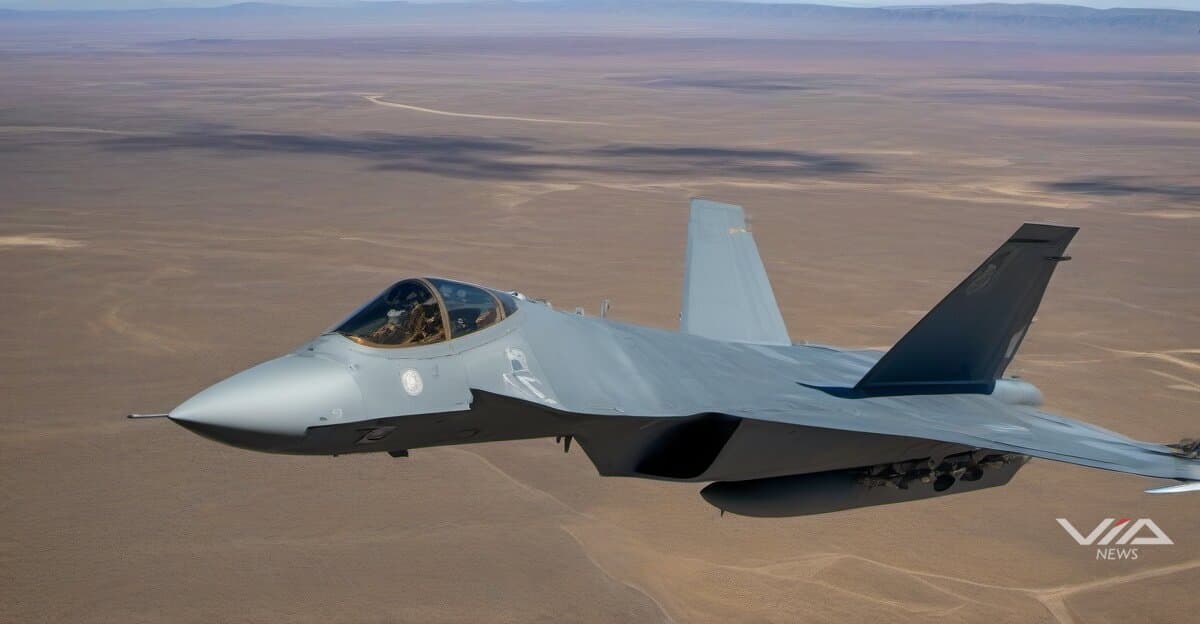
When the United States Department of Defense published its $66 billion IT budget for fiscal year 2026 — a $1.8 billion increase on the prior year — it did more than signal American intent. It set a competitive benchmark that defense industries from Beijing to Brussels are now scrambling to meet.
The budget, the largest military technology allocation in Pentagon history, has accelerated a transformation already underway in the global defense industry: artificial intelligence is no longer an experimental adjunct to military capability. It is becoming the foundation on which contracts are won, platforms are built, and wars may one day be fought.
American Contractors Move First
For U.S. defense firms, the procurement shift is already generating tangible results. Curtiss-Wright recently secured a contract from Boeing for the C-17 Mission Computer, delivering a Modular Open Systems Approach (MOSA)-aligned solution that satisfies the military's demand for upgradeable, AI-ready avionics architecture. MOSA compliance — a design philosophy that allows hardware and software components to be swapped without full system replacement — has become a baseline requirement for mission-critical contracts, reflecting a broader Pentagon push toward interoperable, future-proof platforms.
The most consequential development came on February 17, 2026, when HII, the United States' largest military shipbuilder, signed a memorandum of understanding with Path Robotics to explore Physical AI in naval production. Path Robotics, which has raised over $300 million since its founding, specialises in autonomous welding systems that use real-time computer vision and adaptive AI to handle complex, variable manufacturing tasks. The partnership targets one of the most persistent bottlenecks in naval construction: the shortage of skilled welders capable of meeting military-grade precision standards at scale.
The significance extends well beyond American shores. Naval production capacity is a strategic variable in any great-power conflict scenario, and the introduction of autonomous manufacturing AI into shipbuilding represents a potential step-change in how quickly — and at what cost — a nation can expand its fleet.
A Market Expanding Tenfold
The commercial logic driving these investments is formidable. The global AI-in-defense and aerospace market is projected to grow from $4.2 billion in 2026 to $42 billion within the coming years — a tenfold increase. The AI-in-military segment alone is valued at $22.41 billion in 2026 and is forecast to reach $101 billion by 2032, representing a compound annual growth rate that dwarfs most other sectors of the global economy.
Howmet Aerospace, a supplier of advanced engineered components for both commercial and military aviation, offered a preview of what AI-supported operational efficiency can deliver: 15% year-over-year revenue growth in Q4 2025, alongside record adjusted EBITDA. Analysts note that companies with streamlined, data-driven production processes are structurally better positioned to scale without proportional cost increases — a compounding advantage in an industry where margins are tightly managed.
Rivals and Allies Are Watching — and Responding
The United States is not acting in a vacuum. China's People's Liberation Army has made AI-enabled autonomous systems a centrepiece of its Military-Civil Fusion strategy, with state-backed firms including Huawei, CETC, and DJI's military spin-offs integrating AI into everything from drone swarms to submarine detection. Beijing's defence technology budget, while less transparent, is estimated by analysts at IISS and RAND to be closing the gap with American spending at a faster rate than at any point since the Cold War.
In Europe, the response has been more fragmented but increasingly urgent. France and Germany are jointly developing the Future Combat Air System (FCAS), a next-generation platform explicitly designed around AI autonomy and networked warfare. The United Kingdom, post-Brexit, is pursuing its own Tempest programme through BAE Systems, Rolls-Royce, and Leonardo UK, with AI decision-support and autonomous teaming capabilities at its core. Both programmes face the persistent challenge of European defence: fragmented procurement, divergent national standards, and budgets that — despite post-Ukraine increases — remain modest by American comparison.
India, the world's largest arms importer, is simultaneously attempting to accelerate domestic defence manufacturing through its 'Aatmanirbhar Bharat' (Self-Reliant India) initiative, with state firm HAL and private players like Tata Advanced Systems investing in AI-integrated platforms. New Delhi's challenge is to reduce its historic dependence on Russian and Western systems while building indigenous AI capability fast enough to remain relevant in a rapidly shifting threat environment.
The Autonomy Threshold
Underlying the market data is a strategic question that no government has fully answered: where does AI-assisted warfare end and autonomous lethal decision-making begin? The Pentagon's own guidelines restrict fully autonomous weapons from making kill decisions without human authorisation, but the line is increasingly difficult to enforce as AI systems operate at speeds and scales that exceed human reaction times.
International efforts to establish binding norms — through the United Nations Convention on Certain Conventional Weapons (CCW) — have stalled, with the United States, Russia, and China each resistant to constraints that might limit their technological edge. Human rights organisations including Human Rights Watch and the Campaign to Stop Killer Robots warn that the combination of accelerating investment and absent regulation is creating conditions for an autonomous weapons arms race with no agreed rules of engagement.
Industrial Transformation, Global Stakes
What began as a procurement line item in the Pentagon's annual budget is, in practice, a restructuring of the global defence industrial base. Contractors that can demonstrate AI capability — in autonomous systems, adaptive manufacturing, or intelligent mission computing — are winning the contracts that will define military balance of power through the 2030s.
For allied nations dependent on American platforms and interoperability standards, the shift creates both opportunity and pressure: integrate with U.S. AI architecture or risk strategic obsolescence. For rivals, it raises the stakes of a technology competition that is no longer theoretical. And for the international community, it poses a governance challenge that budgets alone cannot resolve.
The $66 billion figure will be surpassed next year. The question is whether the rules governing how that technology is used will ever catch up.
Sources:
1 Yahoo Finance, "Huntington Ingalls Benefits From Strong Naval Shipbuilding Demand" (March 13, 2026)
2 Yahoo Finance, "Europe’s Defense IPO Party Gets a New Guest" (March 09, 2026)
3 Globe Newswire, "Willis partners with Circle Asia to launch Asia’s first insurance facility for collectors and galler" (March 23, 2026)
4 Yahoo Finance, "AstraZeneca Deepens China Roots With Shanghai Cell Therapy Manufacturing Push" (March 23, 2026)
5 Yahoo Finance, "Why The Huntington Ingalls Industries (HII) Story Is Shifting As Analysts Rework Targets And Risks" (March 19, 2026)