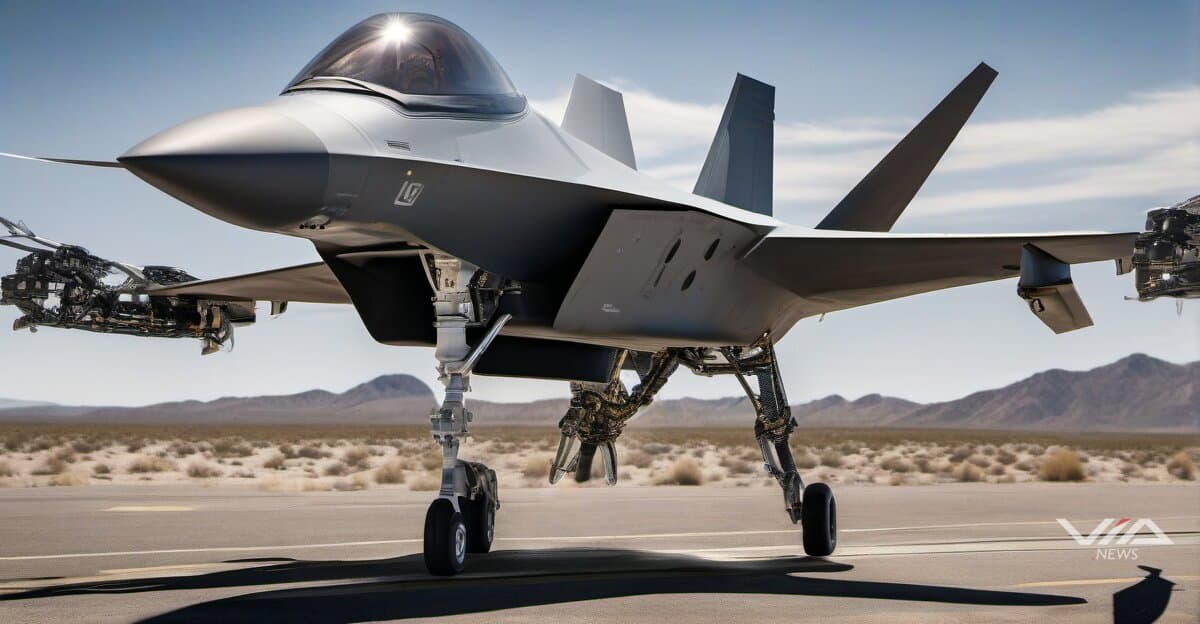
The U.S. Air Force awarded GE Aerospace the GE426 engine contract for its Autonomous Collaborative Platform (ACP) program, sending shares up 7.6% in a single week.1
The ACP program develops autonomous combat drones — "loyal wingmen" — designed to fly alongside crewed fighters. The contract covers propulsion hardware and digital autonomous systems integration.1
The award lands against a volatile global backdrop. U.S. and Israeli forces struck Iran in February 2026.1 Tehran responded by closing the Strait of Hormuz, through which roughly 20% of global oil trade passes. Energy importers across Asia, Europe, and East Africa are absorbing supply disruptions. That pressure has sharpened Pentagon urgency for unmanned platforms that eliminate pilot risk in denied airspace.
Washington is not moving alone. Australia's MQ-28A Ghost Bat, Britain's GCAP loyal wingman concept, and China's Wing Loong III reflect the same strategic logic: autonomous drones extend air power without risking pilots. The GE426 contract signals the U.S. is accelerating to match rivals and allies alike.
GE Aerospace already supplies engines to Kratos Defense, a leading U.S. autonomous drone developer.1 The GE426 win deepens that supply chain position as DoD unmanned spending expands.
Defense contractors with autonomous systems exposure have outperformed broader markets since the Iran escalation began.1 GE's weekly gain reflects a pattern visible across allied defense industries: geopolitical shocks that validate specific platform demand translate rapidly into contractor valuations.
The ACP contract structure — blending propulsion hardware with digital development work — mirrors approaches by BAE Systems on Britain's Tempest program and Airbus on European drone initiatives. Commercial aerospace firms are now embedded at the core of next-generation air power architecture, not merely supplying components.
The program has moved beyond concept into operational development. Whether ACP funding expands will depend partly on how the Iran conflict evolves. But the GE426 award confirms autonomous combat aviation is a procurement priority across Western alliances — not a future aspiration.