
There is a moment in any technological arms race when the prototype becomes the product. In early 2026, the United States defense industrial base reached that moment with physical AI and robotics — and the reverberations will be felt from the shipyards of the Atlantic coast to the defense ministries of Beijing, Brussels, and beyond.
The most telling signal came from Huntington Ingalls Industries (HII), the largest military shipbuilder in the United States, which signed a memorandum of understanding with autonomous welding specialist Path Robotics to deploy AI-driven robotic welding systems directly into naval vessel construction. This is not a laboratory trial. It is a structural commitment to reengineering how warships — the capital assets of maritime power projection — are physically assembled.
The significance is hard to overstate. Naval shipbuilding is one of the most labor-intensive, skills-dependent manufacturing sectors in existence. Countries from the United Kingdom to South Korea to Japan have grappled for decades with the challenge of maintaining sufficient numbers of qualified welders and tradespeople to sustain warship production. HII's bet on autonomous welding directly addresses a vulnerability that is not unique to America: the global defense industrial base is aging, and skilled labor pipelines are thinning across NATO allies and Indo-Pacific partners alike.
Path Robotics' technology is notable for a reason that extends well beyond shipyards: its AI-driven computer vision does not rely on pre-programmed movement paths. The system perceives its environment and adapts in real time — a capability that mirrors what military planners demand of autonomous systems in the field. That the company simultaneously closed a funding round exceeding $300 million reflects a broader investor conviction: defense and heavy industry contracts, particularly in an era of sustained great-power competition, represent some of the most durable revenue opportunities in the global economy.
For context, China's defense industry has been integrating robotics and automation into shipbuilding at scale for several years. Chinese state-owned shipbuilders, including those producing vessels for the People's Liberation Army Navy (PLAN), have deployed robotic welding and automated assembly lines partly to compensate for similar skilled-labor constraints — and partly to achieve the production velocity that has allowed China to launch naval tonnage at a rate that has alarmed Western defense planners. The HII-Path Robotics partnership can be read, at least in part, as a direct industrial-base response to that challenge.
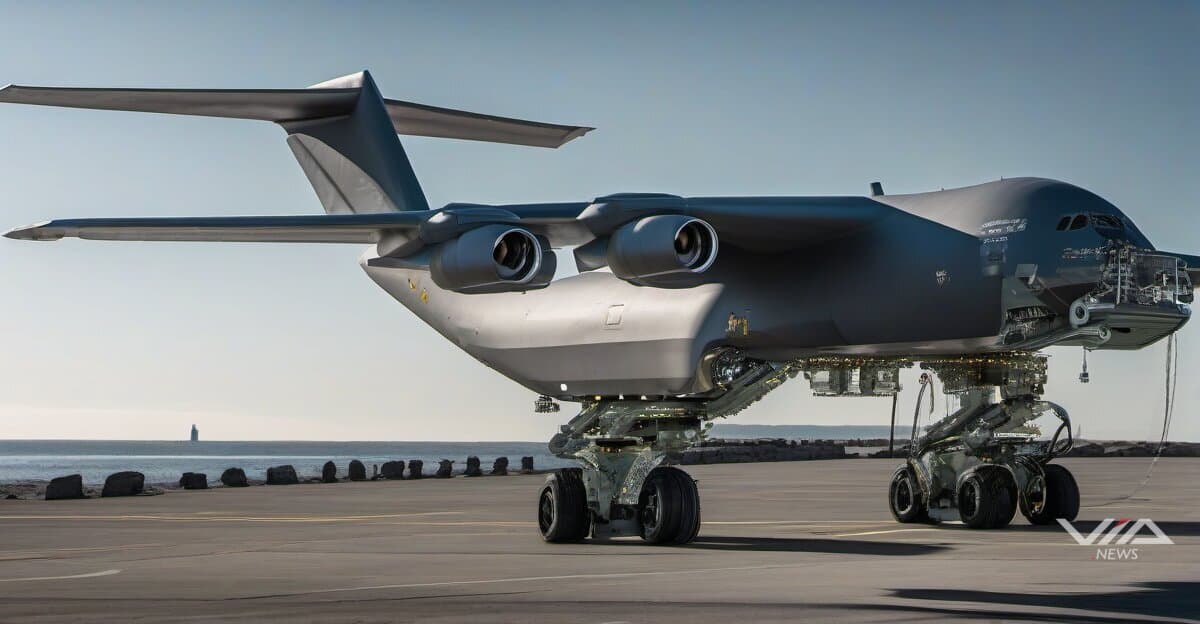
On the avionics and mission computing side, Curtiss-Wright secured a contract with Boeing to supply next-generation mission computers for the C-17 Globemaster III, the backbone of U.S. strategic airlift and a platform operated by allied air forces in Australia, Canada, India, Qatar, the United Arab Emirates, and the United Kingdom. Mission computers are the cognitive architecture of modern military aircraft — they process sensor fusion, manage avionics integration, and increasingly serve as the platform layer onto which AI-enabled decision support is loaded. Upgrading the C-17's mission computer positions a platform already present in allied inventories to absorb new AI capabilities as they are developed and certified — effectively extending the reach of this industrial shift into partner nations' air forces.
Viewed individually, these deals are significant. Viewed together, they describe something larger: a structural transformation of the defense industrial base in which physical AI is no longer an add-on capability but a foundational input — embedded in how weapons systems are designed, manufactured, and sustained over their operational lives.
The geopolitical implications are considerable. Defense economists and strategists have long argued that the country which wins the next major conflict will be the one that can manufacture and replace materiel most rapidly. Ukraine's war with Russia has reinforced that lesson viscerally: production capacity, not merely existing inventory, determines endurance. Autonomous manufacturing systems that can operate continuously, adapt to design variations, and reduce dependence on scarce skilled labor directly address what has become one of the Western alliance's acknowledged vulnerabilities.
European NATO members are paying attention. Several allied governments — including Germany, France, and the United Kingdom — have launched or expanded programs to modernize their defense industrial bases, with robotics and automation featuring prominently. Germany's push to revive domestic arms production following years of post-Cold War underfunding includes investments in automated manufacturing infrastructure. The United Kingdom's Defence Equipment & Support agency has flagged autonomous manufacturing as a priority within its industrial strategy.
The FY2026-2027 U.S. budget cycle is expected to accelerate the trend further, with analysts forecasting significant contract awards in autonomous manufacturing, robotic assembly, and AI-enabled platform computing. For American and allied defense contractors, companies that can demonstrate validated, production-proven robotic capabilities will be positioned to capture a disproportionate share of that spending. For rivals, the message is equally clear: the industrial foundation of Western military power is being rebuilt on AI — and the construction has already begun.