
Walk through the financial districts of London, Singapore, or Frankfurt and the conversation is increasingly the same: how exposed are we to the American AI trade, and what happens when the music stops?
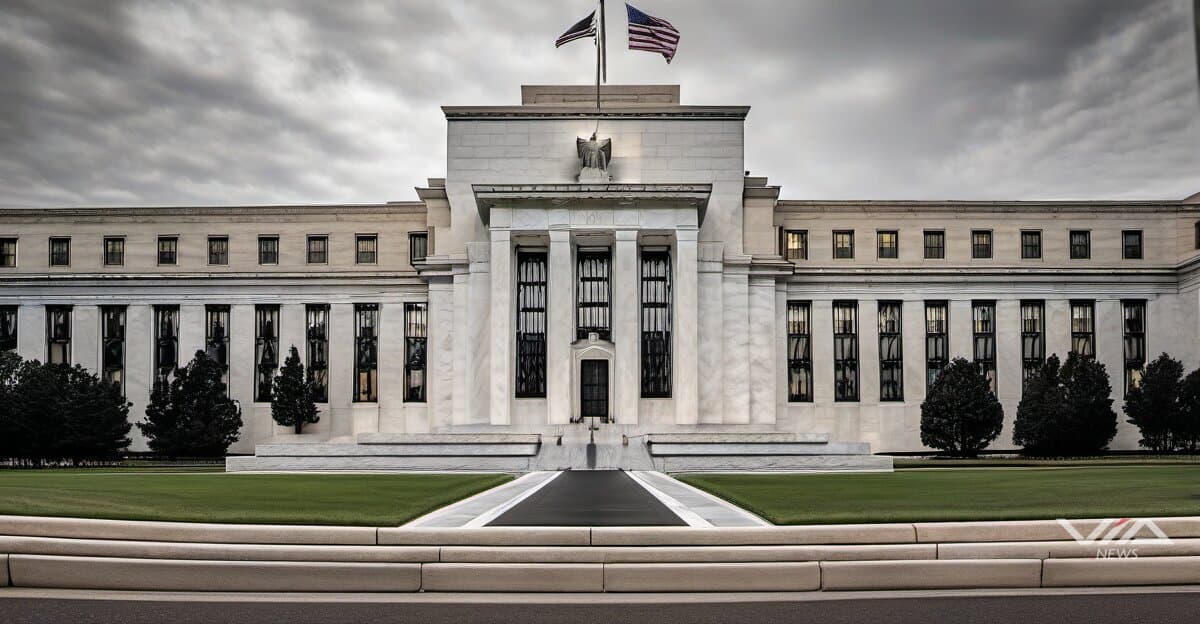
The United States Federal Reserve held interest rates steady at its most recent meeting, with Governor Philip Jefferson describing current rates as sitting in a "neutral range" — central bank language for: we are watching and waiting. The principal reason for that caution is also the principal engine of American growth right now: a torrent of capital flooding into artificial intelligence infrastructure, cloud computing, and semiconductor hardware that is unlike anything seen since the dot-com era.
A Two-Speed Economy With Global Consequences
Former Fed Governor Lael Brainard put the paradox plainly: "The economy at the top level is strong, but again, it's being driven by this really important set of investments in AI. The rest of the economy under the hood is really stuck."
That tension — between a gleaming AI-powered surface and a more troubled interior — is not unique to the United States. Economists in Germany, Japan, and the United Kingdom have observed similar two-track dynamics in their own economies, where technology-adjacent firms and financial centres have recovered strongly from the post-pandemic slowdown while manufacturing, retail, and lower-income households continue to struggle. The difference is that the United States is home to the companies driving the AI investment cycle, which means the distortion in American data is far more dramatic.
Second-quarter U.S. GDP growth registered at a robust 3.8%, with a similarly strong third quarter anticipated. Strip out AI-linked capital expenditure, however, and independent analysts warn the picture would look considerably weaker — with inflation stubbornly near 3% for almost four years and a deepening affordability squeeze on lower-income households that echoes conditions across much of the developed world.
Capital Markets Bifurcate: The Global Investor's Dilemma
The scale of money moving into AI infrastructure is staggering by any historical measure. CoreWeave, a GPU cloud computing specialist, recently secured a $1.17 billion contract — a deal that would have dominated financial headlines in any previous technology cycle. Japan's SoftBank, one of the world's most consequential technology investors, is exploring a potential acquisition of semiconductor designer Marvell Technology in what would rank among the largest AI-adjacent hardware transactions ever recorded.
For investors from Tokyo to Riyadh to Amsterdam, these deals represent both an opportunity and a dilemma. The returns on AI-exposed assets have been extraordinary, drawing sovereign wealth funds, pension managers, and private equity firms into positions that would have seemed reckless even five years ago. Yet the concentration of those returns — in a handful of American companies, in the corridors of Silicon Valley and a few global financial hubs — is generating a statistical illusion. Aggregate wealth figures look healthier than lived experience in most countries suggests they should.
The European Central Bank and the Bank of England have both flagged concerns about over-reliance on U.S. technology valuations as a driver of cross-border portfolio flows. A sharp correction in American AI stocks would reverberate across pension funds in the Netherlands, superannuation funds in Australia, and insurance portfolios in Germany with a speed and severity that regulators acknowledge they have not fully stress-tested.
The Spectre of the Dot-Com Bubble
Gita Gopinath, First Deputy Managing Director of the International Monetary Fund, has offered the starkest warning yet from an institution not known for hyperbole. An equity market correction of the magnitude witnessed during the dot-com collapse, she cautioned, could erase $20 trillion in U.S. household wealth — a figure large enough to trigger a global recession more severe than most central banks are currently modelling for.
The parallel is instructive but imperfect. Unlike the dot-com era, today's AI investment cycle is underpinned by real revenues, real infrastructure deployment, and genuine productivity gains in sectors from healthcare to logistics. The question is not whether AI is transformative — most serious economists agree that it is — but whether current valuations have priced in a pace of transformation that even optimistic scenarios may not deliver within the timeframes markets are implicitly assuming.
Policy Uncertainty Compounds the Risk
The Federal Reserve's calculus is further complicated by the domestic policy environment. Tariffs introduced by the Trump administration have injected fresh uncertainty into supply chains with global reach, affecting manufacturers in Mexico, Vietnam, and South Korea who supply components to the very technology firms driving the AI boom. Meanwhile, ongoing Supreme Court review of U.S. regulatory frameworks is adding a layer of legal unpredictability that foreign investors and trading partners find difficult to price.
With Kevin Warsh widely discussed as a potential future Federal Reserve chair, markets are already gaming out a possible shift in institutional tone. Former Atlanta Fed President Dennis Lockhart suggested that any successor would likely follow the measured, data-dependent approach the current Fed committee has established — but the mere speculation about leadership transition is enough to introduce volatility in currency markets from the Brazilian real to the South Korean won.
What the World Is Watching
For the rest of the world, the American AI investment boom is simultaneously a source of optimism and anxiety. It is driving innovation that will eventually diffuse across borders, raising productivity in ways that could benefit consumers and businesses globally. But it is also concentrating near-term gains in ways that widen the gap between AI-integrated economies and those left behind — and creating systemic financial exposures that no single central bank, including the Federal Reserve, can fully contain on its own.
The harder question, the one being asked quietly in finance ministries and central banks from Seoul to São Paulo, is this: if the AI investment cycle turns, how much of the world's apparent economic resilience turns with it?