
Sunday, September 20, 2026

AI Replacing Teachers Will Have Dire Consequences

Elham P.Mohammadi

June 29, 2020

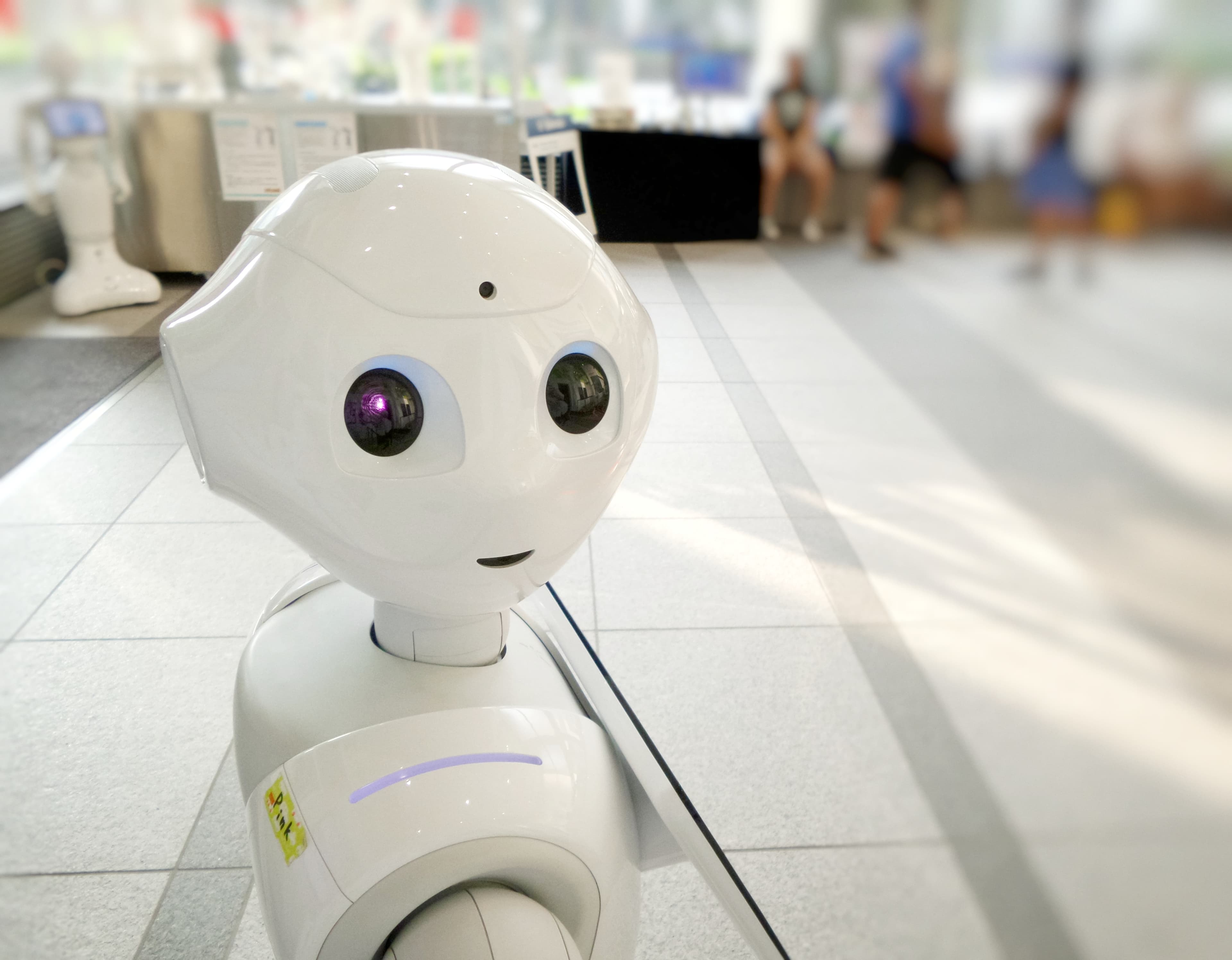
Photo by Franck V. on Unsplash

As technology is taking giant leaps and bounds, artificial intelligence is sweeping aside old notions of education and human tutors are expected to be sidelined soon.

There are many advocates of replacing teachers with AI machines, but Jesper Tække, a Denmark-based university professor, argues that handing over the job of instilling knowledge into young minds to robots will have adverse implications.

Jesper, who has a Ph.D. in media sociography from the IT University of Copenhagen, works at the Centre for Internet Research at the School of Communication and Culture of Aarhus University.

Jesper Tække, an associate professor (Ph.D.) at Aarhus University, Denmark (Photo credit: Aarhus University)

In an interview with Via News, he said the world is witnessing a huge rise in using big data and profiling students.

"Students are being treated like trivial machines," the researcher said, adding that AI should be used only as an assistant and a learning tool.

"AI can help teachers but it is now being used to, for example, read face expressions to figure out if the student is having the 'right' attitude toward the school system and the teacher. It is really scary."

He was referring to the fact that facial recognition technology is being used in some schools in China to monitor how attentive students are in class. The use of this technology is also fast becoming a reality in US schools.

Proponents says facial recognition can enhance the learning experience and serve as a crucial crime-fighting tool, while opponents cite privacy and bias concerns.  

Read more: VR Telehealth Solutions to Boom in Post-Coronavirus World: Virtuleap’s CEO

Jesper believes it is a matter of regret that the coronavirus pandemic is being exploited by some large companies around the world to advance their agendas in the field of education.

The ultimate goal of education is to help people think critically and decide for themselves, he said, adding that a machine should not be allowed to make decisions for people.

"We really like the smart media, but we do not like to be profiled and just have artificial intelligence machines as our teachers. They can help us teach better, but we should not let them play the main role of teaching. We want a human teacher to be there with students," he said, expressing the view of like-minded academics.

https://www.youtube.com/watch?v=YyWzQXTrrZs
What we know · the intelligence behind this page
Live from the substrate
What we're seeing
AI Boom Hits a Fork: Slowdown Calls Clash with Capex Confidence as Markets Get Nervous
Dario Amodei's repeated calls for a global slowdown in frontier AI development, echoed by Microsoft's new humanist AI code of conduct and FTC antitrust caution, are being publicly rejected by Nvidia and Meta leadership even as hyperscaler spending draws fresh skeptical scrutiny (Wachter's analysis, Burry-style overbuilding worries) and weak guidance from Adobe and a post-slowdown-comment selloff in GE Vernova signal investor jitters. Meanwhile wealth and security effects of the AI race keep compounding — Zhang Yiming's fortune surging on AI-driven ByteDance value, a Chinese hacking firm weaponizing AI against stolen government secrets, and low-quality AI-generated products (an AI sitcom, a spam-flooding agent platform) fueling backlash even as adoption races ahead.
Our read on the data ›
Signals we're tracking
EPKINLY Regulatory-Clinical Success Cascade
High probability of expanded label indications, additional combination approvals, and competitive positioning strength in follicular lymphoma market. Predicts positive commercial uptake and potential accelerated review for related indications.
Patterns we're watching ›
Where sources disagree
Berkshire Hathaway
Both facts report Berkshire Hathaway's cash position on 2026-01-01 with identical observation timestamps, but claim vastly different values: 380 billion USD vs 400 USD. These cannot both be true for the same entity at the same point in time. The magnitude of the discrepancy (a factor of ~10^9) rules out rounding, unit conversion, or methodological differences.
We flag conflicts openly ›
Recently verified
Checked against the original source
4,982
facts traced to their source — and we flag the ones that don't hold up.
101 entities tracked4,982 facts checked against source5,299 source documents archived
Query this data → isubstrate.com