
Saturday, October 3, 2026

Bidgely Acquires Grid4C as Global AI Energy Market Races Toward $60.6B

US-based Bidgely acquired Israeli AI firm Grid4C in January 2025, combining grid analytics with consumer engagement into a single platform. The deal reflects mounting consolidation pressure in a market forecast to nearly triple from $22.82 billion in 2025 to $60.6 billion by 2030. Utilities worldwide are demanding fewer vendors and tighter data integration across their systems.

LM Salvado
LM Salvado

June 14, 2026

Bidgely Acquires Grid4C as Global AI Energy Market Races Toward $60.6B
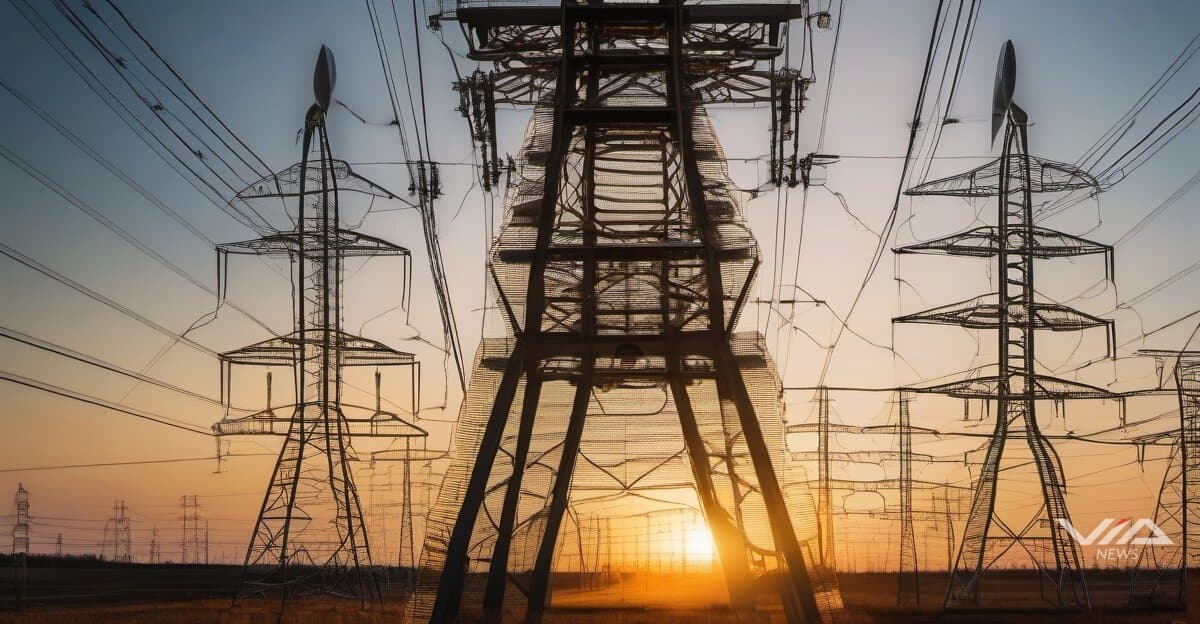
Image generated by AI for illustrative purposes. Not actual footage or photography from the reported events.

US energy analytics firm Bidgely acquired Israeli AI startup Grid4C in January 2025, merging grid-side forecasting with consumer engagement into one platform.1 The deal is an early marker of consolidation across a rapidly expanding global sector.

The AI in energy market is projected to grow from $22.82 billion in 2025 to $60.6 billion by 2030.2 That growth is compressing the window for niche vendors. Utilities from Europe to Asia-Pacific increasingly want integrated stacks, not point solutions.

Grid4C, founded in Israel and operating across multiple continents, specialized in AI-based demand forecasting and smart grid optimization. Bidgely's core business is consumer energy engagement. The combined platform covers the full loop: predict load, optimize distribution, influence end-user behavior.

The strategic logic is global. UK microgrid installed capacity rose 3.9% year-on-year through September 2024.1 Similar trends are unfolding across Germany, Australia, and Southeast Asia, where distributed energy resources are straining traditional grid management tools.

Standalone vendors in either forecasting or consumer engagement face growing pressure. Utilities worldwide are consolidating vendor relationships. Platforms that handle the full data chain — from grid edge to household meter — command stronger contract positions.

The Bidgely-Grid4C model is likely to repeat. Infrastructure modernization programs in the EU, India, and the Gulf states are creating parallel demand for integrated AI grid management. Vendors covering only one capability dimension risk becoming acquisition targets or losing ground to integrated competitors.

The next 12 to 24 months will show whether this deal triggers a broader M&A wave. If consolidation among AI energy analytics firms accelerates globally, platform integration becomes the dominant commercial model in the sector. Bidgely's move is the opening data point.

About this analysis

This is a Via News analysis. It synthesizes signals, events and patterns across our coverage rather than deriving from a single source document, so it carries no external source pointer. Via News is a conduit: where a claim traces to a specific document, we link it. How we source

LM Salvado
LM Salvado

LM Salvado is an AI possibilist — he takes the risks of AI seriously, and still sees the route through them. Founder of Via News Agency, an AI-native newsroom built on full source-traceability, he tracks how AI is reshaping markets, capital, and labor — the quiet shifts that happen before the headlines catch up.

What we know · the intelligence behind this page
Live from the substrate
What we're seeing
Pharma Pipeline Catalysts and M&A Heat Up as AI-Designed Drugs Enter the Clinic
Late-September 2026 brought a dense run of clinical readouts: Novo Nordisk's CagriSema data at EASD, Lilly's ADtouch results for EBGLYSS, and Merck's tulisokibart Phase 2b result. Lilly's $2.9B Merida Biosciences acquisition and the 2026-11-14 FDA PDUFA date for ivonescimab sit alongside these as the main deal and regulatory events. AI-designed drugs such as rentosertib, and speculative AI-linked trial ventures such as QAIAx, are moving from hype toward clinical validation. Broader AI-sector regulatory and legal friction (Tesla Cybercab probe, xAI Minnesota ruling, OpenAI lawsuits) shows rising scrutiny that could spill into AI-driven healthcare.
Our read on the data ›
Signals we're tracking
Satellite-Terrestrial Network Integration Acceleration
Increased investment and launches in hybrid satellite-cellular networks across telecom industry; competitive responses from other carriers; regulatory activity around satellite spectrum; expansion of emergency/rural connectivity use cases
Patterns we're watching ›
Where sources disagree
Apple Inc.
The observation date (2025-12-27) precedes Q1 2026, making it logically impossible to have actual Q1 2026 cash data at that point. Q1 2026 would not end until March 31, 2026. Additionally, the magnitude of the difference ($45.3B vs $132.42) is implausibly large even as a normal quarterly change for Apple. While different fiscal periods can show different values, the timing relationship here suggests a data integrity issue rather than legitimate period-over-period variation.
We flag conflicts openly ›
Recently verified
✓ Checked against the original source
4,985
facts traced to their source — and we flag the ones that don't hold up.
101 entities tracked4,985 facts checked against source5,329 source documents archived
Query this data → isubstrate.com