
In an era when major oil producers from Riyadh to Houston are recalibrating capital allocation under the twin pressures of energy transition politics and volatile crude markets, Canada's largest oil sands operator is taking a distinctly technical route to growth: extracting more value from what it already has.
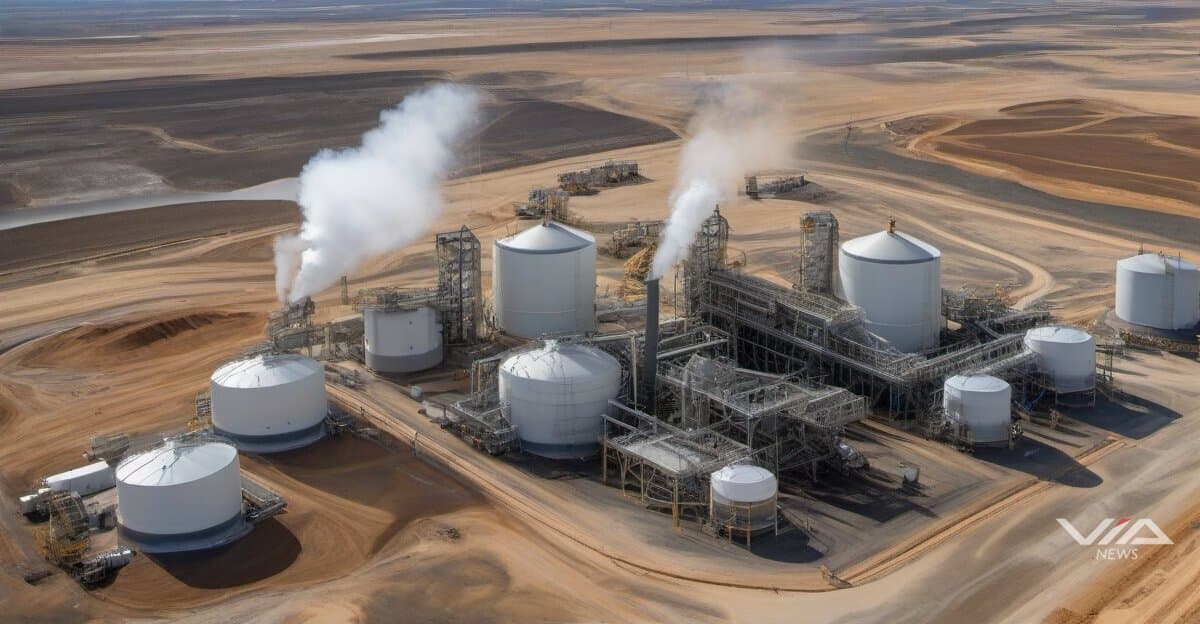
Canadian Natural Resources Limited (TSX/NYSE: CNQ) is advancing a project at its Horizon oil sands complex in northern Alberta that will recover naphtha from tailings treatment streams and reintroduce it into the upgrading circuit — lifting synthetic crude oil (SCO) output by 6,300 barrels per day by the third quarter of 2027. The initiative, known internally as the Naphtha Recovery Unit Tailings Treatment (NRUTT), is notable not just for its incremental volumes but for what it represents: a capital-light, footprint-neutral approach to production growth at a time when greenfield expansion in the oil sands carries mounting environmental and reputational costs.
Capital Efficiency as Competitive Strategy
The NRUTT project sits within CNQ's 2026 capital and operating budget of $6.425 billion CAD — one of the largest single-year spending programmes in the company's history. Nearly half of that, $2.98 billion, is directed at thermal and oil sands mining and upgrading operations. Alongside NRUTT, CNQ is drilling 252 heavy crude oil wells in the Pelican Lake and Driftwood regions, commissioning new CSS pads at Primrose, and bringing a fresh SAGD pad at Kirby online in 2027.
The aggregate production guidance for 2026 stands at 1,590–1,650 thousand BOE per day, roughly 3% above 2025 levels at the midpoint, with liquids growing faster at around 5%. The NRUTT increment layers additional SCO on top of that trajectory heading into 2027.
By contrast, many international operators — from European majors navigating activist shareholder pressure to Gulf state producers managing OPEC+ quota disciplines — are constrained in how aggressively they can pursue volume growth. CNQ's ability to extract incremental barrels from existing infrastructure, rather than through new mine development, positions it favourably on both cost and ESG metrics.
What Synthetic Crude Means in a Global Context
Canadian SCO is not a marginal grade. After upgrading, the bitumen-derived stream carries low sulphur content and API gravity comparable to conventional light sweet crudes — putting it in direct competition with Brent-linked grades and WTI on the refinery slates of US Gulf Coast and Midwest processors. Unlike Western Canadian Select (WCS), which trades at a steep discount to WTI due to its heavy, high-sulphur character, SCO commands pricing much closer to benchmark levels, improving per-barrel netbacks substantially.
For global commodity traders, the timing of the NRUTT start-up in Q3 2027 is material. The Trans Mountain Expansion pipeline — Canada's first new export conduit to tidewater in decades — is now fully operational, opening access to Pacific Rim buyers in Japan, South Korea, China, and India. This structural shift means Alberta producers are no longer solely dependent on US Midwest refiners as their marginal buyer, a dependence that historically suppressed WCS differentials. More export optionality typically compresses the WCS-WTI spread and lifts realized prices across the Canadian heavy complex.
Against that backdrop, additional SCO volumes arriving in 2027 will enter a market with meaningfully different price formation dynamics than existed even two years ago.
The Geopolitical and Regulatory Crosswinds
CNQ's own budget documentation is candid about the headwinds. US tariff threats on Canadian energy exports — periodically resurfaced in the political discourse of both major American parties — represent the most immediate near-term risk, given that the United States remains the dominant destination for Canadian crude by volume. A sustained tariff regime would partially erode the pipeline optionality gains from Trans Mountain, depending on its scope and design.
The OPEC+ dimension is equally relevant. The cartel, whose production decisions continue to set the floor for global crude pricing, faces internal fractures between members seeking quota relief and the core Gulf producers committed to price defence. Any accelerated unwinding of the approximately 5.85 million bbl/d in collective cuts currently in place would weigh on the price environment into which CNQ's 2027 barrels arrive.
Domestically, Canada's federal oil sands emissions cap — still being finalized by Ottawa — remains a structural uncertainty for producers planning multi-year capital programmes. The cap, designed to reduce upstream greenhouse gas intensity, could constrain production ceilings at Horizon and peer facilities if compliance pathways prove technically or economically prohibitive at scale.
A Bellwether for Resource Nationalism and Investment Confidence
Beyond the supply mathematics, CNQ's commitment to a major multi-year capital programme carries a signal value that extends beyond Alberta. At a moment when resource nationalism is intensifying across Latin America, Africa, and parts of Southeast Asia — with governments renegotiating terms, imposing windfall levies, or restricting foreign equity — Canada's stable, rule-of-law investment environment continues to attract long-cycle capital.
The Horizon NRUTT project, modest in barrel terms relative to global benchmarks, is illustrative of a broader thesis: that the oil sands, long criticized for their carbon intensity and capital heaviness, are maturing into a lower-growth, higher-efficiency asset class capable of generating competitive returns across a wide range of commodity price scenarios. Whether that thesis holds through the regulatory and geopolitical turbulence of the late 2020s remains the central question for investors, traders, and policymakers watching Canada's energy sector from abroad.