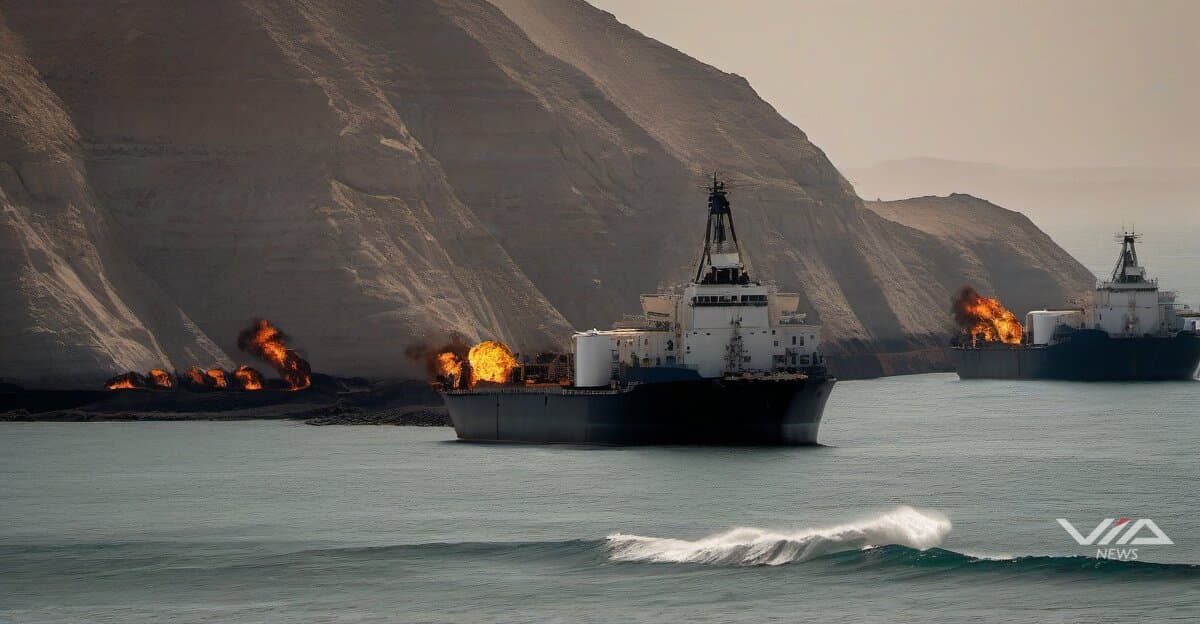
The Strait of Hormuz closed for nine weeks after a February 2026 US-Israel strike on Iran, cutting off roughly 20% of global crude supply and driving US gasoline above $4/gallon — the steepest monthly oil demand collapse in five years.
IEA emergency inventory releases cushioned but failed to contain prices. Asia absorbed the first shock: petrochemical industries across the region contracted sharply as feedstock costs surged. The contraction is now spreading into Western consumer markets.
IMF chief economist Pierre-Olivier Gourinchas warned the crisis could rival the 1970s oil shocks in scale — episodes that triggered global recession, double-digit inflation, and sustained unemployment across developed and developing economies alike.1
University of Michigan economist Justin Wolfers said cost pressures on Americans are real and persistent. His warning: "If we don't get a satisfactory resolution, then that concern remains." Expensive energy could last years without a diplomatic breakthrough.2
The Federal Reserve held rates steady under stagflationary pressure. The S&P 500 fell to yearly lows. Stagflation — rising prices alongside slowing growth — strips central banks globally of their main policy lever.
Downstream exposure runs deep. Plastics, fertilizers, and industrial chemicals all depend on oil feedstocks. As Asian output contracts, supply chain effects will reach retailers worldwide within months — hitting food costs and manufactured goods across both the Global North and South.
At $4/gallon, US drivers historically cut miles driven, defer purchases, and pull back on discretionary spending. Those behavioral shifts are classic demand destruction signals. But Hormuz uncertainty keeps the supply floor elevated — leaving commodity markets caught between a demand ceiling and a supply floor.
The resolution of the Middle East conflict is now the single variable determining whether $4/gallon is a temporary peak or a new baseline for the global economy.1,2