
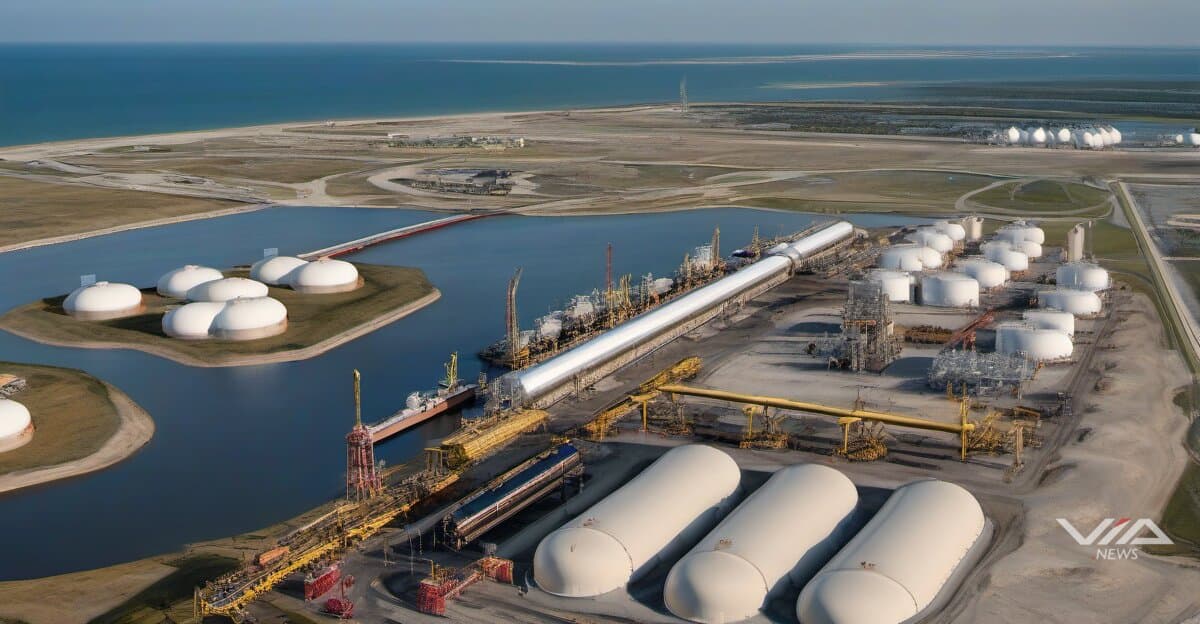
A 400,000 barrel-per-day LPG export terminal will launch on the U.S. Gulf Coast in 2028, expanding American capacity by 20% as global trade in liquefied petroleum gas reached 115 million tons in 2023.
The facility targets Asian markets where Japan, South Korea, and China collectively import over 30 million tons annually for petrochemical production. European buyers increased U.S. LPG imports 40% after 2022 energy disruptions reduced Russian supply access.
U.S. exporters captured 23% of global LPG trade in 2023, trailing Middle Eastern suppliers at 41%. American terminals compete on delivery reliability and contract flexibility rather than price, as Gulf Coast proximity to Panama Canal cuts Asian transit time by 10-14 days versus Atlantic routes.
Asian spot prices averaged $550-650 per ton in 2023-2024, maintaining $200 margins over U.S. benchmark prices at Mont Belvieu. The arbitrage supports infrastructure investment despite competition from Qatar and Saudi Arabia, where integrated refining operations produce LPG at lower costs.
U.S. LPG exports reached 1.8 million barrels daily in 2023, with propane and butane flowing primarily to Asian petrochemical facilities and European residential heating markets. Existing Gulf Coast terminals operate at 85-90% utilization during peak winter demand.
The terminal operates under long-term contracts with petrochemical companies and commodity traders, using fee-based revenue models that reduce exposure to price volatility. Midstream operators view export infrastructure as stable cash flow assets tied to sustained Permian Basin production growth.
The 2028 timeline aligns with projected demand increases in key Asian import markets. U.S. suppliers aim to reach 30% global market share by 2030, requiring continued infrastructure expansion as international LPG consumption grows with petrochemical capacity additions in China and Southeast Asia.