
Sunday, October 11, 2026

Alliance Resource Partners faces $1.8bn debt risk as US coal phase-out mirrors global energy transition

Alliance Resource Partners holds $1.8 billion in long-term debt as coal retirements accelerate across its four-state US footprint, mirroring the global shift away from coal. Renewable costs fell 90% for solar and 70% for wind since 2010 while battery storage doubled annually from 2022-2025. The MLP's distribution-dependent structure faces stranded asset risk as Illinois, Indiana, Kentucky, and West Virginia phase out coal generation.

ViaNews Editorial Team

February 21, 2026

Alliance Resource Partners faces $1.8bn debt risk as US coal phase-out mirrors global energy transition
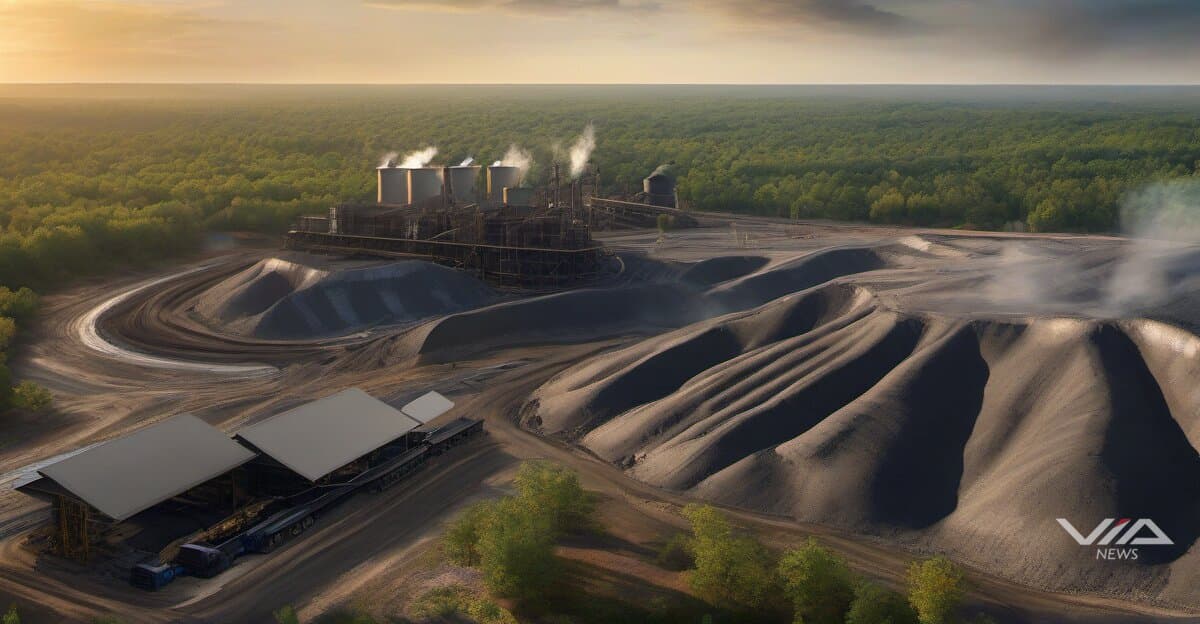
Image generated by AI for illustrative purposes. Not actual footage or photography from the reported events.

Alliance Resource Partners carries $1.8 billion in long-term debt as US coal retirements accelerate, reflecting a global energy transition where 40 countries pledged coal phase-outs at COP26. The Tulsa-based master limited partnership operates mines across Illinois, Indiana, Kentucky, and West Virginia.

Renewable costs fell 90% for solar and 70% for wind since 2010, matching cost declines seen in European and Asian markets. Battery storage deployment doubled annually from 2022-2025 in the US, enabling grid operators to replace coal baseload with renewable-plus-storage at lower costs—a pattern repeated in Australia, Germany, and the UK.

Alliance's four-state footprint concentrates risk. Illinois targets 100% clean energy by 2045, matching EU climate targets. Indiana utilities retired 40% of coal capacity since 2020. Kentucky's two largest utilities announced coal phase-outs by 2035. West Virginia lost half its coal generation since 2010.

The MLP structure requires distributable cash flow to maintain unit prices and debt covenant compliance. Alliance's current distribution of $1.40 per unit yields 8-12% depending on unit price. Distribution cuts typically trigger 30-50% unit price declines as income investors exit, creating refinancing risk if unit prices breach debt covenant thresholds.

Asset impairments would reduce distributable cash flow while accelerated mine closures trigger reclamation obligations that compete with distributions. Coal reserves book at historical cost less depletion under GAAP, delaying stranded asset recognition until impairment tests trigger writedowns.

Analysts rate technological obsolescence risk at medium likelihood with 70% confidence, reflecting uncertainty around retirement timelines. Natural gas prices remain structurally lower than 2010-2014 levels while coal plant retirements exceed utility resource plans filed three years ago.

Investors face asymmetric risk. Upside scenarios require coal demand stabilization unlikely under current grid economics globally. Downside scenarios include accelerated closures, distribution suspensions, and potential bankruptcy if debt maturities coincide with cash flow deterioration.


Sources:
1 Yahoo Finance, "Alliance Resource Partners, L.P. (ARLP) Achieves Record Production and Royalty Volumes" (March 06, 2026)
2 News Report, "Top Coal and Consumable Fuels Stocks by Year-To-Date Performance" (February 20, 2026)
3 Yahoo Finance, "Alliance Resource Partners: Record Royalties Drive Profit Surge – Quarterly Update Report" (February 05, 2026)
4 Yahoo Finance, "Alliance Resource Partners Q4 Earnings Call Highlights" (February 02, 2026)

What we know · the intelligence behind this page
Live from the substrate
What we're seeing
Agentic Enterprise Software Consolidates: Big Platforms Push Autonomy While Startups Get Absorbed
Enterprise software is shifting toward autonomous, AI-agent-driven products. SAP (Autonomous Enterprise, Joule), Meta (a new Enterprise Platform led by ex-MongoDB CEO Chirantan Desai) and UiPath (raised guidance) are pushing from the top. Meanwhile AI-security and governance startups are being acquired (Fortinet–Virtue AI, Harvey–Guardrails AI, Tiny–Oso Cloud) and seed-stage agent companies keep raising capital (Dextr, Latitude, Groq). Investors such as Norwest's Sean Jacobsohn see finance and ERP back-office software as the easier area to disrupt. Trust and enforced governance are treated as preconditions for regulated sectors like finance, and AI is judged unreliable for calculations.
Our read on the data ›
Signals we're tracking
EPKINLY Regulatory-Clinical Success Cascade
High probability of expanded label indications, additional combination approvals, and competitive positioning strength in follicular lymphoma market. Predicts positive commercial uptake and potential accelerated review for related indications.
Patterns we're watching ›
Where sources disagree
ING Group
Both facts record the same metric (shares_outstanding) for ING Group at the identical observation date (2025-12-31). FACT A states 2,902,437,688 shares; FACT B states 2,902 million shares (2,902,000,000). The difference is 437,688 shares (~0.015%). This is a genuine value conflict, though the discrepancy appears to result from FACT B rounding to the nearest million while FACT A provides the precise count.
We flag conflicts openly ›
Recently verified
✓ Checked against the original source
4,986
facts traced to their source — and we flag the ones that don't hold up.
101 entities tracked4,986 facts checked against source5,366 source documents archived
Query this data → isubstrate.com