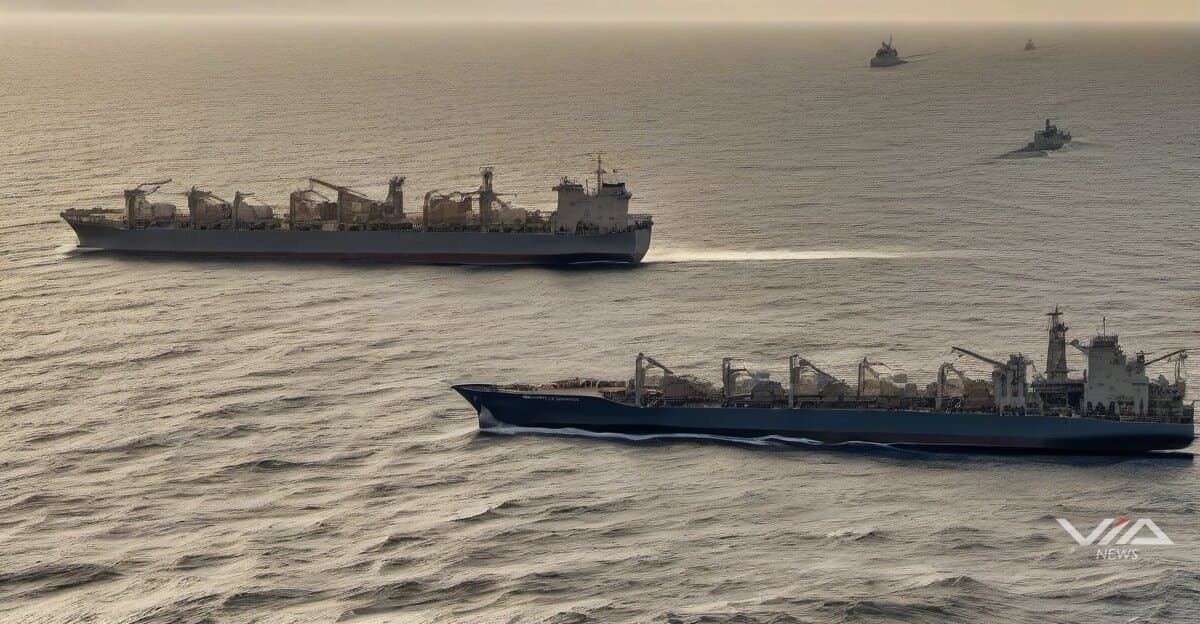
Oil prices broke through $100 per barrel as the United States ordered a blockade of the Strait of Hormuz against Iran, threatening the strategic waterway that carries roughly one-fifth of global oil supply.1 The move triggered a sharp flight to safety across international markets, with the dollar rallying as investors retreated from risk assets.2
The crisis creates immediate complications for central banks worldwide navigating conflicting policy signals. The Bank of Canada maintains restrictive rates despite mounting evidence of economic strain on Canadian consumers facing financial stress from policy uncertainty.3 US Treasury yields show mixed signals on inflation expectations, complicating the Federal Reserve's path forward as energy price shocks threaten to reignite inflation pressures.
Currency markets reflected defensive positioning globally as traders sought shelter from geopolitical uncertainty that could disrupt oil flows and trigger broader economic instability.2 The safe-haven demand for dollars puts additional pressure on emerging market currencies and commodity-dependent economies already struggling with elevated interest rates.
Equity markets showed sector divergence as defensive sentiment overrode positive corporate results. Goldman Sachs shares fell despite beating earnings estimates, illustrating how geopolitical crises can overwhelm fundamental performance.1 US indices including the Dow, S&P 500, and Nasdaq trimmed earlier losses but remained under pressure as investors weighed energy price shocks against resilient tech sector performance.
The blockade threat represents the most acute supply risk to global oil markets since previous Middle East conflicts. Any sustained closure would force buyers from Europe to Asia to seek alternative routes, adding substantial shipping costs and delays to energy supply chains spanning multiple continents. Asian economies, particularly China, Japan, and South Korea, face heightened vulnerability given their heavy reliance on Middle Eastern crude imports.
Market volatility is likely to persist as traders assess whether diplomatic channels can defuse tensions before supply disruptions materialize. The combination of spiking energy costs and currency strength creates conflicting pressures on inflation metrics that central banks worldwide use to guide policy decisions, potentially forcing coordinated responses if the crisis deepens.
Tech stocks demonstrated relative resilience compared to energy-sensitive sectors, suggesting investors still differentiate between companies with direct commodity exposure and those insulated from oil price swings. This sector divergence could widen if tensions escalate further and crude prices continue climbing, affecting global portfolio allocations.