
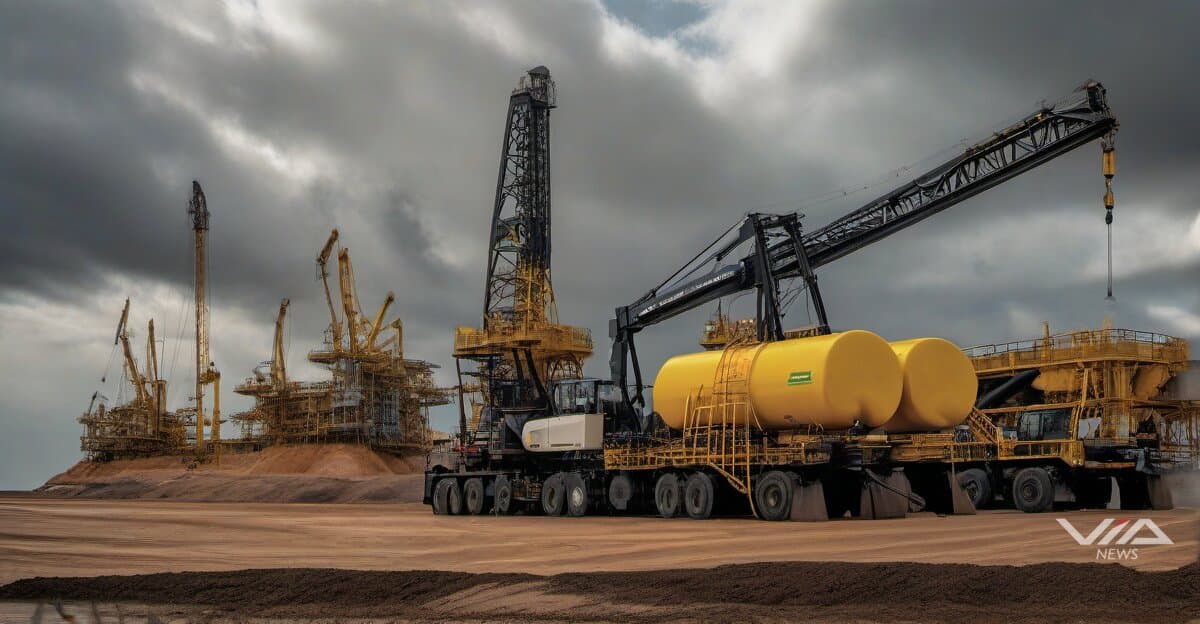
Petrobras faces $109 billion in potential stranded assets as accelerating global energy transition threatens the economics of Brazil's deepwater oil fields. The state-owned producer has committed this capital to pre-salt development through 2030, but faster-than-expected demand decline could render these high-cost barrels uncompetitive.
Deepwater breakeven costs run $40-60 per barrel, significantly above onshore alternatives in the Middle East and US shale basins. If sustained oil prices fall below these thresholds under rapid electrification scenarios, Petrobras would join international peers like Norway's Equinor and UK operators facing margin compression on offshore investments.
The vulnerability stems from project timelines. Pre-salt fields require multi-decade production to recover capital, extending well beyond 2030 into uncertain demand territory. Most investment flows into ongoing projects rather than new exploration, limiting strategic flexibility to pivot if market conditions shift.
IEA baseline scenarios project gradual oil demand decline through mid-century. But faster policy acceleration in major economies, breakthrough battery technologies, or compressed EV adoption timelines could destroy demand faster. China's rapid electrification and EU transport decarbonization targets already signal potential downside risks to consensus forecasts.
High-cost producers face margin compression first in demand-constrained markets. Petrobras cannot easily redeploy deepwater infrastructure to alternative uses, forcing continued production even at marginal profitability to recover partial capital outlays. Sunk costs in existing offshore platforms create path dependency.
The risk carries 70% confidence with low current likelihood but catastrophic potential impact. Brazil's offshore basins face operational complexity and capital intensity that create high fixed-cost structures, unlike flexible onshore operations that can shut in quickly during price downturns.
Investors holding Petrobras exposure should stress-test portfolios against faster transition pathways beyond IEA baselines. Long-dated deepwater investments made today must generate returns across decades of energy market evolution, with asset valuations vulnerable to impairment before technical field life expires.
Sources:
1 Yahoo Finance, "Assessing Baker Hughes (BKR) Valuation After New 60 Month Petrobras Service Agreement" (March 21, 2026)
2 News Report, "Brazil's Lula proposes Petrobras partnership with Mexico's Pemex on oil exploration" (March 20, 2026)
3 Yahoo Finance, "Petrobras Set to Acquire Petronas’ Stake in Two Offshore Fields" (March 19, 2026)
4 Yahoo Finance, "Ecopetrol (EC) Q4 2025 Earnings Call Transcript" (March 18, 2026)