
Sunday, November 1, 2026

SLB Commits $4B to Shareholders as Digital Pivot Delivers Margin Lift Across Global Operations

SLB will return over $4 billion to shareholders in 2026 following Q4 margin expansion driven by digital revenue across its international operations. The Houston-based oilfield services giant raised its dividend as cash flow strengthened from working capital improvements and digital transformation investments that outperformed traditional services globally.

ViaNews Editorial Team

February 27, 2026

SLB Commits $4B to Shareholders as Digital Pivot Delivers Margin Lift Across Global Operations
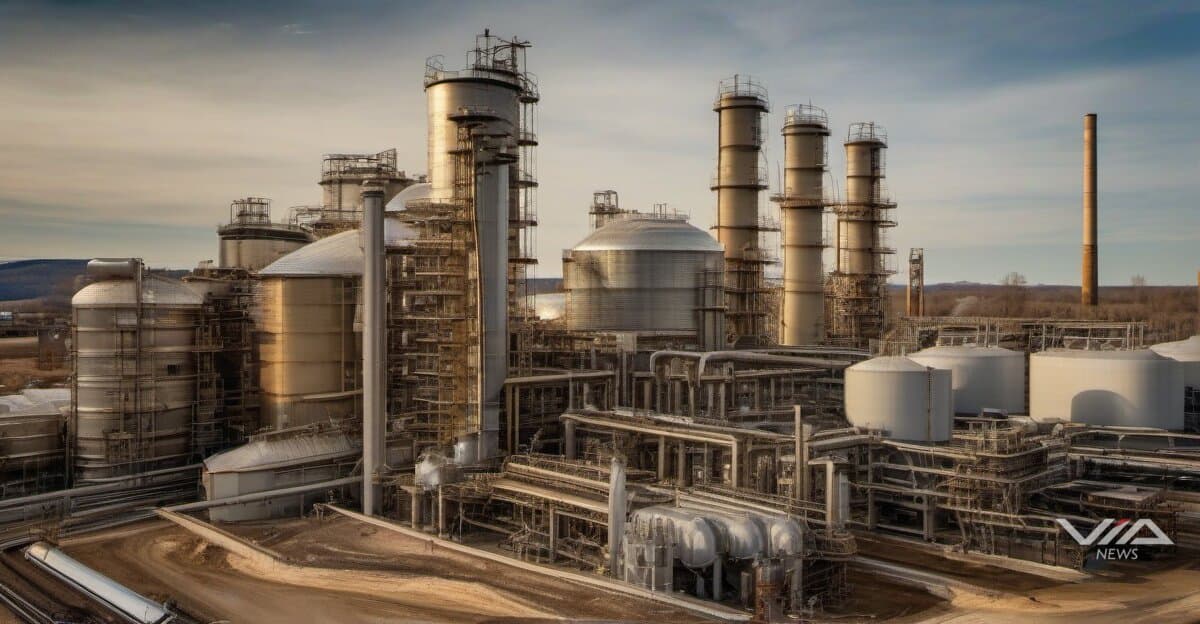
Image generated by AI for illustrative purposes. Not actual footage or photography from the reported events.

SLB will return more than $4 billion to shareholders in 2026 through dividends and buybacks, following Q4 2025 margin gains driven by digital revenue across operations spanning 120 countries. The company increased its 2026 dividend as operating cash flow rose from improved collections and lower inventory levels worldwide.

Q4 adjusted EBITDA margins widened primarily from digital segment performance. Cash flow improvement came from working capital unwinding, with the digital business unit delivering higher margin contribution than traditional oilfield services. The pattern mirrors Halliburton and Baker Hughes results, which also beat Q4 earnings expectations alongside Canadian energy producer Suncor and U.S. fracking specialist Liberty Energy.

Digital transformation investments correlate with cash generation across the global energy services sector. Companies expanding digital capabilities—from remote monitoring systems in Middle East fields to AI-driven drilling optimization in offshore Brazil—reported stronger working capital management than peers relying solely on conventional services.

The $4 billion capital return tests whether Q4 strength translates to sustained programs. Energy services firms historically scale buybacks and dividends based on quarterly performance rather than annual trends, making first-half 2026 announcements from Baker Hughes, Halliburton, and peers critical indicators of sector confidence.

Companies with digital revenue streams may demonstrate more consistent cash flow than those dependent on upstream spending cycles, which vary significantly across regions. North American shale capital discipline contrasts with expansion in Middle East national oil companies and growing offshore activity in Latin America and West Africa.

Investors should monitor dividend increases and buyback authorizations through Q1-Q2 2026 earnings. The correlation between digital investment intensity and cash flow stability will clarify as companies report first-quarter results. SLB's capital allocation plan sets a benchmark for global peers navigating the transition from equipment-heavy services to technology-enabled operations.


Sources:
1 Yahoo Finance, "EnerCom Announces Initial List of Presenting Companies for the 31st Annual Energy Investment Confere" (March 19, 2026)
2 Yahoo Finance, "Stock market today: Dow sinks 750 points, S&P 500, Nasdaq slide after Fed decision as Powell tou" (March 18, 2026)
3 Yahoo Finance, "Assessing Baker Hughes (BKR) Valuation After New 60 Month Petrobras Service Agreement" (March 21, 2026)
4 Nasdaq, "Crude Prices Surge on Reports the US is Preparing Troop Deployment in Iran" (March 20, 2026)
5 News Report, "GBP/USD Price Forecast: Declines below 1.3350 as bearish momentum builds amid stronger USD" (March 23, 2026)

What we know · the intelligence behind this page
Live from the substrate
What we're seeing
Agentic AI Goes Operational: Platform Governance, Local Silicon, and the Physical-AI Data Race
In mid-to-late October 2026, enterprise vendors (Cisco, Fortinet, ServiceNow, Intuit, Salesforce/Braze, Adobe) shipped agent governance, AI security and AI-driven customer engagement products, while a parallel hardware wave (NVIDIA RTX Spark laptops, ASUS, Apple's iPad mini, Microsoft's hybrid local/cloud Windows) pushed AI onto local devices. A third strand, physical AI (Encord, Harvest Praxis, Hesai), argues that real-world sensor data and cheaper edge chips are the next bottleneck. The common thread is the shift from AI experimentation to governed, scaled deployment, with Salesforce's Braze acquisition showing consolidation and fintech players like Intuit tying AI to trusted financial data. The facts support a broad industry theme but contain little direct finance or regulatory evidence, so the AI-finance angle is thin.
Our read on the data ›
Signals we're tracking
EPKINLY Regulatory-Clinical Success Cascade
High probability of expanded label indications, additional combination approvals, and competitive positioning strength in follicular lymphoma market. Predicts positive commercial uptake and potential accelerated review for related indications.
Patterns we're watching ›
Where sources disagree
Ford Motor Company
Both facts give cash for Ford Motor Company at the same point in time (2025-12-31; FY 2025 year-end and Q4 2025 year-end are the same date). Both are labelled USD, but the values are 23,356,000,000 and 23.356, which cannot both be true in USD. The two numbers agree once the second is read as billions (23.356 bn = 23,356,000,000), so the economic content is consistent and the conflict is a unit/scale error in the Q4 2025 record. The period is not the reason for the conflict: a Q4 and an FY figure at the same year-end date should match.
We flag conflicts openly ›
Recently verified
✓ Checked against the original source
4,995
facts traced to their source — and we flag the ones that don't hold up.
101 entities tracked4,995 facts checked against source5,532 source documents archived
Query this data → isubstrate.com