88% of enterprise AI leaders worldwide regret skipping foundational work before deploying agentic systems, according to the Agentic Enterprise Report 2026.1 The finding arrives as the infrastructure enabling mass deployment reaches maturity across global markets.
The Infrastructure Layer
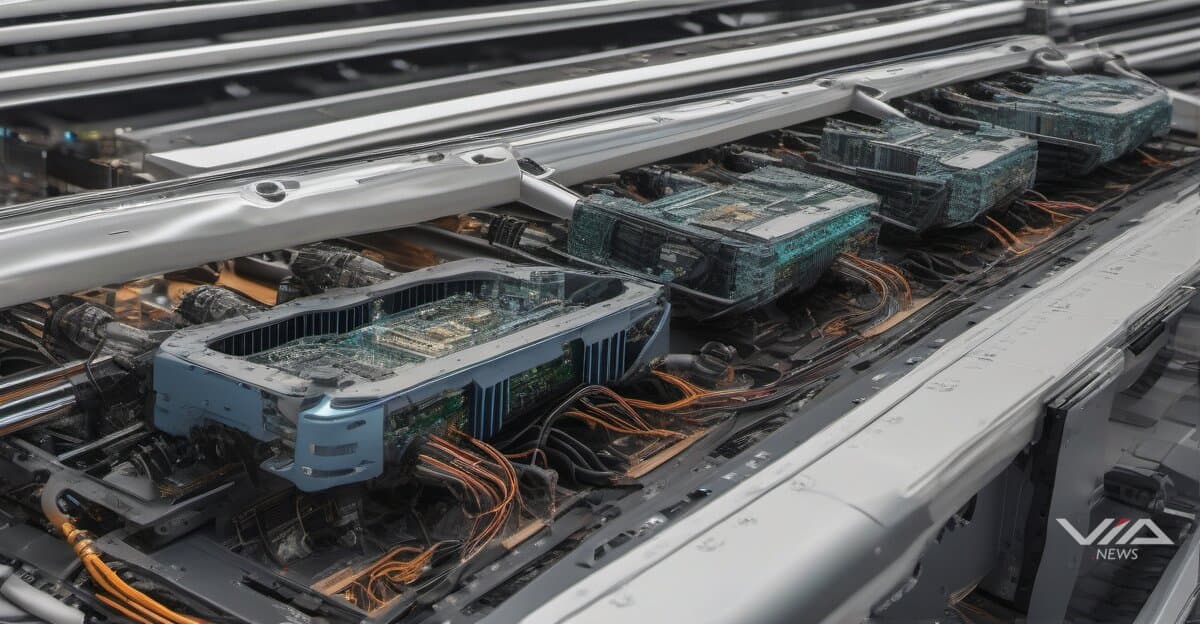
Snowflake's CoCo—its agentic control plane—provides a unified, governed environment to manage workflows across data, models, and apps.2 Global firms including Thomson Reuters and WHOOP are already deploying it to accelerate AI at scale.2 Dell and NVIDIA are driving the underlying hardware buildout. GPU-accelerated processing, exascale storage, and MI350P deployments mark 2026 as the mass-deployment phase for enterprise agentic AI—from North American cloud clusters to data centers across Europe and Asia-Pacific.
The Governance Gap
42% of enterprise AI leaders lack a clear internal owner for agentic AI initiatives.1 That vacuum creates compounding risk—particularly for multinationals navigating the EU AI Act, emerging APAC frameworks, and divergent US state-level regulations simultaneously.
"Your existing tech stack was designed for human-operated, application-centric workflows," wrote Surojit Chatterjee in MIT Technology Review. "It needs to be reconsidered when the actor is an AI agent operating at machine speed across multiple systems simultaneously."3
Chatterjee frames this as agent-based transformation (ABT)—categorically different from digital or AI transformation. ABT integrates agents into the fabric of the organization, not as a layer on top.3
Who's Getting It Right
Companies completing foundational work report measurable returns. Ema, which shifted to outcome-based metrics, reports 3x ROI within two quarters.1 Y Combinator's W26 cohort includes startups building directly into the governance gap. Salus, Moritz, and General Legal are constructing guardrails and compliance infrastructure for agentic deployments.1
Prasun Shah, cited in MIT Technology Review, argues AI agents derive value as "connective tissue"—moving across technology layers to coordinate tasks and contextualize data from multiple applications.3 That cross-stack coordination is where global enterprise competitive advantage is now built.
The Structural Shift
"Digital transformation was about moving from paper to software. AI transformation was about adding artificial intelligence to existing processes," Chatterjee writes.3 Agentic deployment is neither.
Infrastructure availability is no longer the bottleneck—from Frankfurt data centers to Singapore cloud nodes. The constraint is organizational: who owns the agents, who governs their outputs, and how workflows are redesigned for non-human actors operating at machine speed.