
Saturday, October 24, 2026

Computer Vision Systems Deploy at Scale in Global Retail and Infrastructure Markets

Supermicro and Everseen launched edge-computing platforms processing retail video locally, part of a worldwide shift from pilot programs to production AI vision systems. Microsoft and Bentley Systems now offer visual AI tools for infrastructure monitoring, while specialized vendors secure enterprise contracts across retail, manufacturing, and industrial sectors globally.

Source Trace Score7 source documents7 with a live linkVerifiability: High
Computer Vision Systems Deploy at Scale in Global Retail and Infrastructure Markets
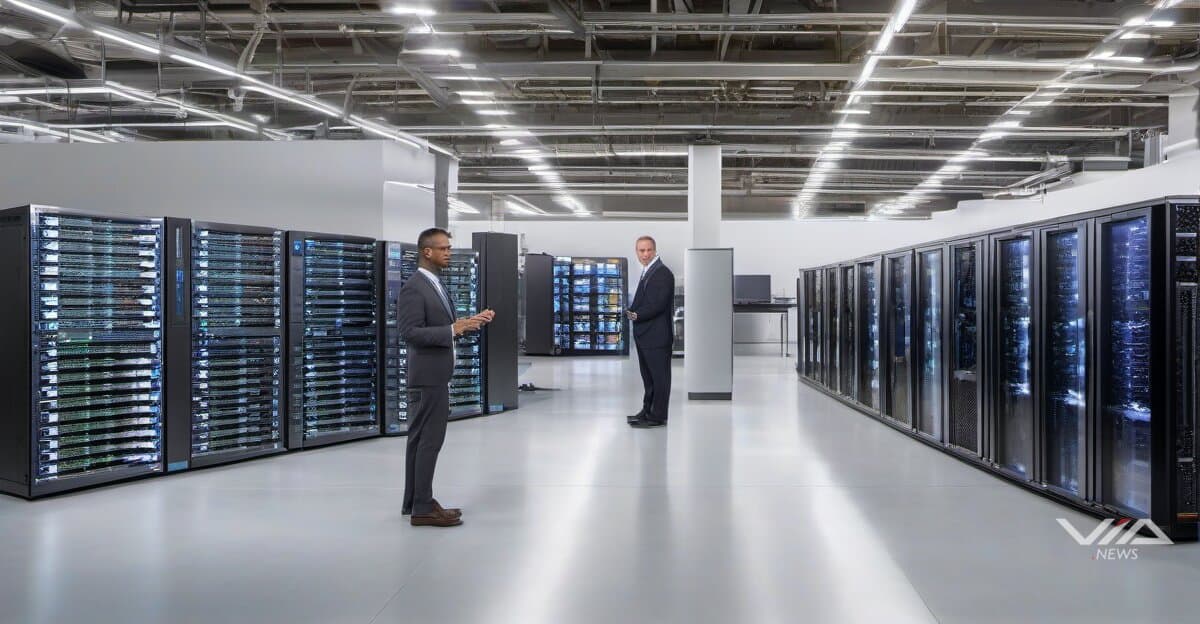
Image generated by AI for illustrative purposes. Not actual footage or photography from the reported events.

Supermicro deployed an intelligent retail platform with Everseen's computer vision technology and NVIDIA edge computing, processing store video locally without cloud latency. The system delivers real-time loss prevention analytics, marking a global transition from experimental vision AI to operational deployment across retail chains.

Joe White from Supermicro said the partnership "delivers real-time computer vision at the edge - transforming store activity into intelligence retailers can act on immediately." Everseen has operational systems with major retailers worldwide, moving beyond proof-of-concept to production-scale implementations.

Vision AI adoption is accelerating across sectors internationally. Microsoft's Copilot Studio enables businesses to build vision-based agents for asset management and infrastructure monitoring. Bentley Systems integrates visual AI into infrastructure digital twins for automated inspection workflows across global construction and utilities projects.

Edge computing hardware from Supermicro and NVIDIA processes video streams locally, eliminating bandwidth constraints and data sovereignty concerns that limited cloud-based systems. This architecture makes continuous visual monitoring economically viable for retail, manufacturing, and infrastructure applications across regions with varying connectivity standards.

Specialized vendors like Everseen and EXL are securing enterprise contracts based on measurable ROI metrics. Loss prevention, automated inspection, and operational monitoring deliver quantifiable returns justifying capital expenditure on edge infrastructure and computer vision software in markets from North America to Asia-Pacific.

The convergence of mature computer vision models, affordable edge hardware, and platform integration tools from Microsoft and Bentley indicates global adoption has crossed from research to operational deployment. Enterprises are integrating visual AI into core processes across retail operations, infrastructure management, and industrial automation worldwide.

Current systems combine purpose-built edge hardware, sector-specific training data, and enterprise platform compatibility enabling rapid scaling across multiple locations internationally. This production-scale adoption contrasts with earlier deployments that faced accuracy, cost, and integration challenges across diverse regulatory and infrastructure environments.

Source documents

Via News is a conduit. We point to the source documents behind this report — we don't replace them. Trace any claim to its source and decide what to trust. How we source

Source Trace Score7 source documents7 with a live linkVerifiability: High
  1. [1]News articleYahoo Finance· January 11, 2026
    Supermicro Announces Intelligent In-Store Retail Solutions in Collaboration with a Broad Range of Industry Partners
  2. [2]News articleYahoo Finance· January 21, 2026
    3 Medical Info Systems Stocks to Gain From Digitization Despite Industry Woes
  3. [3]Earnings callYahoo Finance· February 26, 2026
    Bentley Systems Q4 Earnings Call Highlights
  4. [4]Press releaseGlobeNewswire· February 4, 2026
    Europe and North America Home and Small Business Security System Market Report 2026: DIY Convergence, AI Integration, and Smart Home Competition Reshape the Landscape - Forecast to 2031
  5. [5]News articleYahoo Finance· February 9, 2026
    EXL granted 10 new patents in the last year for AI solutions
  6. [6]News articleYahoo Finance· January 8, 2026
    Microsoft propels retail forward with agentic AI capabilities that power intelligent automation for every retail function
  7. [7]News articleSeeking Alpha· February 19, 2026
    Oceaneering projects $390M–$440M EBITDA for 2026 as ADTech drives multiyear growth

In this story · Knowledge Files

What we know · the intelligence behind this page
Live from the substrate
What we're seeing
Enterprise Software Races to Govern and Consolidate Around Agentic AI
Enterprise software vendors are repositioning around autonomous AI agents. Salesforce is acquiring Braze, ServiceNow is launching agent governance tools (AI Passport, Super Intelligence Control Tower), SAP is pushing its 'Autonomous Enterprise', and Zeta is launching AthenaOS and its own inference model. Palantir is embedding itself in banking, aviation and sovereign AI infrastructure through partnerships with Customers Bank, Surf Air, Ondas and Armada. Governance, data sovereignty and enforced policy are emerging as preconditions for regulated sectors like finance. Investors such as Norwest see room to disrupt ERP and finance software, and they caution that AI should not be trusted with financial calculations. Consolidation and shareholder disputes (Salesforce/Braze, Tiny/Oso Cloud, ZenaTech/Boardwalktech) show the market reshaping.
Our read on the data ›
Signals we're tracking
EPKINLY Regulatory-Clinical Success Cascade
High probability of expanded label indications, additional combination approvals, and competitive positioning strength in follicular lymphoma market. Predicts positive commercial uptake and potential accelerated review for related indications.
Patterns we're watching ›
Where sources disagree
ING Group
Both facts record the same metric (shares_outstanding) for ING Group at the identical observation date (2025-12-31). FACT A states 2,902,437,688 shares; FACT B states 2,902 million shares (2,902,000,000). The difference is 437,688 shares (~0.015%). This is a genuine value conflict, though the discrepancy appears to result from FACT B rounding to the nearest million while FACT A provides the precise count.
We flag conflicts openly ›
Recently verified
✓ Checked against the original source
4,994
facts traced to their source — and we flag the ones that don't hold up.
101 entities tracked4,994 facts checked against source5,484 source documents archived
Query this data → isubstrate.com