
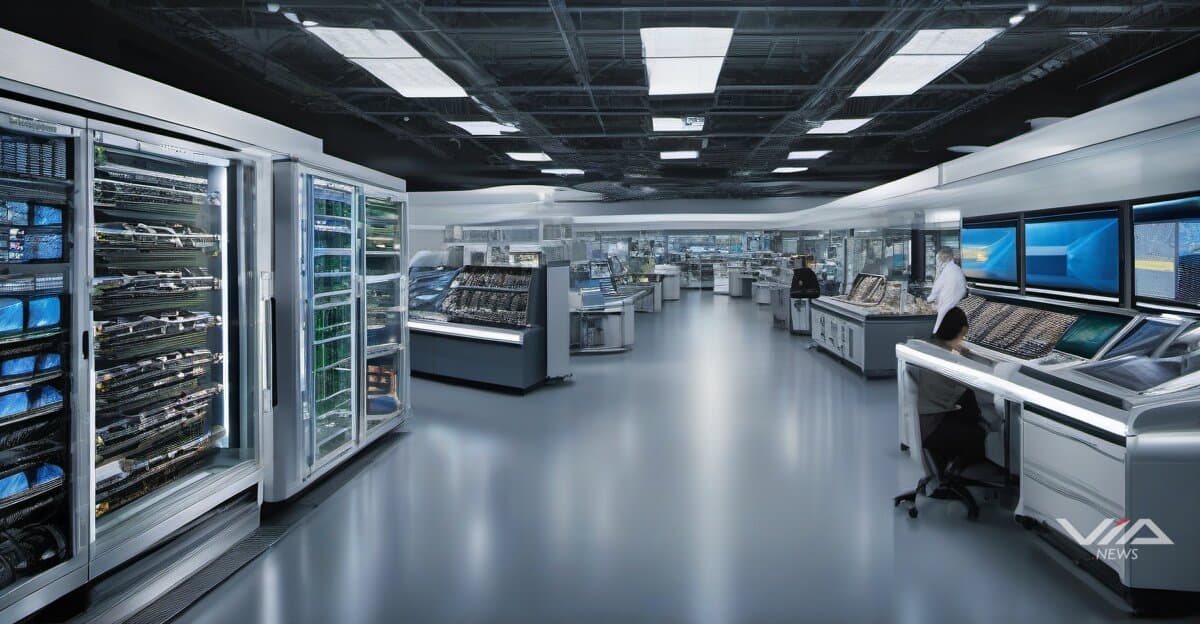
Microsoft, Supermicro, and Bentley Systems deployed computer vision AI platforms across retail stores, manufacturing facilities, and infrastructure sites globally this week. The systems embed visual monitoring into operational workflows, with retailers using automated inventory tracking and infrastructure operators monitoring construction sites and utility networks.
Edge computing enables on-premises processing at retail locations from Singapore to São Paulo and remote infrastructure sites with limited connectivity. Processing customer analytics locally helps retailers meet Europe's GDPR and similar privacy regulations worldwide. Latency drops from seconds to milliseconds compared to cloud-dependent systems.
Each platform combines vision models with autonomous agents that trigger actions based on visual inputs. Retail systems detect low shelf stock and generate restocking orders automatically. Infrastructure platforms identify equipment anomalies at mining operations in Australia or wind farms in Denmark and route maintenance requests. Security systems classify threats and alert response teams across corporate campuses and public venues.
Companies are purchasing multi-year licenses with defined ROI targets rather than running isolated proof-of-concept projects. Retail deployments aim for 10-15% labor cost reduction through automated monitoring. Infrastructure platforms promise 20-30% faster incident detection than manual inspection methods used across industries from Japanese construction sites to North American power grids.
The technology stack uses pre-trained vision models with custom fine-tuning for regional use cases. Retailers adapt systems to recognize product SKUs across different markets. Construction firms train models on equipment types and safety protocols that vary by country. Security operators customize threat classification for facility-specific scenarios from London office towers to Dubai logistics centers.
Deployment timelines run 3-6 months including hardware installation, model training, and operator onboarding. Integration challenges persist around legacy system compatibility and workforce training across different technical environments. Early adopters focus on high-value use cases with clear metrics before expanding to additional locations worldwide.
Market activity indicates computer vision is shifting from specialized AI research to standard enterprise infrastructure globally. The convergence of vision capabilities with autonomous agents and edge computing creates operational systems delivering measurable business outcomes across industries and regions.