NEW DELHI, India (ViaNews)- Indian Supreme Court banned fireworks in Delhi during this year’s Diwali celebration.
Diwali is the foremost festive season of the city, and most of the country for that matter, for which bursting of crackers and lighting of streets formed the major axis of celebration. There were frowns from various people who considered this as a violation of secularism, but the majority of the cosmopolitan crowd was sane enough to see the imminent danger and comply with the court order.
AAP (Aam Aadmi Party) government recently announced a plan to sprinkle water over Delhi sky from choppers to settle the soot and fog down. How big is this pollution issue? What are the international limits and how the Capital city of India fares in this direction? The only way to find out is by analyzing the numbers.
Arvind Kumar, Chairman, Centre for Chest Surgery and Lung Transplantation, Sir Ganga Ram Hospital recently shared a set of images of lungs of normal people in Delhi, most of them non-smokers to show the horrors of constantly polluted air in Delhi. “We are currently in a state of emergency and our lungs are only indicative of the poison that we are subjecting our bodies to. In the 90’s, doctors would see pink lungs, which is an indication of relatively clean and healthy respiratory system. We would see carbon and other toxic deposits only among smokers. Sadly the trend has changed for the worst. Now we are seeing a sharp rise in lung cancer among women who are non-smokers and also don’t have partners who smoke,” he explained.
[caption id="attachment_2767" align="aligncenter" width="640"]

Taj mahal, India[/caption]
Central Pollution Control Board (CPCB) is the final authority on air quality and pollution efforts on the city and nation as a whole, and as per their post quality AQI (Air Quality Index), Delhi is in the category of ‘very poor’. This needs a city-centric reading to understand the meaning ban has caused. Last year, with all the crackers happening in Diwali, AQI had touched ‘sever’ level recording an index value of 431. And this ‘very poor’ tab, air quality is currently in the best it has been in for quite some time. AQI index tabs are as follows: 0-50 ‘good’, 51-100 is satisfactory, 101-200 moderate, 201-300 poor, 301-400 very poor and above 401 sever.
As per last year’s report of World Health Organization Global Urban Ambient Air Pollution Database, more than 80% of people in urban areas are exposed to air quality levels that exceed WHO limits. According to the latest urban air quality database, 98% of cities in low- and middle-income countries with more than 100 000 inhabitants do not meet WHO air quality guidelines. However, in high-income countries, that percentage decreases to 56%. As urban air quality declines, the risk of stroke, heart disease, lung cancer, and chronic and acute respiratory diseases, including asthma, increases for the people who live in them. Pollution is responsible for 7% of annual healthcare spending in middle-income countries that are heavily polluted and rapidly developing.
[caption id="attachment_2769" align="aligncenter" width="640"]

Paharganj, Central Delhi district in New Delhi.[/caption]
As per Lancet Commission on Pollution and Health, released October 19, India tops the world in pollution-related deaths, accounting for 2.5 million of the total 9 million worldwide in 2015. At 1.81 million, India tops the charts, with China second at 1.58 million. Globally, air pollution accounts for twice the number of deaths from AIDS, tuberculosis, and malaria combined.
Breaking down the WHO data on ultra-fine particles of less than 2.5 microns (PM2.5s) region by region a ranking list has been released for cities. WHO recommended levels for PM2.5s are 10µg/m³; Delhi’s air contains an alarming mount up to 122µg/m³, while Zabol, Iran, is the worst at 217µg/m³. Among the worst affected cities of the world, India shares 50% with 10 cities in the top 20 list.
Current Delhi AQI category of 'very poor' implies that people may suffer from respiratory illnesses on a prolonged exposure to such air. And ‘sever’ as the name indicates permanent damages. The Delhi Pollution Control Committee's (DPCC) and System of Air Quality and Weather Forecasting And Research (SAFAR) are monitoring the air quality real-time and rolling the 24-hour data for analysis.
Environment Pollution Prevention and Control Authority (EPCA) under SC is empowered to enforce the Graded Response Action Plan (GRAP) to combat air pollution in Delhi-NCR. And the city had recently found a ban on diesel generator sets, with enforcement validity till March 15, 2018.

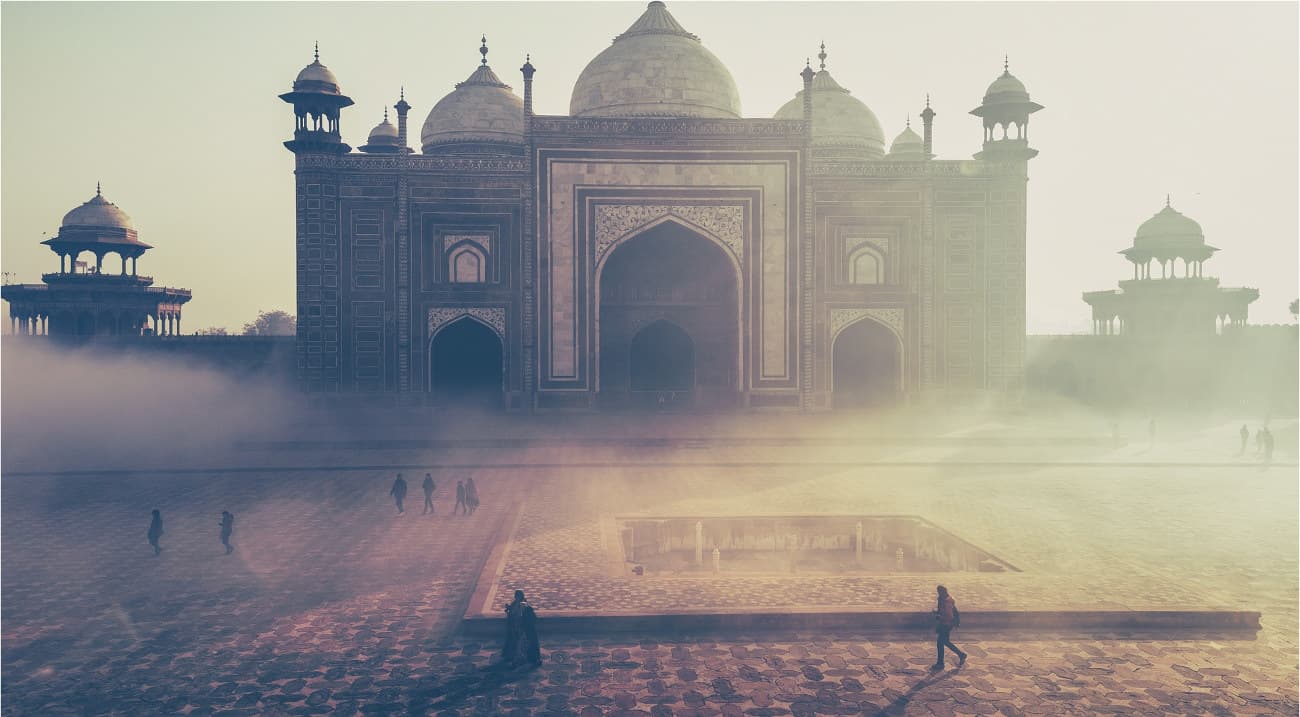
 Taj mahal, India[/caption]
Central Pollution Control Board (CPCB) is the final authority on air quality and pollution efforts on the city and nation as a whole, and as per their post quality AQI (Air Quality Index), Delhi is in the category of ‘very poor’. This needs a city-centric reading to understand the meaning ban has caused. Last year, with all the crackers happening in Diwali, AQI had touched ‘sever’ level recording an index value of 431. And this ‘very poor’ tab, air quality is currently in the best it has been in for quite some time. AQI index tabs are as follows: 0-50 ‘good’, 51-100 is satisfactory, 101-200 moderate, 201-300 poor, 301-400 very poor and above 401 sever.
As per last year’s report of World Health Organization Global Urban Ambient Air Pollution Database, more than 80% of people in urban areas are exposed to air quality levels that exceed WHO limits. According to the latest urban air quality database, 98% of cities in low- and middle-income countries with more than 100 000 inhabitants do not meet WHO air quality guidelines. However, in high-income countries, that percentage decreases to 56%. As urban air quality declines, the risk of stroke, heart disease, lung cancer, and chronic and acute respiratory diseases, including asthma, increases for the people who live in them. Pollution is responsible for 7% of annual healthcare spending in middle-income countries that are heavily polluted and rapidly developing.
[caption id="attachment_2769" align="aligncenter" width="640"]
 Paharganj, Central Delhi district in New Delhi.[/caption]
As per Lancet Commission on Pollution and Health, released October 19, India tops the world in pollution-related deaths, accounting for 2.5 million of the total 9 million worldwide in 2015. At 1.81 million, India tops the charts, with China second at 1.58 million. Globally, air pollution accounts for twice the number of deaths from AIDS, tuberculosis, and malaria combined.
Breaking down the WHO data on ultra-fine particles of less than 2.5 microns (PM2.5s) region by region a ranking list has been released for cities. WHO recommended levels for PM2.5s are 10µg/m³; Delhi’s air contains an alarming mount up to 122µg/m³, while Zabol, Iran, is the worst at 217µg/m³. Among the worst affected cities of the world, India shares 50% with 10 cities in the top 20 list.
Current Delhi AQI category of 'very poor' implies that people may suffer from respiratory illnesses on a prolonged exposure to such air. And ‘sever’ as the name indicates permanent damages. The Delhi Pollution Control Committee's (DPCC) and System of Air Quality and Weather Forecasting And Research (SAFAR) are monitoring the air quality real-time and rolling the 24-hour data for analysis.
Environment Pollution Prevention and Control Authority (EPCA) under SC is empowered to enforce the Graded Response Action Plan (GRAP) to combat air pollution in Delhi-NCR. And the city had recently found a ban on diesel generator sets, with enforcement validity till March 15, 2018.