
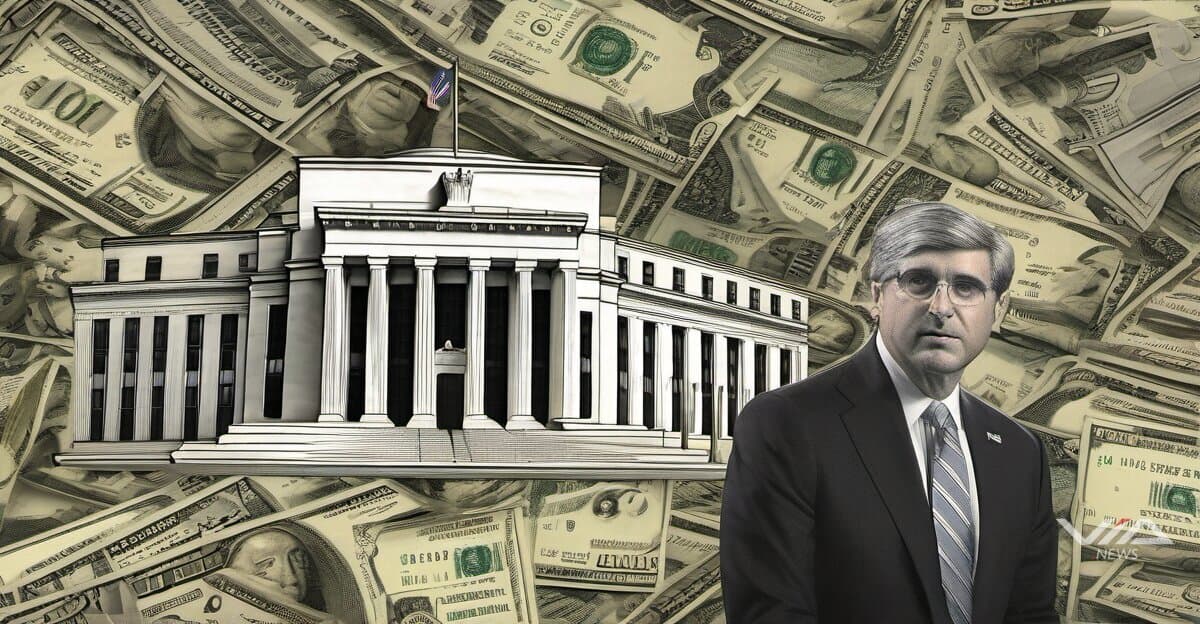
U.S. financial governance is entering a period of simultaneous institutional stress and structural reform. Three distinct forces — a Federal Reserve leadership transition, renewed controversy over congressional stock trading, and an activist Securities and Exchange Commission — are converging to redefine the regulatory landscape for banks, investors, and markets worldwide. For a global economy still calibrating to post-pandemic interest rate cycles, the direction Washington takes carries weight far beyond its own borders.
Warsh Nomination Sends Ripples Across Global Currency and Bond Markets
The prospective nomination of Kevin Warsh as the next Federal Reserve Chair has already produced measurable international market reactions: a strengthening dollar and a sell-off in precious metals, reflecting investor expectations that Warsh would adopt a less accommodative monetary stance than his predecessors. For emerging markets carrying dollar-denominated debt — from Brazil to Nigeria to Indonesia — a more hawkish Fed translates directly into higher refinancing costs and capital outflow pressure. The dollar's reserve currency status means Fed leadership decisions are, in effect, monetary policy decisions for dozens of nations that never voted on them.
Warsh, a former Fed governor and Morgan Stanley investment banker, has historically favoured lighter-touch financial regulation and a more rules-based approach to monetary policy — a posture that echoes debates playing out simultaneously at the Bank of England, the European Central Bank, and the Bank of Japan over how aggressively post-crisis prudential frameworks should be maintained. A recalibration of U.S. capital buffer requirements and stress testing regimes would put pressure on international regulators to follow suit, particularly in jurisdictions where banks compete directly with Wall Street institutions.
The transition also raises pointed questions about central bank independence at a moment when political interference in monetary policy is a global concern. Hungary, Turkey, and Argentina have each faced sovereign credit consequences after governments moved to subordinate central bank decisions to short-term political priorities. Whether a Warsh-led Fed would hold the line against executive influence — or whether institutional norms built over decades begin to bend — will be watched closely in Frankfurt, Geneva, and Beijing.
Congressional Trading Scandal Echoes Insider-Dealing Debates Worldwide
The disclosure of Representative Marjorie Taylor Greene's stock trades — which surged in value following tariff-related policy announcements by the Trump administration — has reignited one of Washington's most persistent governance failures. Greene defended the trades, stating: "I don't place my buys and sells. He did a great job. Guess what he did. He bought the dip." She dismissed criticism that the trades appeared to anticipate tariff moves as "laughable," arguing that "President Trump has been talking about tariffs for decades."
Critics were unconvinced. Representative Mike Lawler, a Republican, called the episode "just another reason why stock trading by members of Congress or their spouses should be banned" — a notably bipartisan sentiment in an otherwise fractured political environment.
Internationally, the episode draws uncomfortable comparisons. The United Kingdom banned ministers from holding individual stocks in sectors they regulate following lobbying scandals in the 2010s. The European Parliament tightened its own ethics rules after the 2022 Qatargate corruption investigation. Australia's parliament requires detailed public disclosure of financial interests updated annually. The United States, by contrast, still operates under the 2012 STOCK Act — a framework that mandates disclosure but stops well short of prohibition, and which is routinely flouted with minimal consequence. Advocacy groups and institutional investors argue the current U.S. framework creates an uneven information playing field that systematically disadvantages retail investors globally who participate in American markets.
SEC Tightens Focus on Retail Investor Protection — A Model Others Will Watch
Against this backdrop, the Securities and Exchange Commission is moving on two fronts to strengthen protections for individual investors. An aggressive fraud enforcement posture — targeting pump-and-dump schemes, social media manipulation, and predatory offerings — mirrors regulatory tightening underway at the UK's Financial Conduct Authority, the EU's ESMA, and Australia's ASIC, all of which have expanded retail investor protection mandates in the wake of pandemic-era meme stock volatility and the collapse of crypto platforms.
The SEC's simultaneous push on structural market reforms — including scrutiny of payment-for-order-flow arrangements that critics say disadvantage small investors — places it in dialogue with European regulators who have already moved to restrict the practice. Whether the U.S. ultimately converges with international norms or charts its own course will shape the competitive dynamics of global retail brokerage for years to come.
A Systemic Moment the World Is Watching
Taken together, these three developments represent something larger than the sum of their parts. The United States built much of the post-war international financial architecture — the IMF, the World Bank, Basel capital standards, and the dollar-based payments system — and its domestic regulatory credibility underpins that global role. Periods of visible institutional strain in Washington, whether over central bank independence, lawmakers trading on non-public policy information, or the adequacy of investor protections, do not stay domestic for long. For international investors, regulators, and trading partners, the question is no longer simply what rules Washington will write — but whether Washington's institutions can still be trusted to write them fairly.