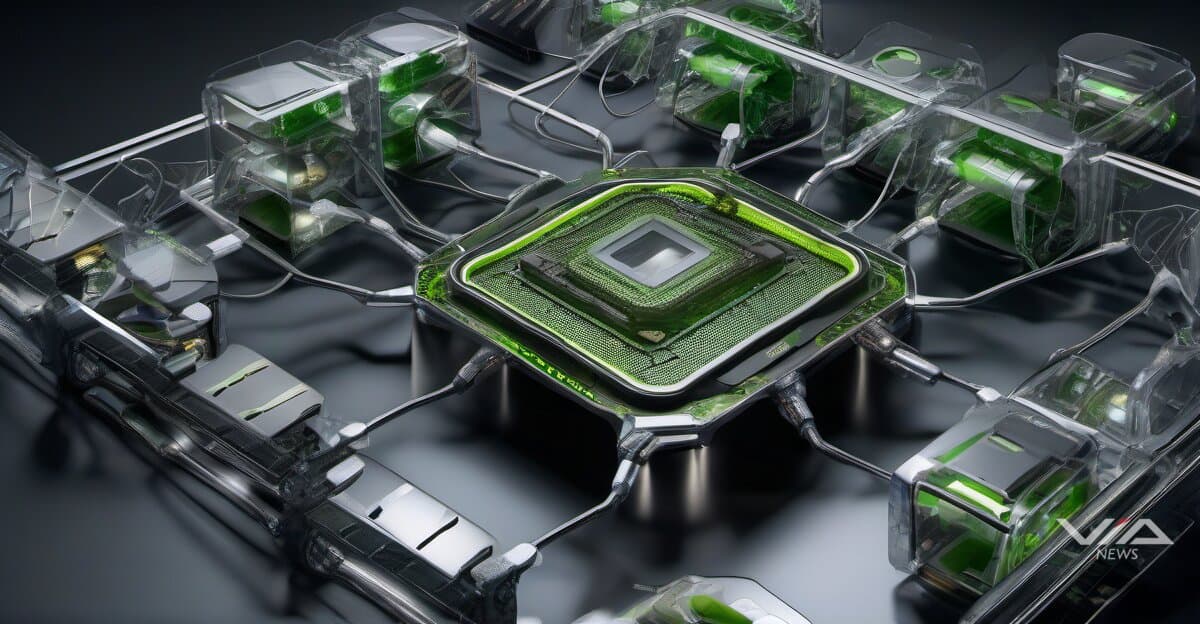
NVIDIA's BioNeMo platform has signed Eli Lilly and Thermo Fisher as anchor partners, turning GPU-backed protein modeling into the operating backbone of commercial drug discovery. The infrastructure race is now a commercial reality, not a research exercise.
Five platforms are competing for the same layer: Boltz Lab, Edison Kosmos, France's Owkin with OwkinZero, UK-rooted Basecamp Research's EDEN, and Natera. Each targets a different bottleneck in the global R&D pipeline. No single system controls the full stack.
Copenhagen signals the direction
Denmark's Novo Nordisk — one of Europe's most valuable companies — rose 24.9% over 30 days, driven by strong Q1 2026 earnings.1 Markets are pricing AI-augmented pipelines, not just near-term GLP-1 revenues. The company is exiting its internal cell therapy unit and licensing its Parkinson's program to Cellular Intelligence, an AI-native developer.1 Large pharma on three continents is watching.
Data infrastructure as the prerequisite
Tetrascience and Thermo Fisher are converting physical lab data into machine-readable formats. AI models cannot function without structured inputs. This partnership removes a foundational bottleneck common to every research institution globally.
FDA Fast Track designation adds further momentum. Compressed regulatory timelines improve economics for AI-assisted programs worldwide — including teams seeking eventual approvals in Europe, Japan, and emerging markets.
How the platforms differ across borders
Owkin's OwkinZero uses federated learning across clinical datasets, a model well-suited to Europe's strict patient-data regulations. Boltz Lab targets protein structure prediction. Edison Kosmos integrates genomics, imaging, and chemistry into a single multimodal model. Each system reflects a different regulatory and scientific tradition.
Commoditization is the likely endpoint. As molecular modeling converges, differentiation will shift to data access, regulatory track records, and integration depth with existing lab infrastructure — advantages that established global players hold.
The infrastructure bet
Pharma is buying AI infrastructure now, not running pilots. The BioNeMo-Lilly-Thermo Fisher axis leads today. But with five credible challengers spanning the US, Europe, and beyond, the race is far from settled.