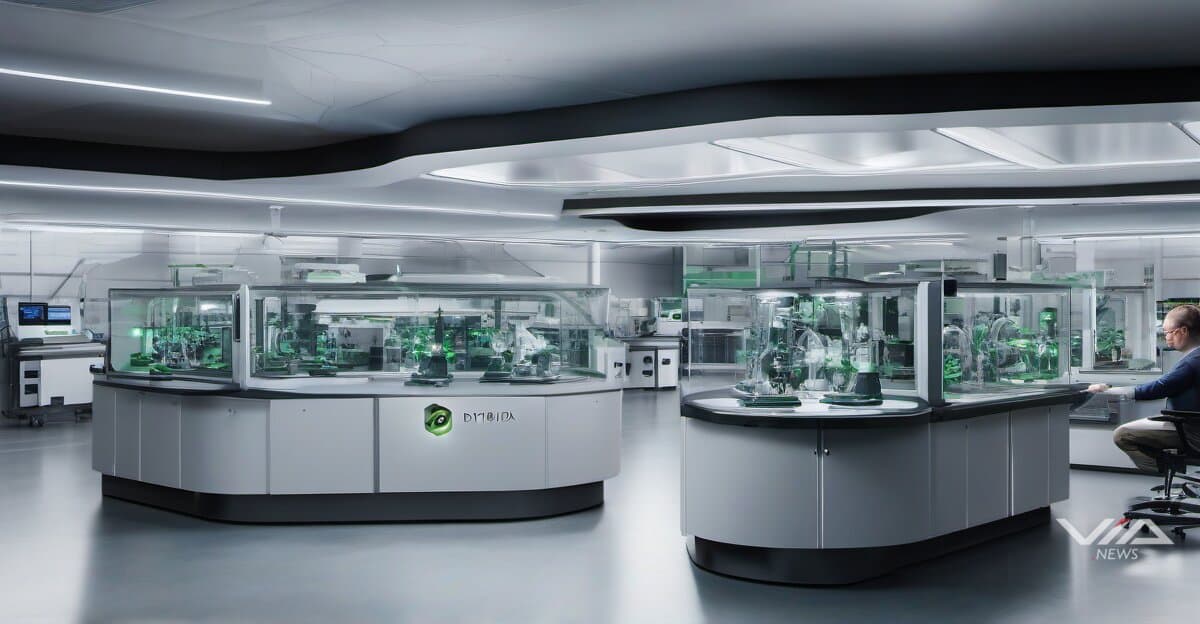
NVIDIA's BioNeMo platform has been adopted by Eli Lilly and Thermo Fisher Scientific to accelerate AI-driven drug discovery, alongside biotech AI firms Natera, Basecamp Research, Owkin, Edison Scientific, and Boltz Lab building foundation model platforms on the technology.1 The concentration of deployments across North American and European pharmaceutical operations marks the transition from proof-of-concept trials to production-scale AI research infrastructure.
The pharmaceutical industry globally faces pressure to reduce the 10-15 year timelines and $1-2 billion costs typical of traditional drug development. AI-driven approaches target discovery phase compression by identifying molecular candidates faster and predicting properties before laboratory testing. BioNeMo provides pre-trained models for protein structure prediction, molecular generation, and genomic analysis—core tasks that previously required years of specialized computational development.
NVIDIA's strategy focuses on infrastructure provision rather than direct drug development competition. By offering standardized GPU-optimized platforms, the company enables biotech firms to bypass building proprietary computing clusters and training foundation models independently. This mirrors patterns seen in autonomous vehicle development and large language model deployment, where NVIDIA established GPU computing as industry standard through early partnerships with sector leaders.
The simultaneous platform launches indicate pharmaceutical research is moving past experimental AI applications toward operational deployment. Early applications span protein folding prediction, molecular binding analysis, and patient data analysis for precision medicine. As more research institutions commit to AI-native workflows, network effects similar to those in other AI sectors may strengthen NVIDIA's position as the computational backbone for global pharmaceutical innovation.
The adoption pattern extends beyond traditional pharmaceutical strongholds in the United States and Europe. Biotech AI development increasingly involves distributed teams and research partnerships across multiple continents, requiring standardized infrastructure that can operate across regulatory jurisdictions and research protocols. NVIDIA's platform approach addresses this need by providing consistent tooling regardless of geographic location.