
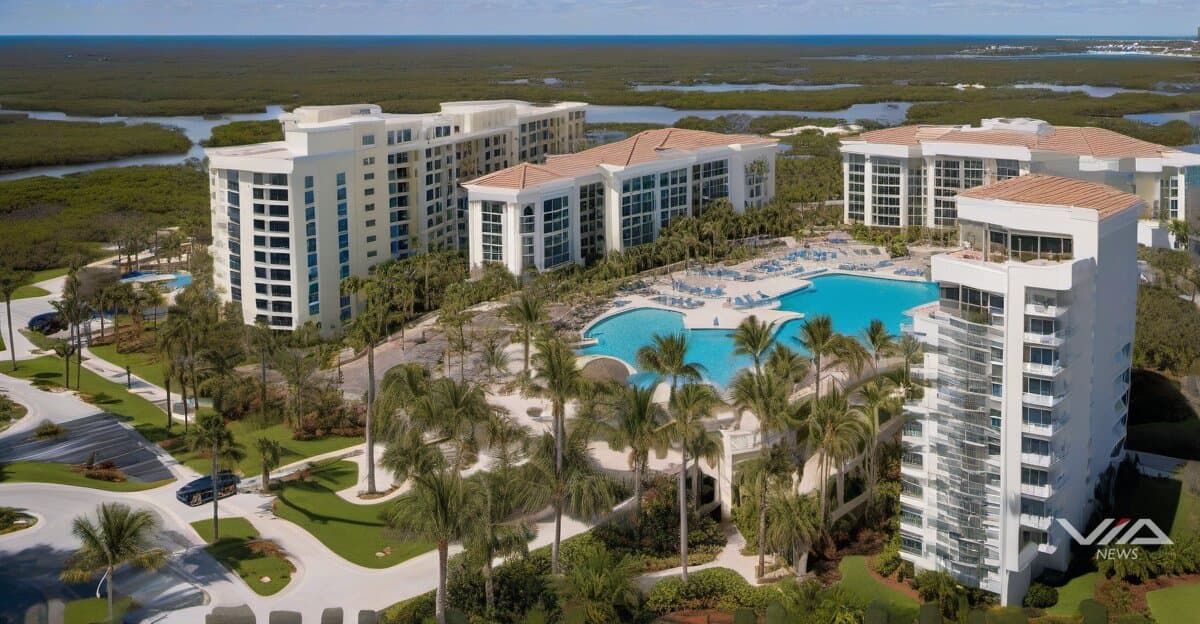
American Coastal Insurance Corporation holds 25% of Florida's condominium insurance market, covering 4,300 of 17,000 associations in a state that absorbs 79% of U.S. hurricane losses despite comprising just 8% of America's coastline. The concentration mirrors risk profiles typically seen in island economies like Jamaica or the Bahamas, where single storms can devastate entire insurance markets.
President Brad Martz has maintained profitability for 18 consecutive years through this focused approach. But the strategy creates structural vulnerability found in catastrophe-prone markets worldwide: one direct-hit Category 4 hurricane could trigger claims across the majority of holdings simultaneously, generating loss ratios exceeding 150%.
Florida's insurance market has collapsed twice in recent decades, following patterns seen in Caribbean and Gulf markets after major hurricanes. Six major carriers exited between 2022-2023, leaving Citizens Property Insurance Corporation—the state-backed insurer—covering 1.1 million policies. American Coastal's concentration amplifies exposure to regulatory changes targeting the crisis: premium caps, coverage mandates, or claims processing rules hit harder than geographically diversified competitors operating across U.S. states or internationally.
The 2021 Surfside collapse triggered legislation requiring reserve studies and structural inspections for buildings over three stories, pushing condo association budgets up 40-60% in some markets. The compliance burden resembles post-disaster building standard updates in earthquake zones from Chile to New Zealand, where safety improvements strain affordability.
American Coastal's 4,300 associations represent approximately $2.1 billion in total insured value. Reinsurance costs in Florida have tripled since 2019, with concentrated carriers paying 18-22% of gross written premiums for catastrophe coverage versus 8-12% for diversified operators—margins comparable to typhoon-exposed Asian markets.
The 18-year profit record demonstrates disciplined underwriting. But geographic concentration transforms hurricane risk from probabilistic to existential, a dynamic familiar to insurers in cyclone-prone Bangladesh, typhoon-exposed Philippines, or earthquake-zone Chile: not whether catastrophe strikes, but when—and whether a single-geography book can survive the claim accumulation that follows.
Sources:
1 Yahoo Finance, "American Coastal Insurance Unveils AmRisc E&S Expansion, Launches ACES, Sets 2026 Guidance" (January 14, 2026)