"The big shift that's occurring here is that banking is becoming more and more experiential."
Brett King, CEO of Moven
We met with him for an interview at the Money Conf in Madrid, the fastest growing fintech conference created by the same people behind the Web Summit. Miguel Salvado: How are you finding the Money Conf so far? Brett King: It's good from the networking perspective. A lot of my good old mates from the old fintech days, before it was called fintech. It's always interesting to catch up with familiar faces."We're moving away from banking products, like a credit card or a savings account, and we're moving the utility of banking into our life when we need it."
Brett King, CEO of Moven
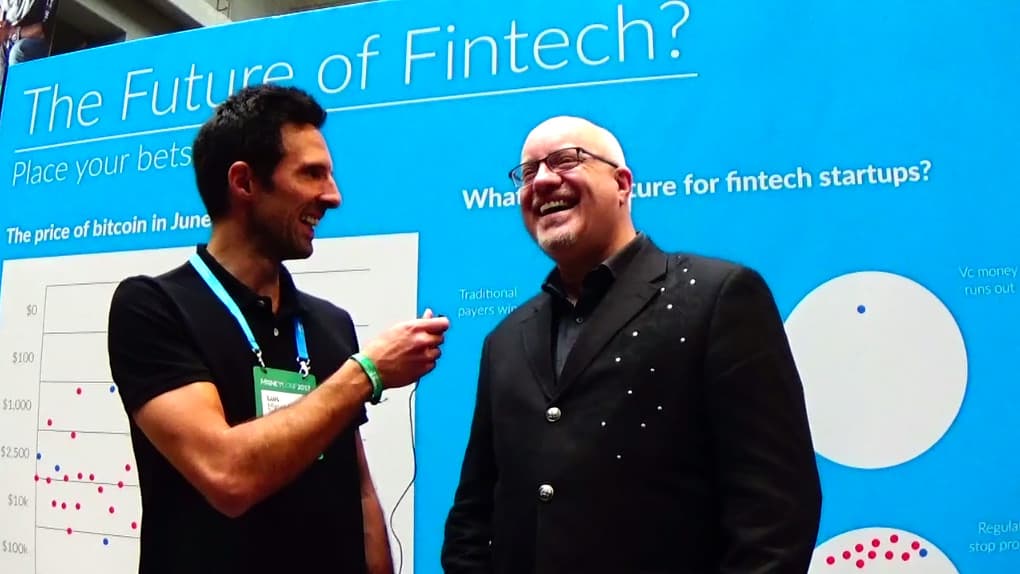
[caption id="attachment_1719" align="aligncenter" width="1019"] Brett King Via.news interview[/caption]
You're a futurist from Australia, bestselling author, and the CEO of Moven. What can you tell us about the future of banking?
Does banking have a future? *laughs* Well, not banking as we know it. The big shift that's occurring here is that banking is becoming more and more experiential. We're taking the utility of banking, things like access to payments, access to a value store where you can safely store your money, and access to credit, and we're surfacing these in real time. Right now, that's through your smartphone, or as you enter a store, for example, in a couple of years you start to see offers for a credit facility surface on your phone. But in the future, that's going to be combined with Artificial Intelligence, in your home, or in smart glasses in 10 years, where you can get that sort of information from your field of view.
So we're moving away from banking products, like a credit card or a savings account like a fixed deposit, and all these sorts of things, and we're moving the utility of banking into our life when we need it.
Brett King Via.news interview[/caption]
You're a futurist from Australia, bestselling author, and the CEO of Moven. What can you tell us about the future of banking?
Does banking have a future? *laughs* Well, not banking as we know it. The big shift that's occurring here is that banking is becoming more and more experiential. We're taking the utility of banking, things like access to payments, access to a value store where you can safely store your money, and access to credit, and we're surfacing these in real time. Right now, that's through your smartphone, or as you enter a store, for example, in a couple of years you start to see offers for a credit facility surface on your phone. But in the future, that's going to be combined with Artificial Intelligence, in your home, or in smart glasses in 10 years, where you can get that sort of information from your field of view.
So we're moving away from banking products, like a credit card or a savings account like a fixed deposit, and all these sorts of things, and we're moving the utility of banking into our life when we need it.
"One of the big impacts of this technology shift will be us moving away from banks handling things like identity, which will stay on the Blockchain".
Brett King, CEO of Moven
Do you see banks using Blockchain generally, over the next years? Absolutely. In fact, they're going to have to. I think one of the big impacts of this technology shift will be us moving away from banks handling things like identity, which will stay on the Blockchain, so they would just net with that identity layer.The banking ecosystem we have today <..> is going to shift to the Blockchain because it's more transparent, auditable, more secure, more robust, and it's built for real-time IP layer.
Brett King, CEO of Moven
For smart assets, and smart contract management, that's going to be based on AI and Blockchain, and in things like trade finance, cross-border monetary transactions will happen on distributed ledger as well. There's a lot of the banking ecosystem we have today that's going to shift to the Blockchain because it's more transparent, it's auditable, more secure, more robust, and it's built for real-time IP layer. What everybody wants to know is what do you think is going to be the most disruptive technologies, or industries, over the next years? In "Augmented: Life in the Smart Lane", my last book, I talked about the four major disruptive forces. The first is obviously Artificial Intelligence and within that, we can talk about robotics because every robot that has autonomy has some sort of AI capability. In AI we're in the machine learning and machine intelligence phase right now, with AI doing specific tasks, and then we have Artificial General Intelligence, the strong AI. The second field is embedded technology experiences, virtual reality (VR), augmented reality (AR), voice-based user interface systems and open reality glasses. Basically where technology is embedded everywhere in the world around us and everything is sort of smart interactive. This changes the way we interact with each other and definitely in the way we interact with surface layers, companies, and providers of services. The third is HealthTech and gene entity, the way we look after our health care and we work with the medical industry. The fourth area is really combining all of these where we have the emergence of smart cities, smart economies, smart companies and how we will differentiate in the future economically, based on smart infrastructure or intelligent infrastructure. Things like moving away from fossil fuel generation to distributed grids on renewables, autonomous transportation systems that deliver goods and services, etc... [caption id="attachment_1720" align="aligncenter" width="1020"] Brett King Via.news interview[/caption]
These are the 4 big disruptive things, but in parallel, you have things like material sciences that are producing nano-tech and smart materials, you have 3d printing, and there's a lot of other fields underneath that like urban farming, and stuff like that that's very interesting, and some other trends.
This is the last day of Money Conf, what are your plans for today?
I'm heading back to New York. After this interview, I'm literally getting in a taxi and going to the airport and heading back to New York, speaking at the Singularity University's Exponential Finance tomorrow doing the keynote there, so no rest.
Brett King Via.news interview[/caption]
These are the 4 big disruptive things, but in parallel, you have things like material sciences that are producing nano-tech and smart materials, you have 3d printing, and there's a lot of other fields underneath that like urban farming, and stuff like that that's very interesting, and some other trends.
This is the last day of Money Conf, what are your plans for today?
I'm heading back to New York. After this interview, I'm literally getting in a taxi and going to the airport and heading back to New York, speaking at the Singularity University's Exponential Finance tomorrow doing the keynote there, so no rest.