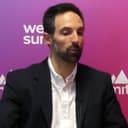

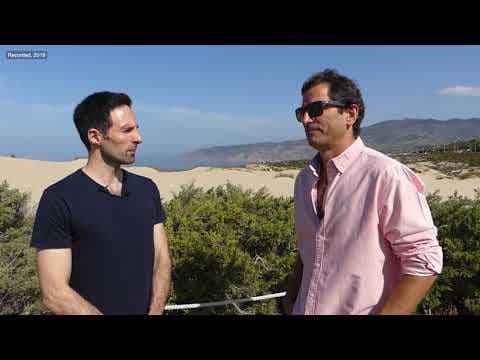
Miguel Reynolds Brandão, CEO of Corkbrick Europe, believes founders should test every business idea against a short list of basic human needs before they build anything. In an interview published by Via News on 6 December 2023, he said a startup that cannot show a benefit on at least one of them is not worth pursuing.
Reynolds Brandão described himself as essentially an entrepreneur. He started his first company at 19 or 20, working in software development because it was cheap and easy to begin, and kept studying engineering and then management while running his own businesses. He has also written a book, The Sustainable Organization, A New Paradigm for a Fairer Society, which proposes a simple algorithm, called SORG, to help people tell the difference between making money and creating economic value.
A four-part test for new businesses
The centre of his advice to young entrepreneurs is a checklist of four questions: does the idea contribute to peace, to health, to a better ecology, and to human development. He said business school tools overlook these basics. "Check for peace, health, ecology, and development or education, whatever you like."
The pass mark is deliberately low but firm. "If you have at least one of those and no minus one, then you move on." He was blunt about the alternative: "If you have a no, stop whatever you do." He said the test is easiest at the startup stage, when strategy is still easy to change, and that founders can then check whether the idea fits any of the United Nations Sustainable Development Goals.
His definition of sustainability is a practical one. "Sustainability is nothing more than just to make sure that whatever you do today, you don't compromise the happiness of people tomorrow." He argued that a useful venture may take longer to generate money than a trivial app, but that it creates economic value and is highly profitable in the end.
Competition, recession and the risk of mega companies
Asked how companies should prepare for a downturn, Reynolds Brandão said usefulness is the best protection. "You don't have much to be afraid because someone will buy it." He said many organisations do things that are useless or copy everyone else.
He was critical of consolidation. He said growing from a small to a medium or large company improves efficiency, but that the logic changes at the top end. "But when you move from big companies to mega companies, then the only objective is to kill competition." In his view, the loss of competition means the major markets no longer work as true market economies, and it carries a longer-term cost. "If you lose innovation, later on, you cannot sustain in the market anymore."
He framed the argument with an image of the world divided between predators and collaborators. "I like to split the world in sharks and dolphins." He said he would accept any economic game, including the sharing economy, as long as the rules are transparent, objective and the same for everyone, and he suggested that blockchain, used well, can help by making agreements impossible to change and people accountable. He added that blockchain is only a tool and that too many projects have turned it into an instrument of speculation.
Cork as a material with more uses
Corkbrick, he said, grew out of a conversation with his eldest daughter about how to host the many friends of his four children. The result is a construction system of seven cork pieces, each about 20 centimetres and under a kilo, that can be assembled and taken apart without tools, screws or glue, and reused as needs change.
He described himself as an outsider to the cork industry and said the material is under-used. By his account about 70 percent of cork goes to bottling wine, and he sees room for applications that reach far more people. He stressed that the product suits long-term thinking, since a cork tree needs at least 25 years before its first harvest. "If you want to harvest cork, you don't destroy anything." He added that expanding cork forests would benefit the environment and regions such as the Alentejo.
On geopolitics, he said the trade dispute between the United States and China had not yet affected his company but could in the near future. He argued that the West should not respond with walls, and pointed to Europe's ageing population as a further reason to collaborate rather than split apart.
Watch the full interview
Interview by L. Miguel Salvado for Via News.