
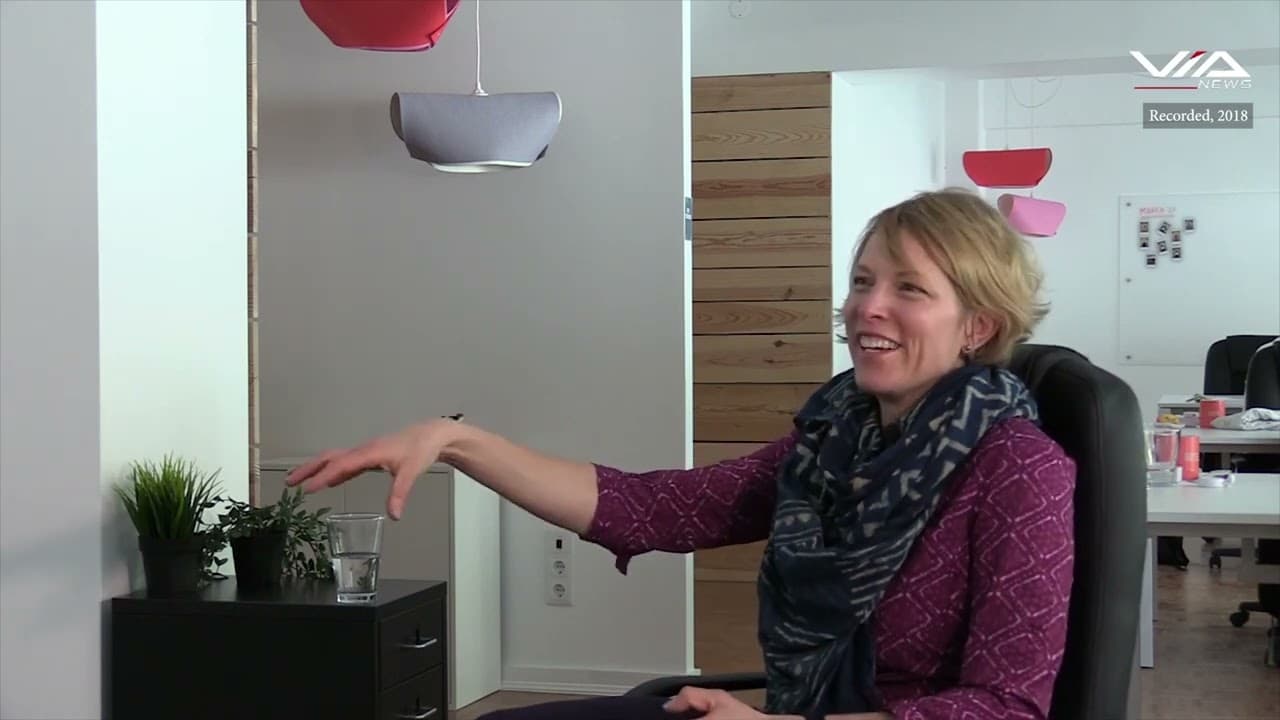
Managers who struggle with their teams should first examine their own approach, according to Kendall Clifton-Short, Managing Director of The Purpose:fully. Speaking to Via News about the challenges she sees in coaching leaders, she said the instinct to locate a problem in other people is the first obstacle to overcome.
"Most people want the problem to sit with other people," she said, describing the familiar thought of "if only I could make them do this" or "if only I could get them to do that". Her response is to turn the focus back on the manager. "If you have a problem with your team it's probably going to be because of how you're managing them or mentoring them or leading them or coaching them not because of who they are."
Commitment to leading differently
Clifton-Short said hearing that message is itself demanding. She described it as requiring a certain level of vulnerability, followed by a serious commitment to change. Without that commitment, she said, the results will be limited.
"unless a leader is really genuinely a hundred percent committed to solving the problem and willing to look at the problem through the lens of how they're leading then it's very hard to to have the impact that you want."
She does not offer a single template for what good leadership looks like. "I don't think there's one formula for what a great leader is. I think there's many aspects." Among those she named were the capacity to listen and understand not only the surface problem but the real one, and the ability to bring together a diverse group of voices to contribute to an idea. She also pointed to flexibility, meaning the ability to adapt a leadership style to the people being led, the situation, and the skills of both the leader and the team.
In training leaders, she said, the aim is to help them understand what they are doing, who they are and what their natural leadership style is. They are then given room to experiment with other styles. She said this marks a move away from a one size fits all approach.
Vulnerability as a management tool
Asked how vulnerability works in practice, Clifton-Short said a leader who presents as having every answer risks a fragile kind of authority. Such a leader ends up on a pedestal, she said, and once the team sees a crack in that image, the trust placed in the leader is gone.
The alternative, in her view, is to be honest about strengths and limits and to build a team around the skills the leader lacks. She said admitting a gap carries its own value. "There's a real strength in saying to your team hey I don't have the answers here but I'm willing to go look for them and I'm willing to help you look for them and that really gives them permission to then not have the answers either but to go on a hunt."
She said she is comfortable taking that position herself. "I'm willing to stand up here and say I don't have the answers and I don't feel like I should have the answers in this position but what I'm really excited to do is lead the journey to asking the questions that's going to uncover the answers for us." The more a leader connects authentically with people, she said, the more they feel the team is on a journey together rather than being pulled in a direction set for them.
Leadership beyond the job title
Asked whether everybody will be expected to lead in future, Clifton-Short said that is already the case. "I think everyone already is asked to be a leader to be honest whether they choose to step into that role or not." She said the shift is away from leadership being something designated or given to a person and towards the way each person moves through the world being an opportunity to lead. In that view, she said, everyone is playing a role.
She closed on personal development as the foundation of the whole approach. It is easy for a leader to tell staff what is needed of them or to ask them to change how they work, she said, but the starting point is the leader. "It starts with us you know our ability to know ourself and grow and constantly be developing our own self and our own leadership capacity then in turn enhances our ability to lead others."
Watch the full interview
Interview by L. Miguel Salvado for Via News.