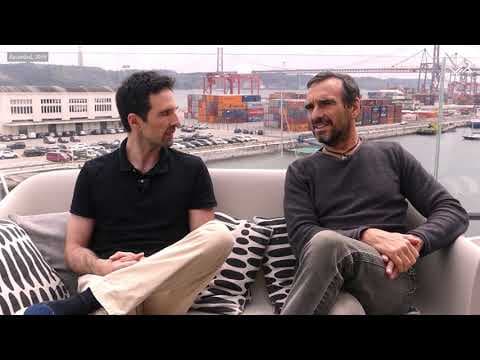
João Lopes Raimundo, co-founder and CEO of Lacs Community Creators, believes flexible workspace is a lasting shift in how companies operate rather than a passing fashion. In an interview published by Via News on 3 December 2023, he said his company, which began operating about a year earlier, expects to have close to 3,000 people working across its sites by the end of the year and intends to keep opening new locations around Portugal.
Scale and a focus on creative businesses
Raimundo described Lacs as a coworking operator built around what he called creative industries, ranging from video and design to technology and radio. The company now runs three sites in Lisbon and the Lisbon area, including a newer one that already has 700 people and can host about 900, and a third that has only just started. He told Via News the group sees scale as its first advantage.
"We've by far the largest co-work initiative in Portugal, not only co-work, but studios, events, and so on and so forth."
He said members include small companies alongside multinationals and the innovation departments of Portuguese corporates. The community spans 27 nationalities, which he called an asset for this kind of space. Members at one location can use the company's other sites, he said, so a member based in Braga could work from Lisbon, Cascais or Porto, which he sees as a strong part of the value proposition.
Raimundo said the company is selective about who joins, positioning itself as a curator rather than a general office provider. "We want the type of businesses and the type of people we want here, we want really people involved in the, let's say, creative industries." Other office spaces, he said, tend to accept everyone and are less focused on building a community and running events that get people talking and working together.
Why big companies are moving innovation out
Asked whether coworking replaces or complements corporate culture, Raimundo said it is a trend, not a fad. He pointed to large companies placing their innovation teams away from headquarters and next to small firms keen to find out what comes next.
"They try to have their innovation departments elsewhere. So they can think a bit, not really out of the box, but differently and not really being as involved, I mean, on a daily basis of the company reality."
He said Lacs has just signed a partnership with a startup incubator that he described as the old incubator in Portugal and close to big corporates, and he argued that no one else in the country combines coworking with that kind of startup connection.
Supply, flexibility and the next ten years
On the outlook for Lisbon, Raimundo said the market will expand and that more supply will bring more demand. He cited the large Beato creative hub, which he said will have 30,000 to 40,000 square metres available in the near future. "So, I mean, if you have more offer, OK, the demand, it will appear." Portugal, he said, is an attractive place to live and work, and people arriving in Lisbon need flexible space.
He gave the example of a company in the building that grew from 12 people to 60 in a year. A conventional lease, he argued, does not suit that pattern: "are you going to start paying the rent for 60 people when actually at the moment in time you just have 12?" Flexible solutions, he said, are the future.
Looking ahead ten years, he said that size matters, noting that a company such as Google has its own campus, but that he sees a growing medium-term demand from big companies whose innovation departments need to be well connected to other players. Remote work will not remove the need for presence. "I think that the physical contact will still be very, very important. So I think that in the future, this market will keep on growing." He also pointed to international operators investing heavily in growth, to hotels adding coworking space, and to co-living apartments aimed at digital nomads.
Building in Anjos and Cascais
Raimundo said the Lisbon building that houses one of the sites is owned by the port authority and was won through a public tender. It had been abandoned for 20 to 25 years, and the works took close to a year and a half. He said the aim was to be the first mover and the first creative cluster in Lisbon, and that the site is now fully occupied, with a pipeline of companies waiting for space.
He explained that the sites differ. Cascais has smaller companies and, in his view, will succeed because people living on the west side of Lisbon would rather work there than face traffic into the city. He said Anjos was chosen because it sits next to the underground and in a part of Lisbon that is booming, where people can still afford apartments. Further expansion is under study in Porto, Gaia, Braga, Aveiro and the south bank of the Tagus.
Raimundo spent about 25 to 27 years in banking, in Portugal, France, Luxembourg, Switzerland and the United States, before retiring from that activity. He also collects art, and he said Lacs pairs about 100 young artists with well-known names, hosting art talks as part of its programme. His advice to young entrepreneurs was brief: "follow your dreams, but do reality checks. OK, and seek advice."
Watch the full interview
Interview by L. Miguel Salvado for Via News.