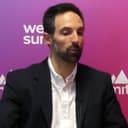

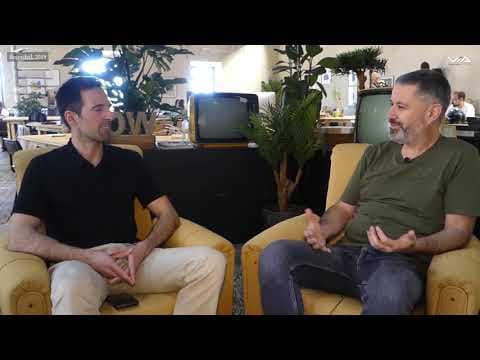
Fernando Mendes, Co-Founder and Chief Community Manager at Now_No Office Work, says coworking has not died as a movement but won, because the institutions that once ignored it now copy it. Banks, real estate developers and other formal players, he told Via News, are using the model to attract customers to almost any kind of space.
"In fact, I could say the opposite. I could say, no, in fact, co-working has won."
Mendes said the question had come up that morning with his partners. In his reading, coworking has become a template anyone can apply. "And it won in the sense that it's becoming an open source thing, something that you can use in any kind of space or project." He described banks keeping a single desk for banking tasks while turning the rest of a branch into a cafe where people can open a laptop, expecting that some visitors will eventually become clients.
From underground movement to business
Mendes dated the movement to 2005, when he said it was born in universities in the United States, free, open and run on very little money. His own space opened in 2010 in Lisbon. He sees the same arc as with other trends. It starts underground, meets the formal world, and is then commercialised. "And then the business people come and transform it in something that is profitable."
He accepted that his own venture is part of that story, while insisting it is an unusual one. "It's a business, in fact. But a real special business. Because it deals with people and communities." He added that he does not live from the income of his coworking projects and continues to teach and do some design work.
Mendes said the first large space opened in 2009 with about 70 desks at LX Factory in Alcantara, and that more than 4,000 people have worked there. In 2010, he said, 70 to 80 percent of members were Portuguese. Today he put the figure at 20 to 30 percent, with the rest made up of remote workers and digital nomads. Remote workers, he explained, live in Lisbon while their clients are in cities such as Berlin or Paris. Some nomads travel in groups of 30 or 40 and use co-living spaces that combine work and accommodation.
He rejected the idea that coworking spaces are startup incubators. "Well, you have a mix of small to micro companies, in fact, in co-working space. Not big companies, usually." Freelancers are numerous, he said, and some early stage startups are present, but the startup scene is "not exactly the same" thing.
A second location and a large redevelopment
Now_No Office Work now runs a second location in a part of Lisbon that Mendes described as one of the poorest in the city, beside a large redevelopment project of almost 40,000 square meters. He said he sits on the jury choosing the operator of a co-living space of about 4,000 square meters inside it, and expects the project to have an impact comparable to LX Factory, with a focus on innovation, new technology and sustainability.
He acknowledged the risk of gentrification and said the company is trying to limit it by buying materials and hiring professionals from the immediate neighbourhood instead of bringing in firms from elsewhere. "Some of it will happen. It's not easy to avoid, but we'll try to do it in the good way, the right way."
Slowing down and acting locally
Asked about the future of work, Mendes said he did not want to use the word. In his view people live in a constant present, and things are moving too fast. He compared the pace of change to a car that keeps getting bigger and faster. "I think the future of work is slowing. It's decreasing speed. And decreasing scale."
He said that means acting locally, responsibly and sustainably, and that the aim has moved beyond recycling to healing the planet. He added that there is no time left to think about the future of work and that change has to happen now.
His advice to entrepreneurs, young and old, was to act rather than plan at length. Although he is a designer by training and would normally plan carefully, he said he avoided over-thinking when launching his first coworking space, which took two months to open, from November 2009 to January 2010. "My advice would be, it's a real cliché, but follow your instinct. Follow your passions."
Mendes, 51, is also a PhD student and a teacher. The interview was published by Via News on 2 December 2023.
Watch the full interview
Interview by L. Miguel Salvado for Via News.