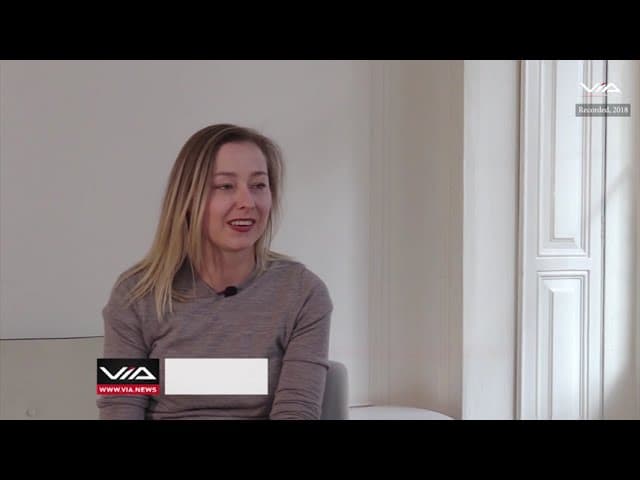
Pia Poppenreiter, CEO and co-founder of Ohlala, told Via News that she has shifted her fundraising plans from an initial coin offering to security tokens, which she sees as a more serious way for startups to raise capital than the usual route of selling shares. In an interview published by Via News on 29 November 2023, she said Ohlala is profitable and that the next step is to scale.
From ICO to security tokens
Poppenreiter said she bought Ohlala back from its investors, found a way to monetise it, and then cut costs. Having done that homework, she said, she looked at tokenising the company. The original idea was to run an ICO on Ethereum, but she said she did not find the right token and legal structure to do it feasibly. She now looks at security tokens instead, citing the scams that came with the ICO market. "I was looking for something more serious."
She described the difference with conventional funding. In Germany, she said, a startup would usually raise money through a capital increase and hand out shares in exchange. Security tokens, by contrast, are a way to raise money instead of giving away equity, and she said they carry more security and rights for investors than ICO tokens did. Buyers would hold a stake in the company, and she said she liked the idea that anyone could have a say in Ohlala.
On the size of the plan, she said the cost of opening one city or one country is known, so the sums are simple. With 100 million, she said, she could most likely finance a global launch and stay sustainable. She also said the market is moving from ICOs to security token offerings.
Asked about venture capital, she said there is no general answer on whether it is ethical, but that its structure shapes the company. Venture funds invest other people's money and work to cycles of six to eight years. "If you take VC money they want their money back eventually with hopefully a big, big great return." In her view that pushes founders to sell rather than build a sustainable global player. She called it one way to finance a company.
Europe, Berlin and the search for talent
Poppenreiter was critical of the regulatory environment. She said Europe is good at regulating in ways that make it hard for startups to scale, because they must go country by country, and she said GDPR did not necessarily help them grow faster. She also pointed to bureaucracy and regulation in Germany in particular.
She said she does not regret launching in Berlin, a city she described as open-minded, where she arrived on a scholarship and studied business ethics. But she said it is time to move on. She is looking for tech talent and a better place to build. "I think Berlin is by these days overhyped and I'm looking for more of a calmer space to build in all peace and calmness that I can."
How the platform works
Ohlala connects users for paid dates. Poppenreiter said the company provides the platform and nothing more: "Whatever is happening on that paid date is a private matter." Users cannot browse profiles. A man sends out a dating request stating time, budget, duration and expectations, and women who find it interesting apply. She said the company does not match anyone. "We do not want to get involved in a matching process."
To keep the community in order, she said, Ohlala relies on user feedback and a reputation system, and takes action when users are reported to a certain amount. "This is the only way from a marketplace dynamic how you can create a good community."
She put the number of enrolled users at some 135,000 and growing, including 41,000 to 42,000 women. She said the company grew organically with almost no marketing spend. It is active in the 15 biggest German cities. Berlin has the biggest user base, while the highest transaction volumes are in Munich. Between four and five people work on the project at a time, many of them freelancers. She said the product will adapt and may pivot, and that the direction has not been decided.
Investors, failure and early career
Poppenreiter said her first company, Pepper, which she founded at 25, is still operating after she sold her shares, as are all her other companies. She rejected the word failure for startup attempts that do not work out. "Not a single investor has ever lost money with me, up until today, which is almost a miracle in the startup industry."
Before becoming an entrepreneur she worked in investment banking at the investment banking division of Dresdner Bank, which she said held billions in toxic papers. The experience changed her view of stability. "There is no such thing as security and stability." She later spent a year as a bartender and travelled before studying in Berlin.
She said her family shaped her outlook, and that her father, a chemist who works in fire protection materials, told her to be true to herself and speak her mind. "I think they inspired me to be a rebel with purpose and with the heart in the right spot."
Watch the full interview
Interview by L. Miguel Salvado for Via News.