
The Hub-and-Spoke Model: A Global Architecture Under Scrutiny
Across the world's major aviation markets, the hub-and-spoke model has long been the dominant logic of airline network design. From Dubai's Emirates routing intercontinental traffic through a single Gulf mega-hub, to Singapore Airlines anchoring its global reach at Changi, to Delta's reliance on Atlanta — airline profitability has historically been built on concentration, not dispersion.
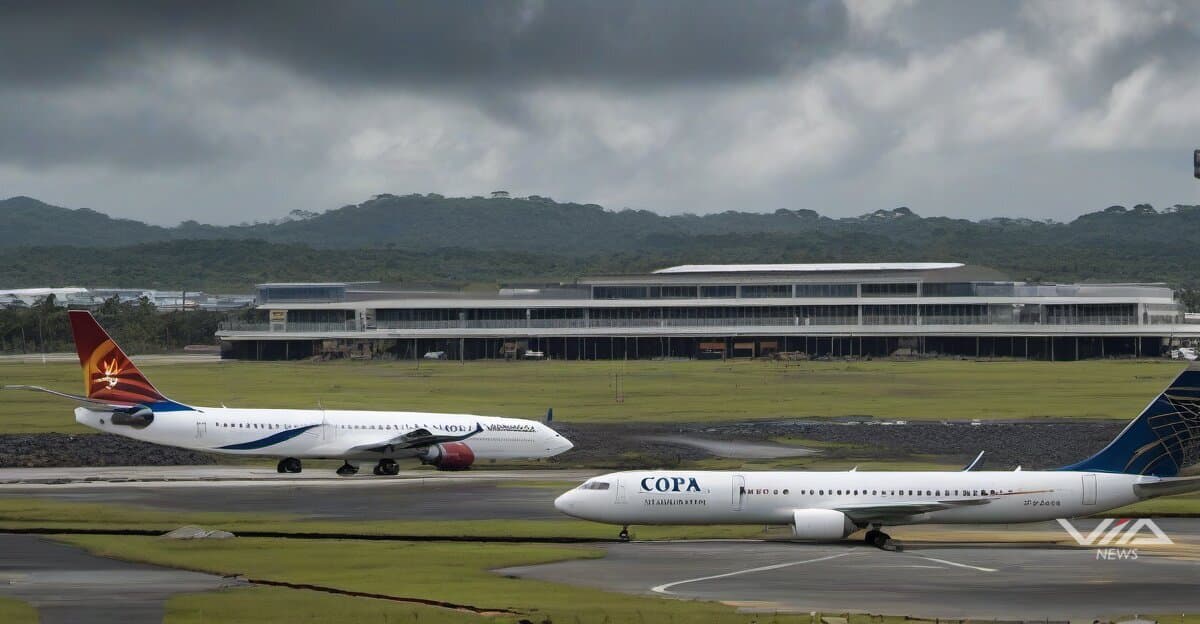
Copa Holdings, the Panamanian carrier listed on the New York Stock Exchange, represents perhaps the purest expression of this model in the Western Hemisphere. Its home base, Tocumen International Airport, sits at the geographic midpoint of the Americas — a natural crossroads connecting more than 80 destinations across North America, Central America, South America and the Caribbean. The airline has turned this geography into competitive advantage, earning consistently strong operating margins that rival or exceed those of its global peers.
But that structural elegance carries a structural price. A recent operational risk assessment of Copa Holdings assigns its Tocumen concentration scenario a catastrophic severity rating, paired with low likelihood and a 0.7 confidence score. It is precisely this class of tail risk — high-impact, low-probability — that global equity markets have historically struggled to price correctly until the moment it arrives.
When One Node Is the Entire Network
In network theory, a system where all traffic routes through a single point is only as resilient as that point. For Copa, Tocumen is not merely a hub — it is the network itself. There is no secondary hub, no fallback routing architecture, no regional spokes capable of absorbing diverted demand at scale. This is a deliberate strategic choice, and for most of Copa's history it has been a rewarding one.
The disruption scenarios, however, are not theoretical. Panama's tropical geography places Tocumen within reach of seasonal storm systems capable of grounding fleets for extended periods. Infrastructure failures — runway closures, terminal outages, air traffic control disruptions from labor actions or technical failures — would propagate immediately across Copa's entire schedule, with no contained fallback. Unlike multi-hub global carriers such as American Airlines, LATAM, or Air France-KLM, Copa cannot redirect demand to an alternative base.
The comparison with global peers is instructive. When Heathrow experienced a major power outage in March 2025, British Airways — itself heavily concentrated at the London airport — faced acute disruption precisely because of that dependency. The incident briefly reignited debate among European aviation analysts about the systemic risks of single-hub concentration for full-service carriers. Copa faces a structurally analogous vulnerability, amplified by the fact that Panama has no alternative international airport capable of replacing Tocumen's function in Copa's network.
Financial Exposure: The Arithmetic of a Hub Shutdown
For international equity investors holding CPA shares, the financial mechanics of a Tocumen disruption are direct and severe. Copa reported operating revenues of approximately $3.2 billion in its most recent fiscal year, with operating margins consistently in the 15–20% range — among the strongest in global commercial aviation. A multi-day hub shutdown would not only ground Copa's own fleet but would eliminate the transit passenger segment that drives load factors across much of the network.
A sustained disruption of one to two weeks could represent a revenue impact measured in the tens of millions of dollars. More significantly, it would disrupt the connectivity product — the one-stop Latin American routing — that defines Copa's value proposition for passengers and travel managers across the region. Revenue lost to a hub shutdown cannot easily be recovered by rerouting; the geographic logic that makes Tocumen irreplaceable in normal operations makes it equally irreplaceable in contingency planning.
A Broader Lesson for Global Aviation Investment
Copa's situation illustrates a tension that is not unique to Latin America. Across global aviation, carriers that have maximised efficiency through hub concentration — Gulf carriers, East Asian network airlines, and single-hub European operators — face analogous questions about tail-risk exposure. The difference is that most of those carriers operate within national contexts where alternative airports, government support mechanisms, or regulatory backstops provide at least partial buffers.
Copa operates in a smaller national market with fewer such buffers, and its hub sits in a country where Tocumen is genuinely without domestic peer. For international investors assessing CPA as part of a broader emerging-markets or transportation portfolio, that distinction matters. The airline's operational excellence and margin profile are well-documented strengths. The Tocumen concentration risk is the less-discussed counterweight — a low-probability, high-severity exposure that warrants a place in any serious risk-adjusted analysis of the stock.
In global markets that have lived through the pandemic-era collapse of aviation demand, the Texas freeze of 2021, and a succession of extreme weather events disrupting major airports worldwide, the question of single-point-of-failure risk in airline networks is no longer abstract. For Copa Holdings, the answer to that question runs through one airport in Panama City.