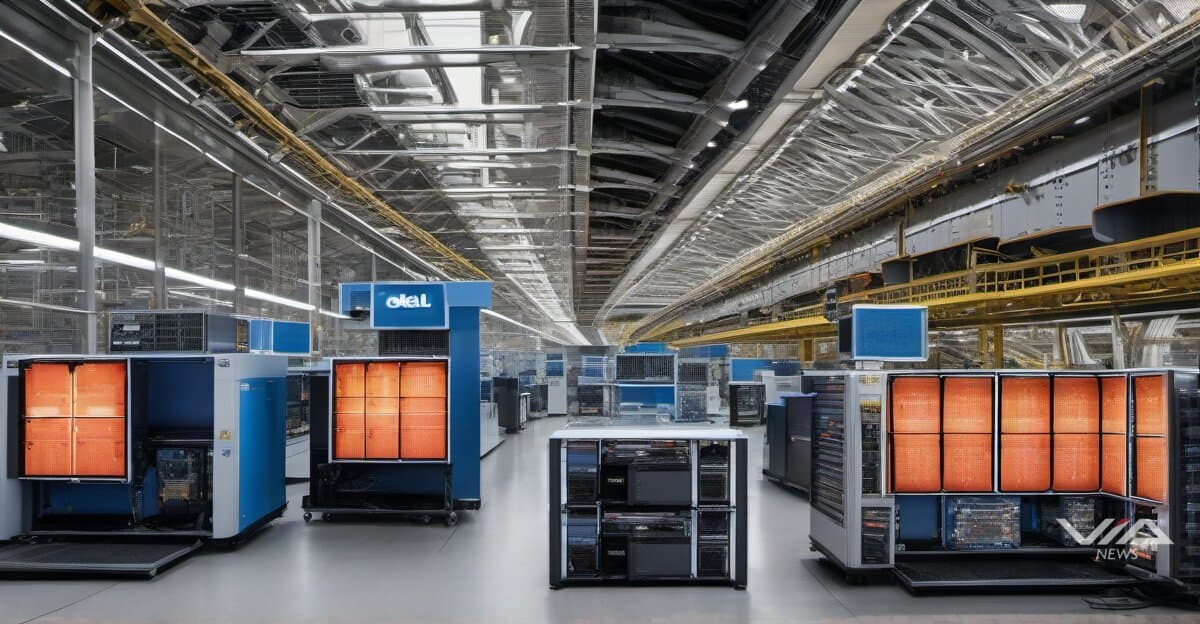
Micron and Dell each jumped 5% on June 25 as investors globally pivoted from AI software into semiconductor and computing hardware.SanDisk added 4%.1
The Nasdaq Composite fell on the same day — confirming this is a reallocation, not a broad rally.
A Worldwide Infrastructure Bet
The rotation reflects a global consensus: physical AI infrastructure — chips, memory, servers, storage — is the safer bet as the AI application layer matures. This mirrors trends in Asian markets, where chipmakers like Samsung and SK Hynix have outpaced Korean software peers, and in Europe, where semiconductor equipment stocks have held firm.
Taiwan's TSMC remains the linchpin. Demand from U.S. hyperscalers for advanced nodes continues to drive Asian foundry capacity investment, reinforcing the hardware-over-software thesis.
Winners and Losers Across the Stack
Memory leads the winners: Micron and SanDisk both surged on sustained HPC and data centre demand.1 Dell's gains reflect enterprise server orders that cross borders — from U.S. cloud builders to Middle Eastern sovereign AI projects. KLA benefits as semiconductor equipment spending holds globally. Penguin Solutions rose as HPC infrastructure demand expands beyond North America.
Losers: enterprise software vendors and AI services firms dependent on corporate IT budgets. Spending remains constrained in both the U.S. and Europe, squeezing companies monetising AI at the application layer.
Outlook
The rotation is projected to persist three to six months.1 Semiconductor ETFs and AI data centre REITs are positioned to outperform. Fintech and enterprise AI vendors face continued pressure until corporate spending cycles — globally — improve.
For international investors, the signal is consistent: hardware-adjacent positions outperform across markets while enterprise software waits for a budget cycle recovery.