
Facebook's Attempt to Broadcast Exclusive E-Sports Tournaments Didn't Turn Out as Expected
Juan Felipe Guerrero C
March 12, 2018
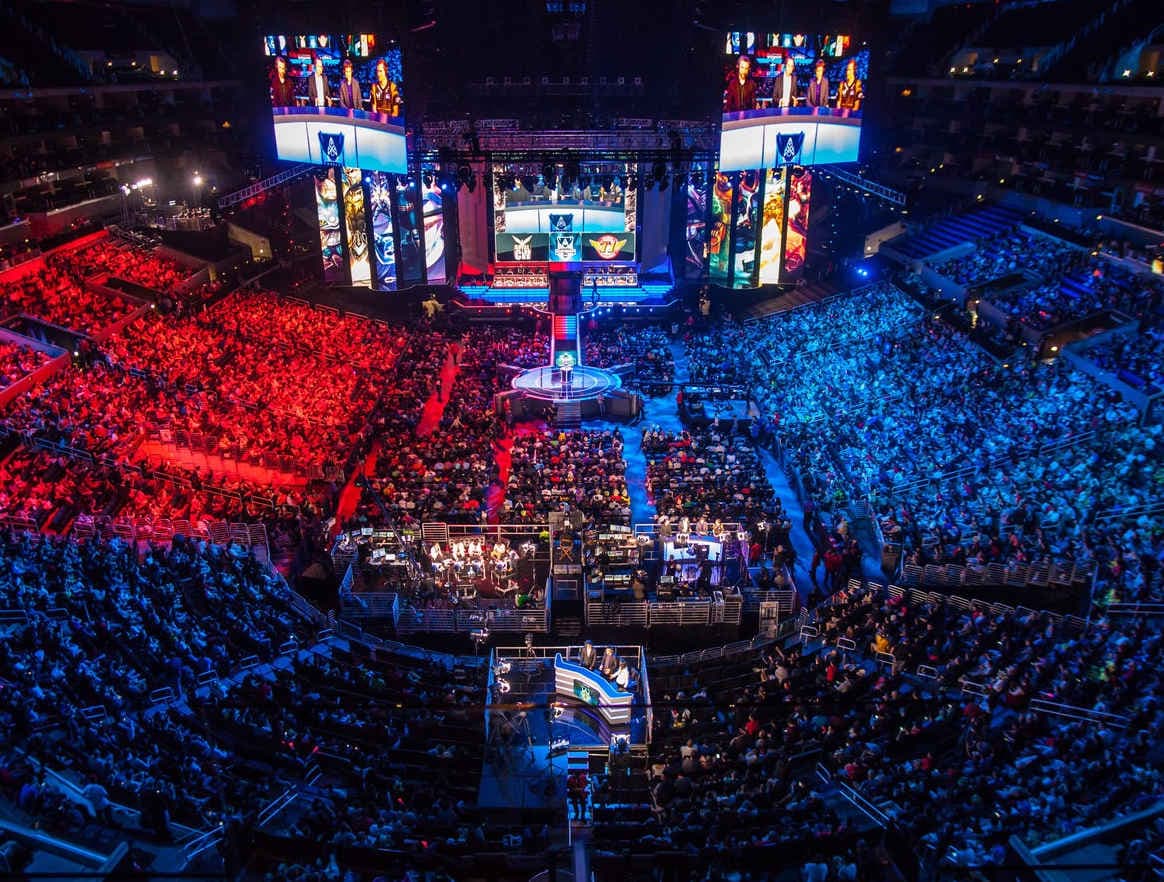
Between January 23 to 28, Facebook exclusively broadcasted the competition of two important massive online video game tournaments, but the reaction of players and spectators was not entirely positive.
The popular social network co-founded by Mark Zuckerberg began 2018 with a slight slip. In the first days of the first month of the year, Facebook closed an agreement with the ESL (Electronic Sports League), one of the largest companies in the organization and transmission of electronic sports tournaments (eSports), to exclusively broadcast the competitions of Dota 2 and Counter-Strike: Go. The event, called ESL One, was held at the Genting Highlands Hotel in the city of Bentong, Malaysia, on January 23-28, and awarded $160,000 to the winning team; $80,000 to the second; and $40,000 to the third place.
Facebook thought that breaking into the broadcast of these two tournaments would be a good strategy, much more so when getting the broadcasting rights would mean taking them away from YouTube and Twitch, the two channels par excellence in streaming massive events.
Facebook's scheme was based on the premise that the broadcast of the event could serve not only to attract the direct public (the gamers), depending on how many fans had the most notable players but also to attract the public outside that industry. The broadcasts were technically solid, as they were executed at 60 frames per second at a resolution of 1080 pixels per inch (Full HD), with coverage in English and Portuguese, as well as additional shows that kept the public constantly informed during the week of the competition.
However, during the first day of broadcasts, the uneasiness of the direct audience was felt. The announcement of the agreement between Facebook and ESL led to a social media protest where users mainly criticized the decision because they felt that Facebook provided a viewing experience inferior to Twitch and did not allow mobile viewing without the Facebook application. During the week of the tournament, Facebook's live broadcast reached, at its peak, some 7,000 viewers, a number that was reduced to about 2,000 at many times during the broadcast. Undoubtedly, a much lower number than expected on Facebook, as this type of transmissions have easily reached figures that surpass the audience of more than 20,000 spectators.
In addition, as with YouTube and Twitch, each broadcast has a sidebar for live commentary, so there the discomfort of viewers was also evident. Hundreds of comments and negative emojis invaded the ESL One transmissions through Facebook. Beyond the challenge of moderating the crowd of traditionally rebellious players, Facebook will have to try to convince those same people that it can be considered a legitimate destination to watch live game broadcasts. In addition, like any type of sporting event, the highest revenues come from broadcasting rights, so this type of agreement will be increasingly common as electronic sports are growing in popularity.
There are already many visionaries who see eSports as a big business due to the million-dollar figures that this industry generates every year. It is also expected that in a few years they will be able to beat big competitions like the Super Bowl. Among the key business of digital sports are streaming platforms or live broadcast. They have a very important role in the industry because of their great capacity to generate income in advertising. It is very important to keep in mind that as in traditional sports the competition is a spectacle and the number of spectators is what produces the income, something Facebook should bear in mind.