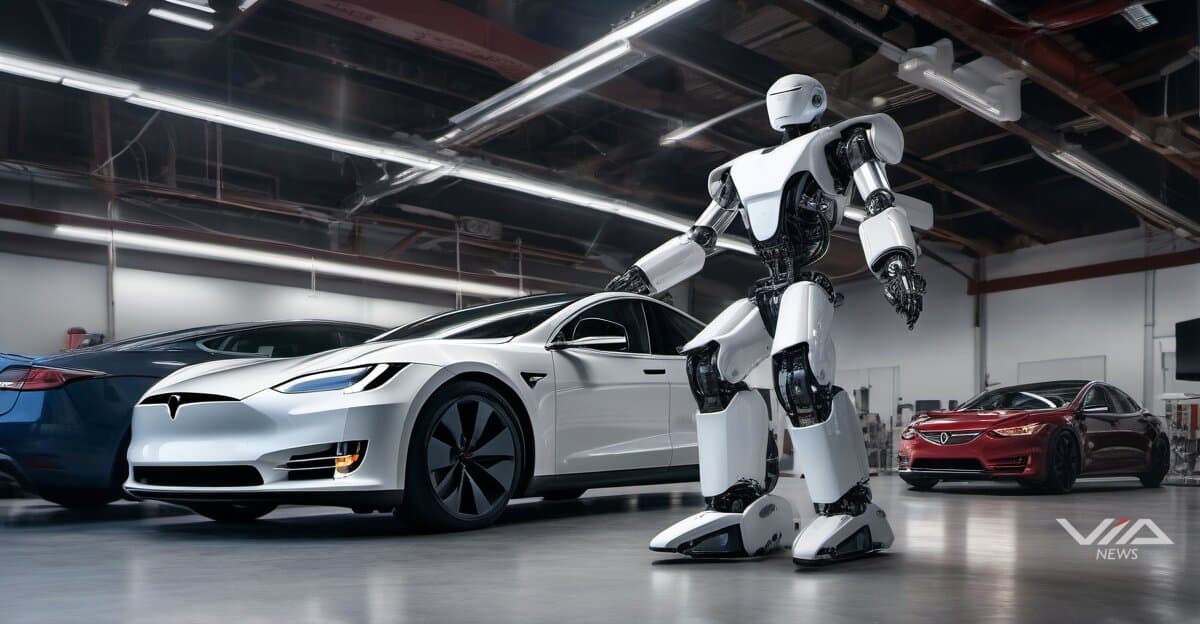
Tesla targets 2027 for commercial deployment of Optimus humanoid robots, marking a global transition from laboratory research to commercial markets. Similar shifts are occurring across continents, with Nissan developing ProPILOT autonomous systems in Japan and quantum-HPC integration advancing in Europe through the Bull-Equal1 alliance.
OMNIQ Corp reduced shareholder deficit from negative $43.9 million to negative $11.8 million, a 71% improvement year-over-year.1 The company increased gross profit 60% in 2025, demonstrating commercial viability across international fleet management markets.
Regulatory challenges differ by region. AMC Robotics Corporation delayed its Form 10-K filing due to warrant accounting classification issues under U.S. securities rules, though the company stated this does not reflect changes in underlying operations.2 The delay highlights varying regulatory frameworks facing robotics companies transitioning to commercial markets across different jurisdictions.
Infrastructure requirements are driving unconventional energy solutions globally. Nuclear power plants are being repurposed to supply data centers running AI workloads, addressing massive power demands of autonomous systems and robotic controls.
Quantum computing partnerships are accelerating AI capabilities across continents. Bull and Equal1 formed an alliance for hybrid quantum-HPC integration in Europe, while IBM partnered with Illinois Institute to establish the Discovery Accelerator Institute in the United States.3 Bruno Lecointe said the convergence of high-performance computing and quantum technologies redefines approaches to complex global challenges.
Consumer-facing deployments are expanding beyond industrial applications. Nissan's ProPILOT systems demonstrate how autonomous technologies developed for commercial Japanese fleets are entering global consumer markets through smart home platforms and vehicle systems.
"When you finally launch the thing you've been working on, and you see the usage go up, it's exhilarating," said OpenAI engineer Sarang Gupta.4 "You feel like that's what you were building toward: users actually seeing and benefiting from what you made."
The commercial deployment phase combines improved AI model performance, reduced hardware costs, and proven financial models. Companies across North America, Europe, and Asia are moving from pilot programs to scaled operations in robotics, autonomous vehicles, and intelligent automation.