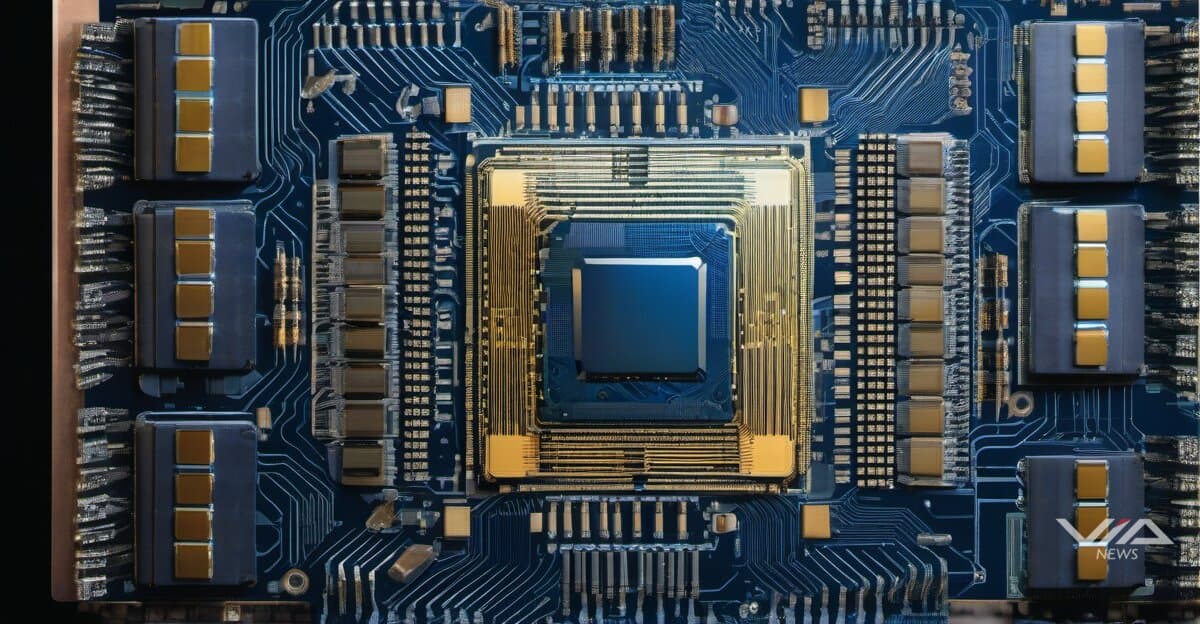
Marvell Technology is expanding custom chip development for data centers as enterprise clients across North America, Europe, and Asia increase AI tool adoption.1 Cloud providers are moving beyond general-purpose GPUs toward application-specific integrated circuits for machine learning workloads, with AMD and other chipmakers joining the custom processor race.
Asian manufacturers are competing to commercialize glass substrate technology for advanced chip packaging. LG Innotek and Samsung Electro-Mechanics are developing substrates that enable higher density interconnects and improved thermal management for AI accelerators, targeting cloud infrastructure operators worldwide.
Samsung Electronics set a 2027 target for fully autonomous network systems while deploying its Snapdragon 8 Elite Gen 5 processor in the Galaxy S26 Ultra.2 The company integrated satellite communication across Galaxy flagship and A-series devices starting in 2025, expanding connectivity for edge AI applications globally.2 Samsung introduced Privacy Display technology, marketed as the first built-in privacy screen for mobile devices.2
U.S. defense regulations are reshaping global semiconductor supply chains. Starting 2027, Chinese rare earth materials will be banned from defense systems, forcing manufacturers worldwide to diversify sourcing.1 Micron is responding by expanding domestic U.S. manufacturing capacity, reflecting broader industry shifts toward geographically distributed production networks.
The semiconductor sector faces dual pressures: surging demand for specialized AI acceleration hardware and geopolitical requirements for supply chain resilience. Companies are balancing performance requirements with regulatory compliance as international trade policies evolve.