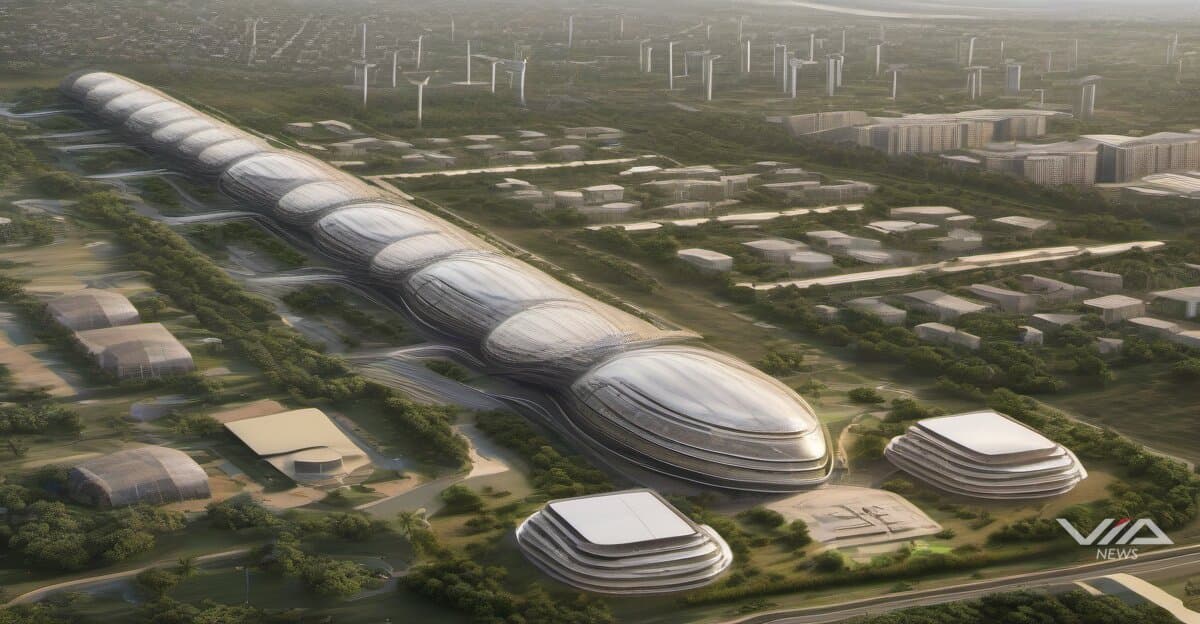
Nigeria has commissioned the Kasi LOS1 data center in Lagos.1 The Nigerian Sovereign Investment Authority has committed funding to the project simultaneously — the first time sovereign capital and hyperscale compute have aligned in West Africa.
African AI infrastructure has lagged Asia and the Middle East for more than a decade. Gulf states deployed sovereign-backed data centers in the 2010s. Southeast Asia followed. Sub-Saharan Africa is now entering that cycle.
Nigerian and West African fintech and AI companies currently route compute-heavy workloads to European or US cloud providers.1 LOS1 changes that equation. Local hyperscale access is expected within 6 to 18 months.1
Four factors converged at once: NSIA capital, LOS1 commissioning, Nigeria's National Cloud Policy 2025, and the Nigeria Data Protection Act 2023.1 Two subsea cable systems — 2Africa and Equiano — both land in Nigeria, providing the upstream bandwidth needed for at-scale data center operations.1
The Data Protection Act adds regulatory pressure to localization.1 Companies processing Nigerian user data now operate under a framework that favors domestic compute. Combined with sovereign funding, that regulatory weight sharpens the economic case for building AI products onshore.
Nigeria's population of approximately 200 million is the continent's largest single addressable base for AI services.1 B2B products targeting financial services, agriculture, and healthcare have historically absorbed latency and cost penalties from offshore compute. Local infrastructure eliminates both.
A wave of fintech AI product launches is expected once LOS1 reaches operational capacity.1 The 6-to-18-month window aligns with standard B2B AI development cycles.
The model is replicable. Kenya, South Africa, and Egypt — each with sovereign wealth or state development funds — are positioned to announce comparable infrastructure bets within 12 months.1 LOS1 sets the regional benchmark.
Sovereign capital entering the stack — rather than waiting on hyperscaler FDI — marks a structural shift in how Africa intends to own its digital infrastructure layer.