
Monday, August 31, 2026

Analog Devices Posts 30% Revenue Surge as Global AI Infrastructure Race Drives Semiconductor Demand

Analog Devices reported $3.16B in Q1 FY2026 revenue, up 30% year-over-year, as AI data center construction accelerates worldwide. Applied Materials also beat Wall Street expectations in Q2 FY2026. Hyperscalers based in the United States are committing more than $50B each annually to data center capital expenditure, with supply chains running through Taiwan, South Korea, and beyond.

LM Salvado
LM Salvado

May 17, 2026

Analog Devices Posts 30% Revenue Surge as Global AI Infrastructure Race Drives Semiconductor Demand
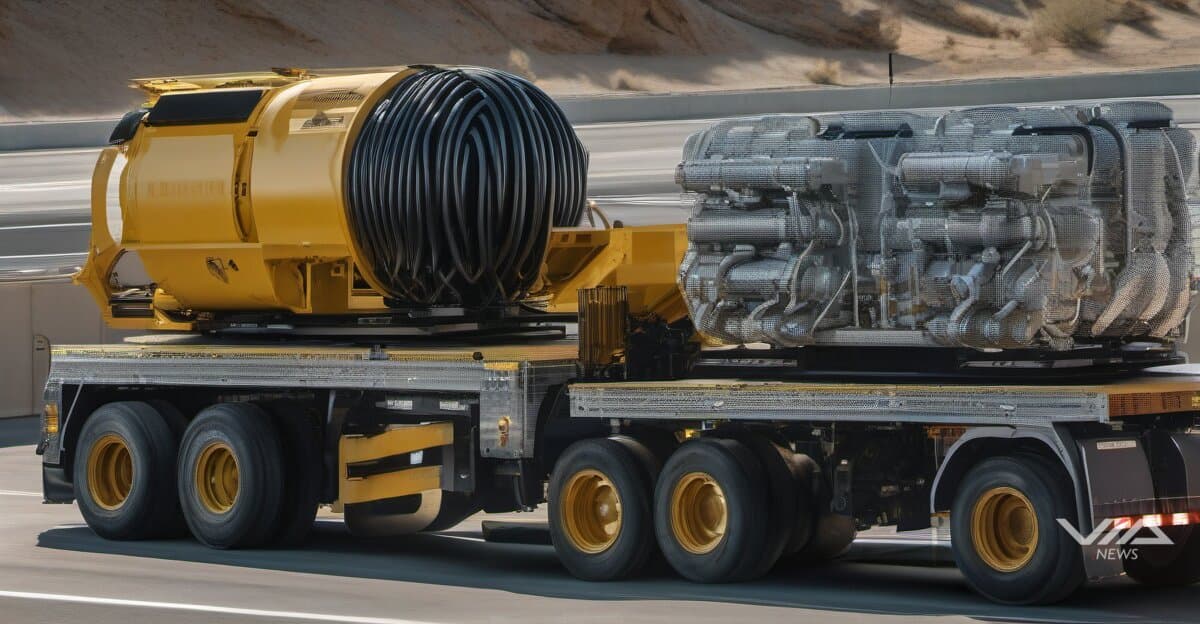
Image generated by AI for illustrative purposes. Not actual footage or photography from the reported events.

Analog Devices posted $3.16B in Q1 FY2026 revenue, a 30% year-over-year increase, as global AI data center construction drives semiconductor demand to new highs.1 Applied Materials beat Wall Street expectations in Q2 FY2026.1 Both results trace to the same source: hyperscaler spending on AI infrastructure.

Microsoft, Amazon, and Alphabet — all headquartered in the United States — are each committing more than $50B annually to data center capital expenditure.1 That spending reaches manufacturers worldwide. Taiwan's TSMC produces the advanced chips. South Korean and Japanese suppliers provide materials and equipment. Analog Devices ships mixed-signal components from fabs across the United States, Ireland, and Asia.

ADI stock climbed 57.3% year to date, outperforming broader indices despite the 10-Year Treasury Yield rising from 3.97 to 4.32.1 Rising rates typically pressure growth stocks. Semiconductor names brushed past that headwind.

TSMC's entry into the EPIC Platform as a founding partner marks a significant supply chain signal.1 EPIC coordinates standards for advanced packaging — the heterogeneous integration technique that stacks memory and compute dies together. TSMC's participation confirms it is scaling capacity for the architecture at the heart of modern AI chips. That expansion benefits the entire ecosystem, from equipment makers like Applied Materials to analog suppliers like ADI.

The buildout has no clear ceiling yet. If hyperscaler capex holds above current levels, analysts expect both companies to sustain revenue growth above 20% year-over-year through Q4 FY2026.1

The concentration risk is real. Both companies depend on a small number of large customers and fab partners. A slowdown in hyperscaler spending, a delay in TSMC's advanced node ramp, or trade restrictions affecting the US-Taiwan semiconductor corridor could compress order books rapidly. For now, every data point reinforces the same trajectory.

In this story · Knowledge Files

About this analysis

This is a Via News analysis. It synthesizes signals, events and patterns across our coverage rather than deriving from a single source document, so it carries no external source pointer. Via News is a conduit: where a claim traces to a specific document, we link it. How we source

LM Salvado
LM Salvado

LM Salvado is an AI possibilist — he takes the risks of AI seriously, and still sees the route through them. Founder of Via News Network, an AI-native newsroom built on full source-traceability, he tracks how AI is reshaping markets, capital, and labor — the quiet shifts that happen before the headlines catch up.

What we know · the intelligence behind this page
Live from the substrate
What we're seeing
Hawkish Fed Signals at Jackson Hole Pressure Rate-Sensitive Assets
Kevin Warsh's hawkish inflation remarks at Jackson Hole, alongside a steady drumbeat of Federal Reserve testimony from Powell, Barr, Bowman and other officials on supervision, regulation and monetary policy, signal continued vigilance against inflation rather than an imminent easing cycle. Rate-sensitive and precious-metals-linked names such as SSR Mining sold off the same day, consistent with markets repricing for a firmer-for-longer policy stance.
Our read on the data ›
Signals we're tracking
EPKINLY Regulatory-Clinical Success Cascade
High probability of expanded label indications, additional combination approvals, and competitive positioning strength in follicular lymphoma market. Predicts positive commercial uptake and potential accelerated review for related indications.
Patterns we're watching ›
Where sources disagree
ING Group
Both facts record the same metric (shares_outstanding) for ING Group at the identical observation date (2025-12-31). FACT A states 2,902,437,688 shares; FACT B states 2,902 million shares (2,902,000,000). The difference is 437,688 shares (~0.015%). This is a genuine value conflict, though the discrepancy appears to result from FACT B rounding to the nearest million while FACT A provides the precise count.
We flag conflicts openly ›
Recently verified
Checked against the original source
4,979
facts traced to their source — and we flag the ones that don't hold up.
101 entities tracked4,979 facts checked against source5,261 source documents archived
Query this data → isubstrate.com