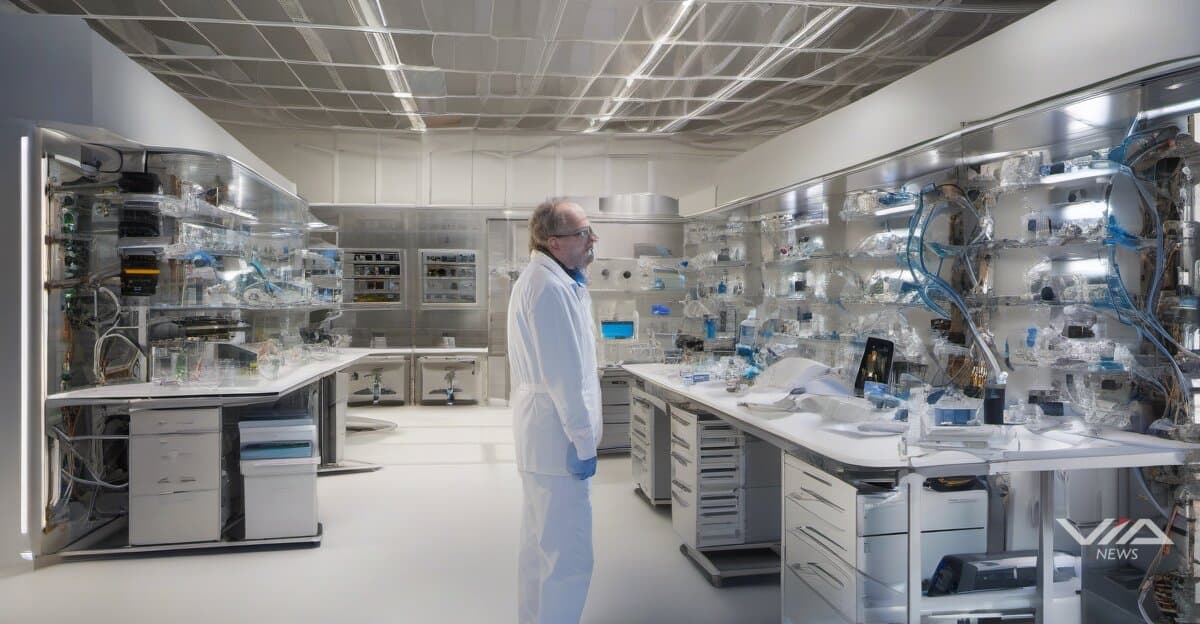
MindWalk Holdings publicly demonstrated its ReefIQ platform this month, powered by HYFT Technology — a database of roughly 660 million biological patterns linking sequence, structure, and function.13
The company filed patent EP26187897.9, adding a computational layer atop its foundational HYFT patent, EP3881326A1. MindWalk says the new filing is additive, not a replacement.2
The move fits a global pattern: drug discovery is shifting from proprietary in-house pipelines toward shared, AI-readable biological data. MindWalk argues biological data is scattered across incompatible files and systems worldwide, and must be unified before AI can use it effectively.1
Competition spans continents. NVIDIA BioNeMo, Boltz Lab, Owkin, Basecamp Research, and Edison Scientific are all racing to control the connected biological data layer beneath drug discovery. NVIDIA has anchored lab-in-the-loop partnerships with Thermo Fisher and Eli Lilly, tying US hardware to pharma R&D directly.
Major pharmaceutical firms are restructuring in response. Denmark's Novo Nordisk closed its internal cell therapy unit entirely, licensing the program to AI-driven Cellular Intelligence instead of building it in-house.4 Its stock rallied nearly 25% over 30 days on the news.4
The pattern reaches beyond any single company or country: pharma is outsourcing R&D to AI platforms built on shared biological data, rather than guarding proprietary pipelines. For an industry historically defined by closely held research, that marks a structural shift in how new drugs get discovered.