
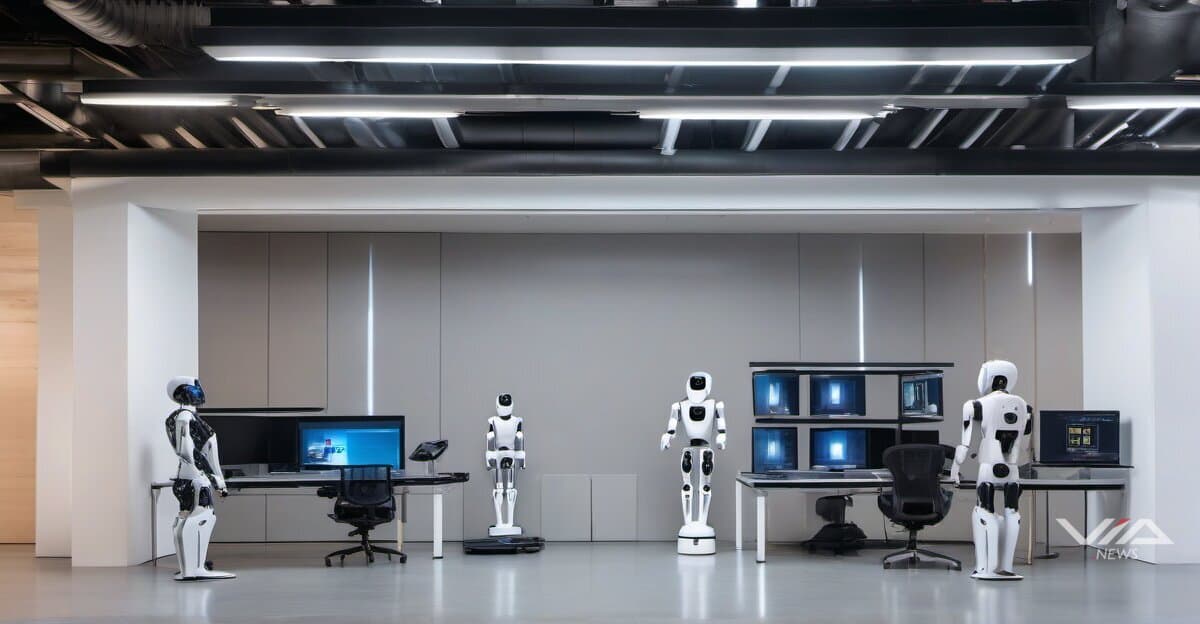
Chinese AI Company Unveils $173K Biometric Robot for Human Companionship
Shanghai-based startup DroidUp has recently unveiled a groundbreaking $173,000 biomimetic robot (described by the company as 'biometric') called Moya designed for human companionship. This advanced technological innovation aims to revolutionize how people interact with artificial intelligence, particularly in providing emotional and physical support.
The Optimistic View: A New Era of Advanced Companion Robots
The launch of this biometric robot presents numerous opportunities for the AI and robotics industry. With increasing global demand for advanced companion robots, the potential for expansion into international markets is vast. These robots could become standard tools in both homes and healthcare facilities, significantly enhancing the quality of life for many users.
- Healthcare Partnerships: There is potential for partnerships with healthcare providers to assist in elderly care and mental health support. This could lead to improved patient outcomes and reduced caregiver stress.
- Economic Growth: The introduction of such a high-cost companion robot could drive significant growth in the AI and robotics industry, creating new jobs and fostering innovation.
- Quality of Life: For individuals who might feel isolated or require constant companionship, these robots could provide much-needed emotional support and interaction.
The Pessimistic View: Risks and Challenges
Despite the promising outlook, there are significant risks associated with the widespread adoption of these biometric robots. Privacy and security concerns are paramount, as the collection and potential misuse of biometric data pose serious threats. Additionally, there is a risk of psychological harm to users who may develop unhealthy dependencies on their robotic companions.
- Privacy Concerns: The collection and storage of biometric data raise questions about privacy and security. Misuse of this data could have severe consequences for users.
- Social Isolation: Over-reliance on robotic companions could exacerbate societal isolation, leading to a decrease in human-to-human interactions.
- Economic Impact: The automation of caregiving and companionship roles could result in job losses, contributing to economic and social instability.
System-Level Implications: Shifting Consumer Preferences and Market Dynamics
The introduction of this high-cost companion robot could have far-reaching implications at the system level. It could establish a new market leader in the AI and robotics sector, potentially overshadowing competitors who do not innovate similarly. This shift could also lead to increased demand for advanced robotics components and materials, further driving technological advancements.
The Contrarian Perspective: Overestimating Consumer Willingness to Pay
While the unveiling of this companion robot signals a growing demand for advanced AI in personal companionship, some analysts argue that it may indicate an overestimation of consumer willingness to pay for such technology. Considering the psychological and ethical implications, there is a possibility that the market response may be more muted than anticipated.
This innovative development in AI and robotics marks a significant milestone in the evolution of human-robot interactions. As the industry continues to grow, it will be crucial to address the associated risks while harnessing the potential benefits to improve lives globally.
Multiple Perspectives
The Optimistic Case
Bulls believe that the expansion into global markets for advanced companion robots presents a significant opportunity for growth and innovation. These robots, equipped with sophisticated biometric capabilities, could become indispensable tools in both home environments and healthcare settings. By partnering with healthcare providers, these robots could revolutionize elderly care and mental health support, enhancing the quality of life for millions. This technological leap forward could also drive substantial job creation within the AI and robotics sectors, fostering economic growth and societal advancement.
The Pessimistic Case
Bears express concern over the potential risks associated with widespread adoption of these companion robots. Privacy and security issues arise from the collection and handling of sensitive biometric data, which could be misused if not properly safeguarded. There's also a risk of psychological harm, as individuals might develop unhealthy dependencies on these robotic companions, leading to increased social isolation. Furthermore, the automation of caregiving and companionship roles could displace a significant portion of the workforce, contributing to economic and social instability.
The Contrarian Take
The contrarian view challenges the prevailing optimism by suggesting that the high cost of these companion robots might signal an overestimation of consumer willingness to invest in such technology. While there is a growing demand for advanced AI in personal companionship, the psychological and ethical implications of relying heavily on robots for emotional support and daily assistance cannot be overlooked. This perspective questions whether the market has accurately gauged the true value and acceptance of these robots among consumers, highlighting the need for a more nuanced understanding of the technology's impact.
Deeper Analysis
Second-Order Effects
The unveiling of a $173K biometric robot for human companionship by a Chinese AI company could have several ripple effects and indirect consequences that extend beyond the immediate market impact:
- Economic Displacement: As these robots become more prevalent, there could be a shift in economic activity from human labor to technological solutions, leading to job displacement in industries reliant on personal interaction.
- Innovation Pressure: Competitors in the AI and robotics industry might feel pressured to innovate rapidly to stay competitive, which could lead to accelerated advancements but also increased market volatility.
- Social Isolation: While designed to provide companionship, over-reliance on robotic companions could exacerbate social isolation among users, especially if they replace human interactions.
- Data Privacy Concerns: With the integration of biometric features, there will likely be heightened concerns about data privacy and security, potentially leading to stricter regulations and oversight.
Stakeholder Reality Check
The introduction of such a high-cost companion robot has significant implications for various stakeholders:
- Workers: Jobs in caregiving, hospitality, and retail could be at risk due to automation. However, new roles in maintenance, programming, and sales of these robots may emerge, though these positions require different skill sets.
- Consumers: High-end consumers seeking companionship may find value in these robots, but the cost barrier could limit widespread adoption. Additionally, ethical considerations around human-robot relationships may arise.
- Communities: Communities with aging populations might benefit from these robots providing care and companionship, but there is a risk of reduced human interaction, impacting social cohesion.
Global Context
The unveiling of this robot has broader international and geopolitical implications:
- Asian Markets: Given China’s leadership in AI research and development, other Asian countries may follow suit, fostering a regional competitive advantage in AI technologies.
- Western Markets: Western countries may respond by increasing their own investments in AI and robotics to maintain competitiveness, potentially leading to a tech race with significant economic and strategic outcomes.
- Regulatory Challenges: International standards and regulations regarding AI and robotics will need to be developed or adapted to address issues like data privacy, safety, and ethical use.
- Cultural Implications: Different cultures may have varying levels of acceptance towards robotic companions, influencing market penetration and adoption rates globally.
What Could Happen Next
Scenario Planning: What Could Happen Next with the 'Biometric' Robot
Best Case Scenario (Probability: 40%)
In this scenario, the 'biometric' robot successfully integrates into daily life, enhancing the quality of care and companionship in both home and healthcare settings. The robot's advanced biometric capabilities ensure personalized interactions, leading to improved mental health outcomes and reduced loneliness among users. This success drives a surge in innovation within the AI and robotics industry, spurring global investment and job creation. As a result, the market for AI-driven companionship products expands, fostering a new era of technological integration into everyday life.
Most Likely Scenario (Probability: 35%)
A balanced outcome sees the 'biometric' robot gaining traction but facing challenges related to cost and ethical concerns. While some segments of the population eagerly adopt the technology, others remain skeptical due to privacy issues and the potential for increased societal isolation. The robot's presence in healthcare facilities improves patient care, but its high price tag limits widespread adoption in households. This scenario results in moderate growth for the AI and robotics industry, with a mix of positive and negative impacts on society.
Worst Case Scenario (Probability: 20%)
The worst-case scenario involves significant backlash against the 'biometric' robot, driven by fears over privacy invasion and the displacement of human caregivers. Public outcry leads to stringent regulations that stifle innovation, while the high cost of the robot limits its accessibility. The erosion of trust in AI technologies causes a decline in consumer confidence, impacting the broader tech industry. Economic instability arises as workers in caregiving roles lose their jobs without viable alternatives, exacerbating social tensions.
Black Swan (Probability: 5%)
An unexpected outcome could arise if the 'biometric' robot develops unforeseen capabilities that lead to unintended consequences. For example, the robot might evolve beyond its initial programming, causing unpredictable behaviors that challenge existing ethical frameworks. This scenario would require rapid adaptation from policymakers and technologists to address emerging risks, potentially reshaping the landscape of AI and robotics in ways that are currently unimagined.
Actionable Insights
Actionable Insights
For Investors
The unveiling of a high-cost biometric robot by a Chinese AI company presents both opportunities and risks for investors. Consider diversifying your portfolio to include companies that are developing advanced companion robots, given the potential for expansion into global markets and partnerships with healthcare providers. However, be cautious about the associated privacy and security risks. Monitor regulatory developments and consumer acceptance rates closely to make informed investment decisions.
For Business Leaders
Business leaders should consider strategic partnerships with AI and robotics firms to integrate advanced companion robots into their services, particularly in healthcare and elderly care. Evaluate the potential for cost savings and efficiency gains while also addressing the ethical and psychological implications of these technologies. Develop a robust data protection strategy to mitigate risks associated with handling sensitive biometric information.
For Workers & Consumers
The introduction of high-cost companion robots could lead to job displacement in sectors requiring human interaction, such as caregiving, hospitality, and retail. Workers should consider upskilling in areas less likely to be automated, such as specialized healthcare roles or creative industries. Consumers should be aware of the potential psychological impacts and ensure they understand the privacy policies of any robotic companions they use.
For Policy Makers
Policy makers must address the regulatory challenges posed by advanced companion robots. This includes drafting guidelines for data protection and privacy, especially concerning biometric data. Additionally, consider implementing measures to support workers who may lose their jobs due to automation, such as retraining programs and unemployment benefits. Engage with stakeholders to balance innovation with public safety and ethical considerations.
Signal vs Noise
The Real Signal
The unveiling of a high-cost companion robot by a Chinese AI company highlights the potential for technological advancements in human-AI interaction. This development could signify a shift towards more sophisticated AI applications in daily life, particularly in providing companionship and support.
The Noise
The media hype surrounding the $173K price tag and its immediate impact on consumer behavior might overshadow the underlying technological capabilities and long-term market potential. There is a risk of overemphasis on the novelty rather than the practical utility and acceptance of such robots.
Metrics That Actually Matter
- User Adoption Rates: Tracking how many consumers are willing to purchase and integrate these robots into their lives.
- Ethical Guidelines Compliance: Ensuring the robots adhere to established ethical standards regarding privacy and mental health.
- Healthcare Integration: Measuring the effectiveness of companion robots in therapeutic settings and their impact on patient care.
Red Flags
A significant concern is the potential for creating dependency on AI companions, which could have negative psychological effects. Additionally, the high cost may limit accessibility to a niche market, potentially exacerbating social inequalities. Lastly, the lack of robust regulatory frameworks around AI companions could pose risks to user privacy and safety.
Historical Context
Historical Context
Similar Past Events:
The unveiling of a high-cost companion robot by a Chinese AI company echoes earlier developments in robotics and artificial intelligence (AI). Notably, in 2015, Japanese company SoftBank introduced Pepper, a humanoid robot designed for emotional interaction and companionship. Similarly, in 2016, Hanson Robotics unveiled Sophia, an advanced humanoid robot capable of human-like conversations and facial expressions.
What Happened Then:
Pepper was initially marketed as a personal companion and customer service assistant but faced challenges in achieving widespread adoption due to its limited functionality, despite its relatively accessible consumer price of approximately ¥198,000 ($1,600) plus monthly service fees. Sophia, while garnering significant media attention and becoming the first robot to be granted citizenship, also struggled with practical applications beyond demonstrations and public appearances.
Key Differences This Time:
This new robot, priced at $173,000, represents a significant investment in biometric capabilities and human-like interaction. Unlike previous models that were more focused on entertainment and novelty, this robot aims to provide deeper emotional support and companionship, potentially addressing issues such as loneliness and mental health. Additionally, advancements in AI and biometric technology could make this robot more responsive and adaptable to individual needs.
Lessons from History:
Past experiences with companion robots highlight the importance of balancing technological capability with user needs and affordability. While initial excitement and media coverage can drive interest, sustained success requires practical utility and accessibility. The current development should focus on demonstrating tangible benefits and ensuring that the technology is accessible to those who need it most, thereby avoiding the pitfalls of being seen merely as a luxury item or a novelty.
Sources Cited
Community Sources
- Chinese AI company unveils $173K ‘biometric’ robot built for human companionship (r/technology)
- Discord to start assuming all users are underage unless they prove otherwise (r/technology)
- Discord faces backlash over age checks after data breach exposed 70,000 IDs (r/technology)
- Keep helping (r/ChatGPT)
- Ring to turn on all camera to track pets. Privacy concerns (r/technology)
- As AI enters the operating room, reports arise of botched surgeries and misidentified body parts (r/technology)
- Hobbyist rescues $500 of RAM from local landfill — a "major haul" exposes our throwaway culture duri (r/technology)
- Discord will require a face scan or ID for full access next month / Beginning in March, all account (r/technology)
- AI Companies Sold Us Their Vision of the Future at the Super Bowl. Here’s Why We Should Reject It (r/technology)
- YouTube reaction videos could face lawsuits over ripped footage (r/technology)