
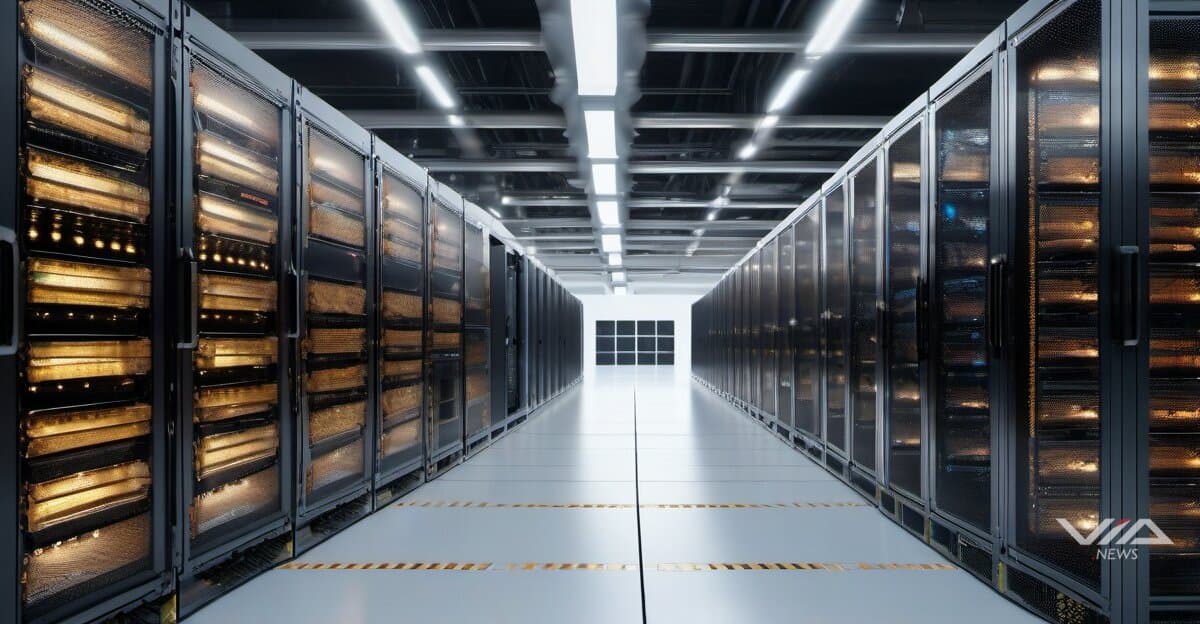
Data center infrastructure has become the primary constraint for AI cloud deployment globally, overtaking chip availability as the dominant bottleneck. CoreWeave reports delays stem from "powered shell" data center capacity—not semiconductors or power supply—prompting the company to build its own facilities.
The shift marks a reversal from 2023-2024, when GPU scarcity drove AI deployment timelines worldwide. Specialized cloud providers now face longer waits for rack space, power connections, and cooling systems than for procuring advanced AI accelerators.
CoreWeave is embedding self-build capabilities into its supply chain, following vertical integration patterns pioneered by hyperscalers like AWS and Google Cloud. The move represents a strategic departure from asset-light models that relied on colocation providers across North America, Europe, and Asia-Pacific markets.
The company has diversified its data center partnerships to manage constraints. Internal projections indicate Q1 2026 will eliminate most current deployment delays through combined self-build and partnership approaches.
Surging demand for AI inference and training infrastructure is outpacing traditional data center construction cycles in established markets. Hyperscalers and AI-focused providers compete for limited availability in existing facilities from Northern Virginia to Frankfurt to Singapore while racing to bring new capacity online.
Industry observers expect more AI infrastructure companies to announce self-build initiatives through 2026 as time-to-deployment becomes competitive differentiation. Providers with captive data center capacity can offer faster provisioning for enterprise AI workloads, particularly in power-constrained European and Asian markets.
The infrastructure crunch affects model training timelines, inference deployment schedules, and AI application scaling globally. Companies dependent on third-party cloud infrastructure face extended wait times for new capacity, with delays most acute in regions with limited power grid expansion and restrictive zoning regulations.
CoreWeave's Q1 2026 timeline will test whether vertical integration and provider diversification can compress deployment cycles under supply-constrained conditions across multiple continents.
Sources:
1 Nasdaq, "Think You Can Ignore RMDs? Here's What It Could Cost You." (March 23, 2026)
2 Globe Newswire, "New Crypto: Pepeto Presale Stage Update While Dogecoin Price Prediction Heats Up After Elon Musk Dog" (March 23, 2026)