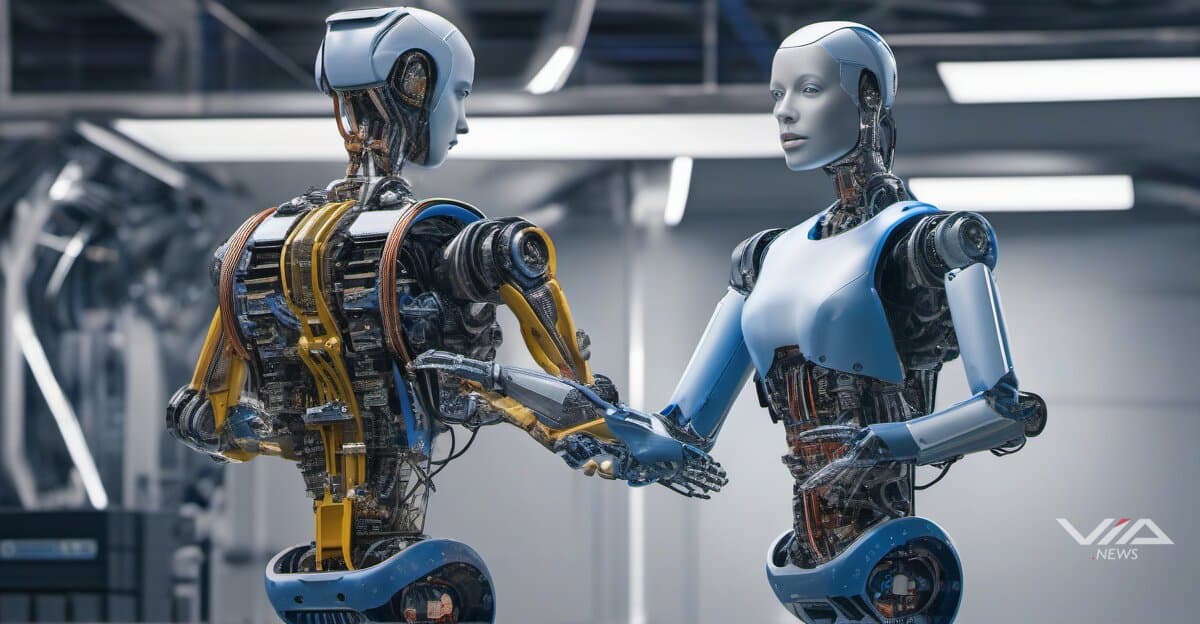
Fortune 500 companies deploying autonomous security robots report 35-80% cost reductions compared to human guards, driving adoption across the $50 billion global security services market. Artificial Intelligence Technology Solutions' RAD units generate recurring revenue as enterprise clients scale from pilots to fleet deployments, with RADSight 2.0 cutting power consumption over 50% for 24/7 operation.
Foundation models now power robotics development worldwide. Serve Robotics acquired Vayu Robotics to gain physical intelligence technology, while three humanoid companies—Galaxea AI, Spirit AI, and AI² Robotics—launched in six months building systems around neural networks trained on diverse physical tasks.
The technology processes visual and sensor data to handle unpredictable situations without reprogramming. Warehouse robots adapt to diverse objects and changing layouts, replacing fixed conveyor systems across global logistics networks. Retail and hospitality service robots navigate human spaces using the same underlying architecture.
This marks a shift from programmed automation to learned autonomy. Traditional industrial robots execute predetermined sequences; foundation model systems interpret sensory input and generate physical responses, enabling operation in unstructured environments previously requiring human workers.
Internal resistance emerged at OpenAI over Pentagon partnerships for autonomous systems, raising questions about military deployment of AI robotics. The debate highlights tensions as foundation model capabilities extend to defense applications across multiple countries developing autonomous military systems.
Commercial deployments accelerate as improved power efficiency and lower costs address deployment barriers. Each Fortune 500 security client represents potential for multiple reorders as organizations expand from initial installations to full-scale operations.