
Sunday, August 30, 2026

AI Security Robots Slash Guard Costs 80% as Global $50B Market Faces Automation Wave

Artificial Intelligence Technology Solutions launched RADSight 2.0, cutting power consumption 50% while targeting the $50 billion U.S. security market—part of a worldwide shift toward autonomous surveillance. The platform delivers 35-80% cost savings versus human guards as labor shortages and wage pressures drive security automation across North America, Europe, and Asia-Pacific markets.

Source Trace Score3 source documents3 with a live linkVerifiability: Strong
AI Security Robots Slash Guard Costs 80% as Global $50B Market Faces Automation Wave
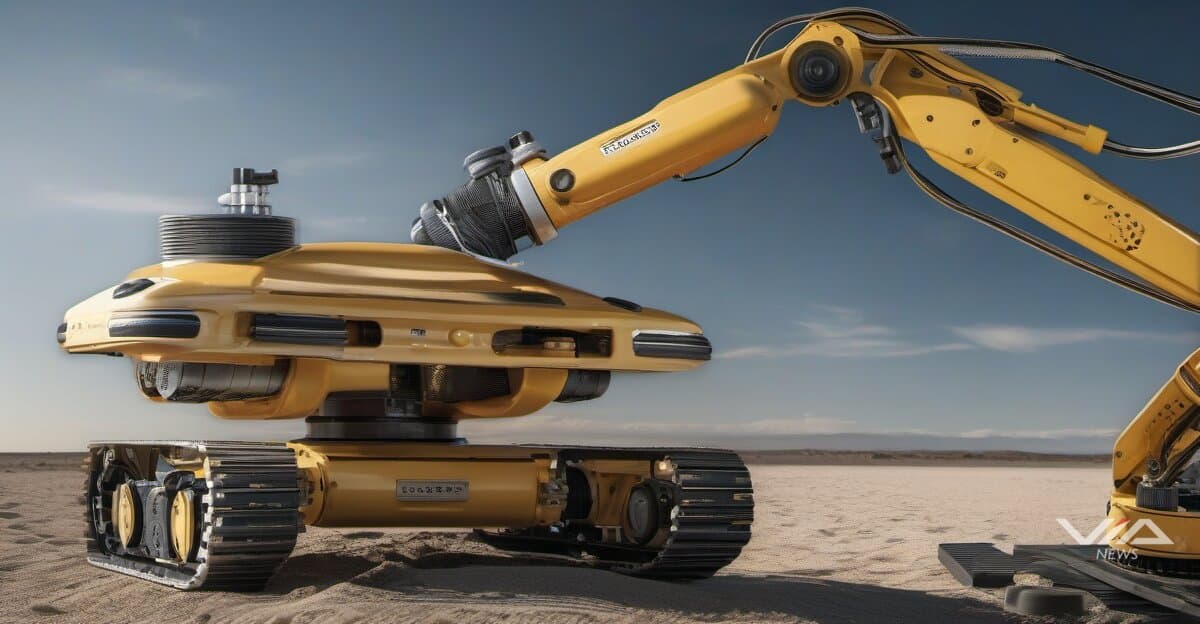
Image generated by AI for illustrative purposes. Not actual footage or photography from the reported events.

Artificial Intelligence Technology Solutions launched RADSight 2.0, an autonomous security platform consuming half the power of prior systems while targeting the $50 billion U.S. security services market. The company's RAD units deliver cost savings between 35% and 80% compared to traditional manned security operations, addressing global labor shortages affecting security industries from Germany to Japan.

The upgraded architecture enables Fortune 500 companies to deploy recurring revenue models across multiple facilities worldwide. RAD expects to convert existing sales opportunities into subscription-based income streams as enterprises in North America, Europe, and Asia shift from human guards to AI-powered surveillance amid rising labor costs and staffing challenges.

Commercial robotics firms globally are integrating foundation models to move beyond fixed automation into adaptive security responses. The RADSight platform demonstrates how embodied AI—combining computer vision, mobility, and decision-making—addresses cost pressures across labor-intensive industries worldwide, from U.S. warehouses to European corporate campuses.

The security robot market intersects broader robotics expansion including delivery systems and warehouse automation gaining traction across developed economies. Serve Robotics recently reported growth in autonomous delivery while acquiring AI capabilities, showing parallel commercial trends. Companies worldwide are racing to embed large language models and vision systems into physical robots for real-world tasks.

The AI robotics sector faces ethical tensions around defense applications internationally. OpenAI's Pentagon partnerships triggered internal friction over military use cases, highlighting global debates around weaponized AI versus commercial deployments in logistics, security, and service industries across civilian markets.

Power efficiency improvements in RADSight 2.0 address operational barriers to robot deployment at scale globally. Lower energy consumption reduces total cost of ownership for enterprises evaluating automation versus human labor across 24/7 security operations, particularly relevant as energy costs vary significantly across international markets.

The security services transformation mirrors manufacturing and logistics shifts toward embodied AI across industrialized economies. Foundation models enable robots to handle variable environments rather than scripted tasks, expanding markets beyond controlled factory floors into outdoor patrols, facility monitoring, and threat detection requiring contextual judgment.

Source documents

Via News is a conduit. We point to the source documents behind this report — we don't replace them. Trace any claim to its source and decide what to trust. How we source

Source Trace Score3 source documents3 with a live linkVerifiability: Strong
  1. [1]News articleYahoo Finance· January 26, 2026
    AITX's RAD Unveils RADSight 2.0 as the Next Evolution of Its Video Management Platform
  2. [2]News articleYahoo Finance· March 11, 2026
    Serve Robotics Announces Fourth Quarter and Full Year 2025 Results
  3. [3]News articleYahoo Finance· March 9, 2026
    Tech stocks today: OpenAI's robotics leader resigns after Pentagon deal, Anthropic prepares to battle ban

In this story · Knowledge Files

What we know · the intelligence behind this page
Live from the substrate
What we're seeing
Enterprise AI's Trust Gap: Microsoft-Mistral Ecosystem Expansion Meets a Governance Deficit in Agentic Adoption
Microsoft is deepening its AI platform bet through simultaneous moves — expanding its Mistral partnership (Copilot Studio, Foundry, European infrastructure capacity) and deepening enterprise AI governance ties with Manulife — just as independent research (Google Cloud, VentureBeat, Box) shows enterprises racing toward agentic AI adoption (100% planned within two years) while data access and trust in agent decisions lag badly (average 45% data access, only ~half trust agent outputs). The result is a structural mismatch between platform-vendor momentum and enterprise readiness to actually govern and trust the agents being deployed.
Our read on the data ›
Signals we're tracking
EPKINLY Regulatory-Clinical Success Cascade
High probability of expanded label indications, additional combination approvals, and competitive positioning strength in follicular lymphoma market. Predicts positive commercial uptake and potential accelerated review for related indications.
Patterns we're watching ›
Where sources disagree
Morgan Stanley & Co. LLC
Same entity (Morgan Stanley & Co. LLC), same metric (net_income), same fiscal period (Q1 2026), same observation date (2026-03-31), but vastly different values: $5.567 billion vs. $5.57. These cannot coexist for the same time period. Fact B appears to be a data entry error (possible missing decimal placement: 5.57 should likely be 5,567,000,000 or a per-share figure incorrectly entered as total).
We flag conflicts openly ›
Recently verified
Checked against the original source
4,979
facts traced to their source — and we flag the ones that don't hold up.
101 entities tracked4,979 facts checked against source5,257 source documents archived
Query this data → isubstrate.com