
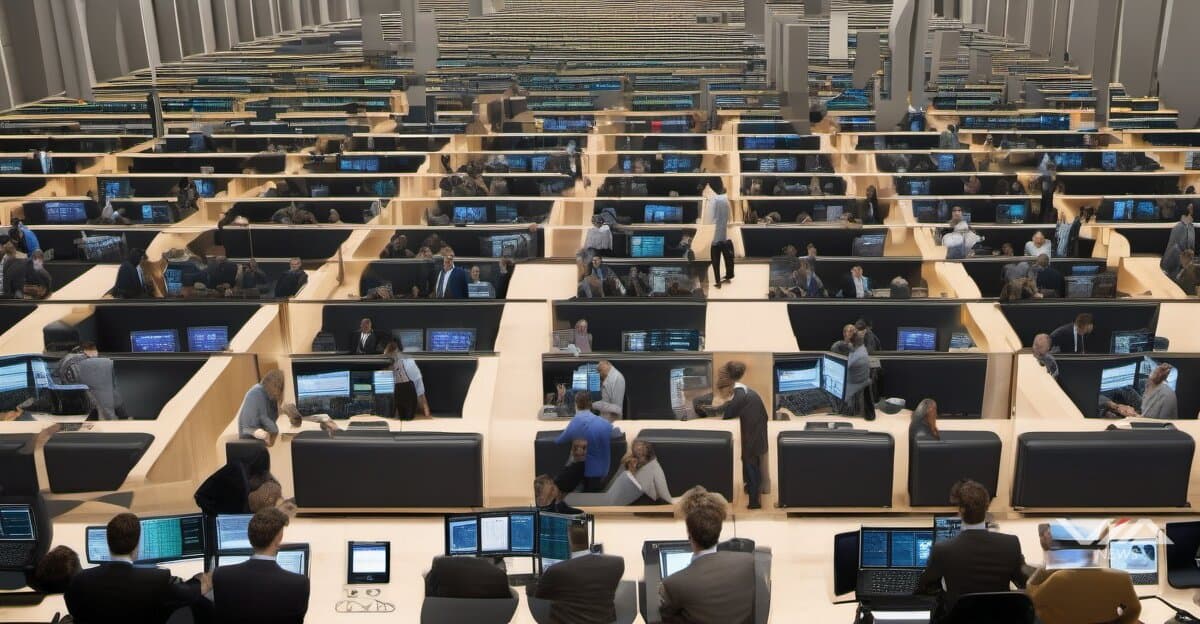
Global crypto trading firms are deploying Google TPU-powered deep learning systems to automate market making and trade execution across international exchanges. Flow Traders, a Netherlands-based market maker operating across Asia, Europe, and the Americas, launched neural network systems optimizing liquidity provision in digital asset markets.
BitMart rolled out AI-powered trading infrastructure integrating machine learning for price prediction and automated order routing. The Cayman Islands-based exchange, serving users across 180 countries, reported improved execution efficiency following deployment.
Retail traders globally gained access to institutional AI tools through nof1.ai, which runs live capital trading competitions. The platform democratizes algorithmic trading infrastructure previously exclusive to hedge funds operating in traditional financial centers like London, New York, and Singapore.
Google's Gemini 3 language model is being integrated for sentiment analysis across international markets. The AI processes social media feeds, regulatory filings from multiple jurisdictions, and market commentary in various languages to generate trading signals.
The AI deployment coincides with diverging regulatory approaches worldwide. Tether's USDT faced credit rating downgrades while European regulators approved the first Bittensor exchange-traded product, highlighting the fragmented global regulatory landscape for crypto assets.
Bitcoin's volatility created testing conditions for AI systems across time zones. The cryptocurrency reached all-time highs before entering correction, providing diverse market scenarios for machine learning models trading across Asian, European, and American sessions.
TPU infrastructure costs remain prohibitive for smaller operations in emerging markets. Google's tensor processing units outperform traditional GPUs for deep learning but require significant capital investment, creating competitive advantages for well-funded firms in developed markets.
Market makers report AI systems reduced latency during high-volatility periods across international exchanges. The technology enables simultaneous risk management across multiple trading pairs and geographic markets, responding faster than human traders to global market movements.
The convergence of AI infrastructure and global crypto markets creates new competitive dynamics where computational power determines trading performance alongside traditional financial analysis, concentrating advantages among technologically sophisticated firms.